Ahead of ASCO data drop, AZ gets key Imfinzi approval
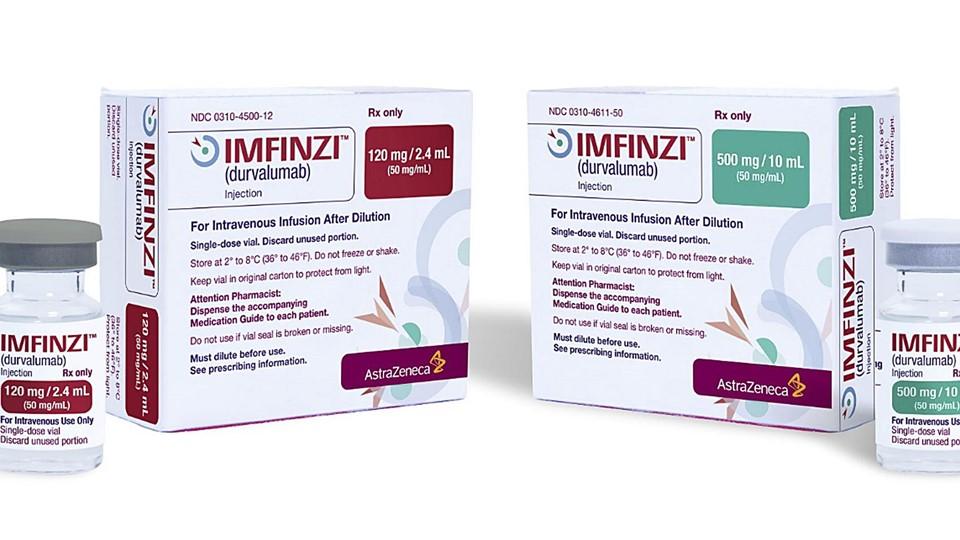
AstraZeneca's bid to extend the use of its PD-L1 inhibitor Imfinzi into non-muscle invasive bladder cancer (NMIBC) has been successful, with the FDA clearing the drug for induction and maintenance therapy alongside standard treatment BCG.
The approval is based on the results of the POTOMAC trial, for which five-year results are due to be presented at the ASCO conference about to get underway in Chicago. It covers the use of Imfinzi (durvalumab) plus BCG in BCG-naïve NMIBC patients who are at high risk of disease recurrence after surgery to remove the tumour.
Bladder cancer is viewed by AZ as a major new opportunity to grow Imfinzi commercially, and the NMIBC indication follows last year's FDA approval of the immunotherapy as a peri-operative treatment for muscle-invasive bladder cancer (MIBC), based on the results of the NIAGARA trial.
That marked a return to the bladder cancer area for Imfinzi, which in 2017 claimed an accelerated approval in previously treated adult patients with locally advanced or metastatic forms of the disease, although that was subsequently withdrawn after the failure of a confirmatory study.
In 2024, over 31,000 people in the US were treated for high-risk NMIBC, and around half of the patients in this group are at high risk of recurrence despite standard treatment with surgery and BCG. That is a larger population than MNIBC, with around 21,000 new cases per year, according to the American Cancer Society.
According to POTOMAC's principal investigator, Neal Shore of the Carolina Urologic Research Centre in the US, adding Imfinzi to BCG marks the first advance in high-risk NMIBC patient care in more than three decades.
"Unfortunately, many of these patients experience disease recurrence requiring repeated surgical procedures, as well as disease progression resulting in surgical removal of their bladder," said Shore.
"The POTOMAC trial demonstrates that…durvalumab with BCG induction and maintenance regimen reduces the risk of disease recurrence, progression or death for patients by almost a third compared to BCG alone."
AZ reported sales of Imfinzi leaped 30% to $1.7 billion in the first quarter of this year, with bladder cancer a key driver for the increase, although the category is becoming increasingly competitive.
MSD's rival PD-1 inhibitor Keytruda (pembrolizumab) was approved last November in combination with Pfizer/Astellas' Nectin-4-targeting Padcev (enfortumab vedotin) for cisplatin-ineligible MIBC patients, adding to the duo's use in advanced bladder cancer and Keytruda's 2020 approval for BCG-unresponsive high-risk NMIBC.
Meanwhile, other non-immunotherapy rivals that have broken into the NMIBC category include ImmunityBio's Anktiva, Ferring's Adstiladrin, and Johnson & Johnson's Inlexzo (intravesical gemcitabine) – the latter tipped as a future blockbuster by Clarivate.
Last month, AZ also reported positive top-line results in the VOLGA trial in cisplatin-ineligible MIBC, ramping up its rivalry with MSD in this form of bladder cancer and setting up further regulatory filings.