J&J claims FDA okay for bladder cancer drug TAR-200
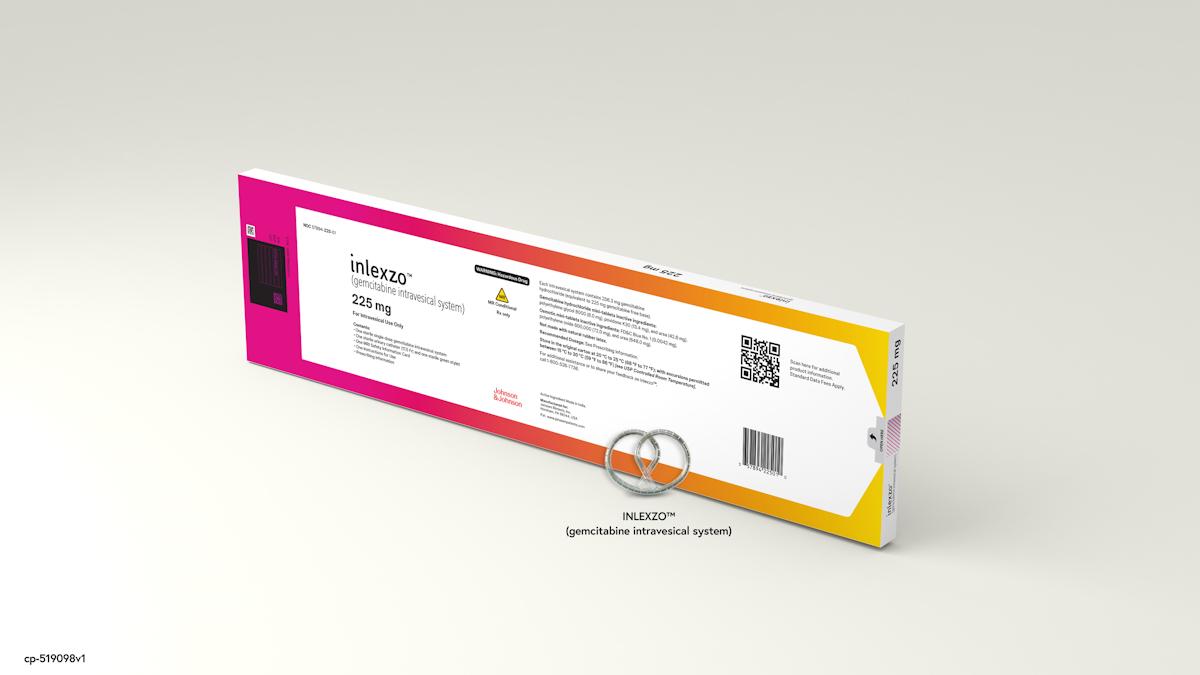
Johnson & Johnson has brought its bladder cancer drug TAR-200 to the US market, a year after its prospects were dented by a negative phase 3 readout.
The novel formulation of the stalwart chemotherapeutic drug gemcitabine, which allows it to be administered directly into the bladder, has been cleared as Inlexzo by the US regulator for high-risk, non-muscle-invasive bladder cancer (NMIBC) that does not respond to BCG, a live bacterial vaccine that is currently the standard first-line treatment.
The drug features a silicone-based drug delivery system that allows for the continuous release of gemcitabine chemotherapy into the bladder via a catheter.
Its approval is based on the results of the phase 2b SunRISe-1 study, reported at last year's ESMO cancer congress, which revealed an 82% complete response (CR) rate, with 51% of them maintaining that response for at least a year.
In a statement, J&J said the drug is the first therapy to provide extended local delivery of a cancer medication into the bladder and is a "potential practice-changing" treatment for people living with this form of cancer.
"When we acquired this novel therapy in 2019, our ambition was to give patients with bladder cancer a renewed sense of hope and belief," said Jennifer Taubert, J&J's head of innovative medicine.
"In an area that has seen little progress for more than 40 years, Inlexzo delivers a first-of-its-kind breakthrough innovation with a bright future ahead," she added.
Around this time last year, prospects for the drug looked rocky after it failed to show efficacy in the SunRISe-2 study, conducted in people with muscle-invasive bladder cancer (MIBC) who were not receiving surgery to remove the bladder (cystectomy) and nearby lymph nodes.
J&J acquired rights to TAR-200 when it bought privately-owned biotech Taris for an undisclosed sum in 2019, and has big sales expectations for the drug. It is also developing a second Taris-derived candidate called TAR-210, an intravesical formulation of J&J's FGFR kinase inhibitor Balversa (erdafitinib), and has previously predicted that combined sales of the two drugs could reach $5 billion at peak.
At the time of the SunRISe-2 readout, J&J said the trial had always been speculative and the result had no bearing on its projections for the Taris-derived candidates. NMIBC is more common than MIBC and accounts for around three-quarters of all cases of bladder cancer at diagnosis.
The company is also running the phase 3 SunRISe-3 study, hoping to position Inlexzo as a first-line alternative to BCG treatment, as well as SunRISe-5, looking at its role as a potential second-line therapy for high-risk NMIBC patients who have previously received BCG treatment and are unwilling or unable to have a cystectomy.