ImmunityBio rises as route opens to broader Anktiva label
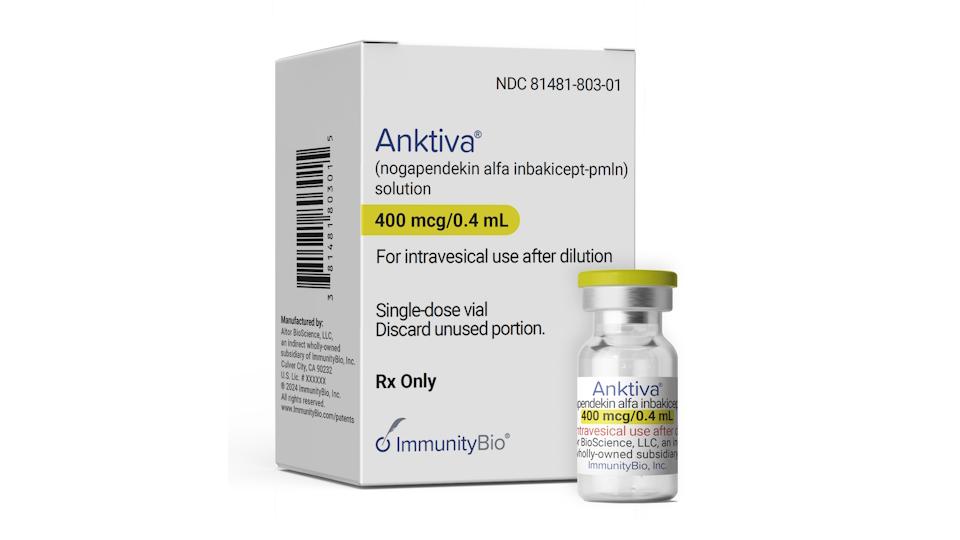
Shares in ImmunityBio rose sharply after the company said it has agreed a path with the FDA that will allow it to refile for approval of wider use of its bladder cancer therapy, Anktiva, in papillary-only disease.
First-in-class IL-15 receptor agonist Anktiva (nogapendekin alfa inbakicep) has been approved since 2024 for use in combination with the BCG vaccine in non-muscle invasive bladder cancer (NMIBC) patients who have not responded to the BCG shot on its own and have carcinoma in situ (CIS), with or without papillary tumours.
The new indication would cover the use of the drug in high-grade papillary-only NMIBC that is unresponsive to BCG, a group of patients that currently has no approved targeted therapies, and is one of a series of label extensions that ImmunityBio is banking on to drive growth of Anktiva, which made around $113 million in sales last year, up from $14 million in 2024.
The CIS indication is more aggressive, but much less common, accounting for around 10% of BCG-resistant NMIBC, while papillary-only disease accounts for most of the remainder. The FDA turned down ImmunityBio's initial marketing application for the latter form last year.
In its current indication, Anktiva is competing with Johnson & Johnson's Inlexzo, a novel formulation of chemotherapy stalwart gemcitabine, which was cleared as a monotherapy last September, and J&J is also looking at the papillary-only indication with its drug, with phase 3 trials on the go.
In a statement, ImmunityBio said that it had completed discussions with the FDA that should allow it to resubmit an application for BCG-unresponsive papillary NMIBC that will not include "the initiation or design of any new clinical trials."
Shares in the Culver City, California-based company rose more than 17% on the announcement, but lost some of that ground in after-hours trading.
The proposed submission would draw on long-term follow-up data from the QUILT-3.032 phase 2/3 trial, which included a cohort of 80 patients with BCG-unresponsive high-grade papillary-only NMIBC. It showed a12-month disease-free survival (DFS) rate of 58.2% and 96% disease-specific survival (DSS) rate at 36 months.
Moreover, the results also suggested that Anktiva treatment can help patients avoid bladder removal surgery, as cystectomy-free survival was 92.2% at 12 months and 81.8% at 36 months.
"The 12- and 36-month survival rates observed with Anktiva plus BCG are higher than those reported for other investigational therapies in this patient population," said Dr Patrick Soon-Shiong, ImmunityBio's founder and executive chairman.
The company said it will submit additional data to the FDA to support a resubmission within the next 30 days.
Readers can learn more about ImmunityBio's plans for Anktiva in NMIBC from the company's chief medical officer Sandeep Reddy, who spoke to pharmaphorum's web editor, Nicole Raleigh, at last year's ESMO cancer congress.