Padcev/Keytruda scores again in early bladder cancer
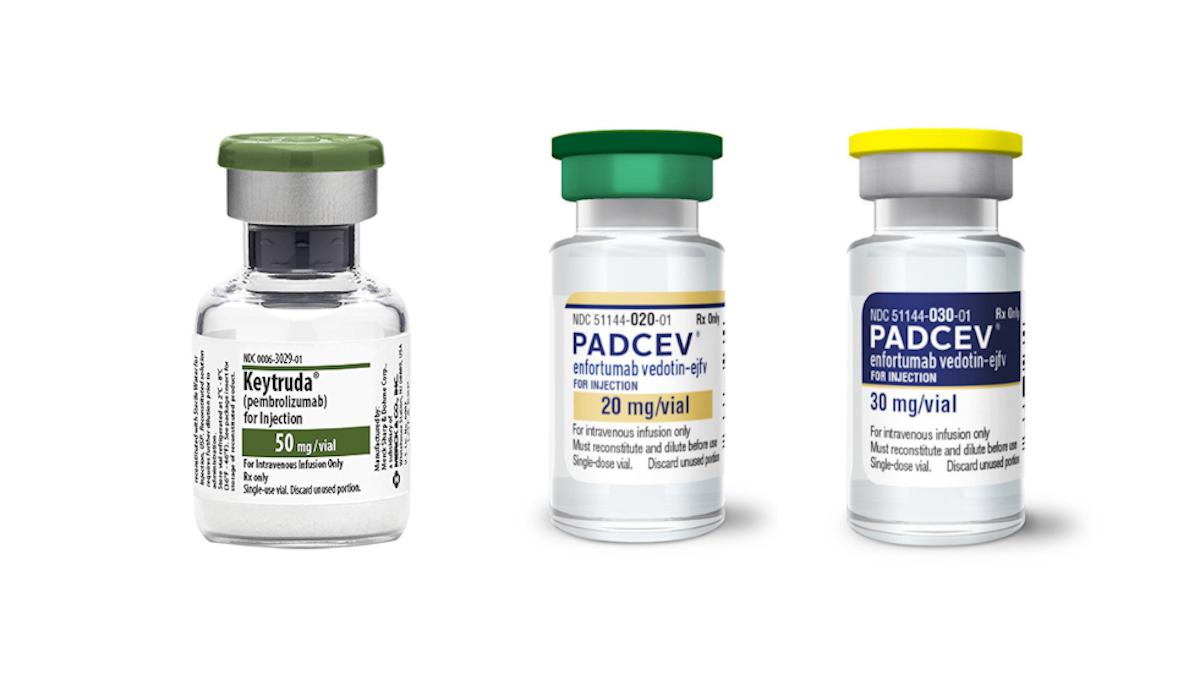
Pfizer and Astellas now have two studies supporting the use of Padcev with MSD's Keytruda as a perioperative therapy for muscle-invasive bladder cancer (MIBC), raising the prospect of wider use in earlier-stage disease.
According to the two companies, the results of the EV-304/KEYNOTE-B15 clinical trial make anti-nectin-4 drug Padcev (enfortumab vedotin) and PD-1 inhibitor Keytruda (pembrolizumab) the first regimen without platinum-based chemo to extend event-free and overall survival when used before and after surgery in cisplatin-eligible MIBC patients.
The results come a few months after Pfizer and Astellas reported similarly positive data from the EV-303/KEYNOTE-905 study of neoadjuvant/adjuvant Padcev and Keytruda, which looked at the regimen in MIBC patients who were not eligible for the standard perioperative regimen of cisplatin plus gemcitabine. That indication was approved by the FDA in November.
In a statement, the companies said the two trials "highlight the potential of this combination to become a new platinum-free standard of care in an earlier stage of bladder cancer."
Padcev is already approved in combination with Keytruda to treat previously untreated patients with locally advanced or metastatic urothelial carcinoma (UC), the most common form of bladder cancer, regardless of cisplatin eligibility.
"Despite available treatment options, nearly half of patients with [MIBC] progress to metastatic disease within three years of diagnosis," commented EV-304 principal investigator Christopher Hoimes of Duke Cancer Institute in the US.
"The EV-304 results represent a key milestone in the new era of urothelial cancer treatment…signalling a shift from conventional platinum-based chemotherapy and the potential to transform the standard of care."
Last year, Astellas hiked its peak sales expectations for Padcev from $2.7 billion to $3.4 billion on the promise of extending its use in bladder cancer, and there are already signs of an acceleration with Pfizer reporting sales up 25% to $1.43 billion in the first nine months of 2025, driven primarily by increased market share in the first-line UC indication.
Pfizer books Padcev sales in the Americas after its takeover of Seagen, which partnered with Astellas on the ADC's development, while Astellas records revenues in other markets.
The new MIBC data also provides a further opportunity to move Keytruda earlier in bladder cancer treatment as it builds towards estimated full-year sales of more than $31 billion, cementing its position as the world's top-selling pharmaceutical product. Keytruda has been approved by the FDA to treat non-muscle-invasive bladder cancer (NMIBC) since 2020.