UK patient first in world to get novel lung cancer vaccine
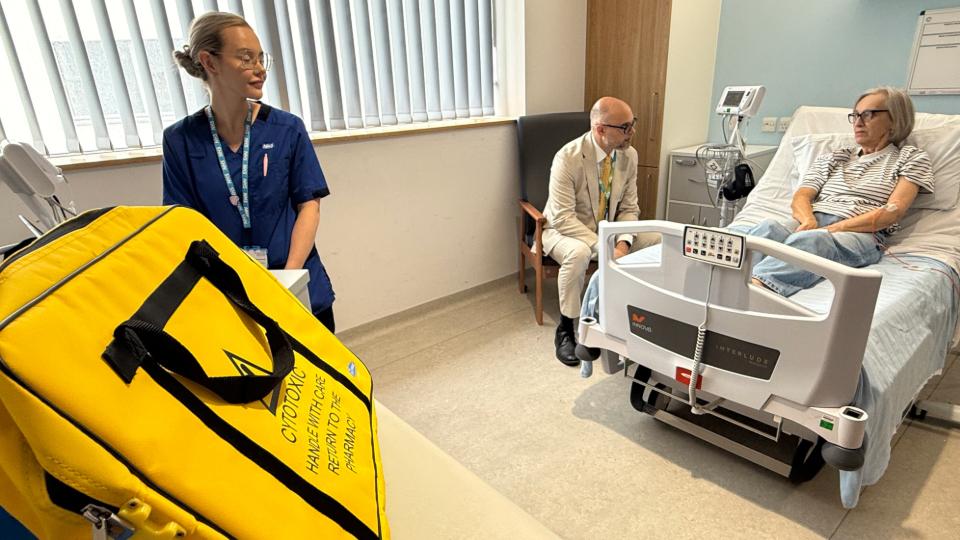
A woman from the Wirral in the UK has become the first patient in the world to receive an experimental cancer vaccine developed by a consortium of academic organisations and biotech companies.
Chris Jones (68) from Hoylake, who has advanced, PD-L1-positive non-small cell lung cancer (NSCLC), is the first subject to be treated with the vaccine in the NEOVACC clinical trial at the Clatterbridge Cancer Centre in Liverpool, just ahead of World Lung Cancer Day on 1st August.
Jones has already received immunotherapy for NSCLC, but that proved to be only partially effective – something that can affect around half of all NSCLC patients receiving immunotherapy – and the hope is that combining the vaccine with MSD's standard immunotherapy Keytruda (pembrolizumab) could improve its efficacy. She is the first of 10 patients expected to take part in the trial over the next 24 weeks.
The cancer vaccine is made by taking a biopsy from the tumour to identify genetic differences between the cancer cells and normal cells (neoantigens), with advanced computational techniques developed by Belgian biotech myNEO Therapeutics used to select those that should be included in the bespoke shot.
The neoantigens are then made into a vaccine using a cell-free DNA manufacturing method developed by UK-based Touchlight – known as 'doggybone DNA' (dbDNA) because of its distinctive shape – that allows rapid production of components at a lower cost than conventional methods based on bacterial DNA. Delivery of the shot, into the muscle of each arm, is carried out using a needle-free injector developed by USD-based PharmaJet.
Along with Clatterbridge and the two biotechs, the trial is being run by the University of Liverpool and NHS Blood and Transplant, with the help of a £2.66 million ($3.6 million) grant from the UK Medical Research Council (MRC).
Chris runs gelato and coffee shop Churn & Chill in Hoylake, with her daughter Phoebe, while her other daughter Grace is a firefighter. Her first daughter, Alex, died in 2016 from breast cancer aged just 26 – giving her another reason for volunteering for the trial.
"Alex raised a lot of money for cancer research, so I knew how important research was in the battle against cancer," said Jones.
"The trials team said I was an ideal candidate for this study, so I didn't hesitate when they asked if I wanted to take part," she added. "If there was a possibility of me surviving longer, I was happy to be involved with it, and if there is a chance of it helping other people in the future, then that was even better."
In the UK, around 50,000 people are diagnosed with NSCLC each year, with two million cases globally, making it the third most prevalent cancer worldwide.
"This personalised approach could offer hope to those for whom standard immunotherapy has not fully worked, by helping the immune system recognise and fight the parts of the tumour that have previously evaded detection," said Prof Christian Ottensmeier of Liverpool's Institute of Systems, Molecular and Integrative Biology (ISMIB), who is co-leading the study alongside his colleague Prof Natalia Savelyeva.
"It is a very exciting study because, if successful, this strategy could benefit more than half of patients with advanced lung cancer, and possibly those with other types of cancer as well," said Savalyeva.