NICE backs Keytruda/Padcev combo for bladder cancer
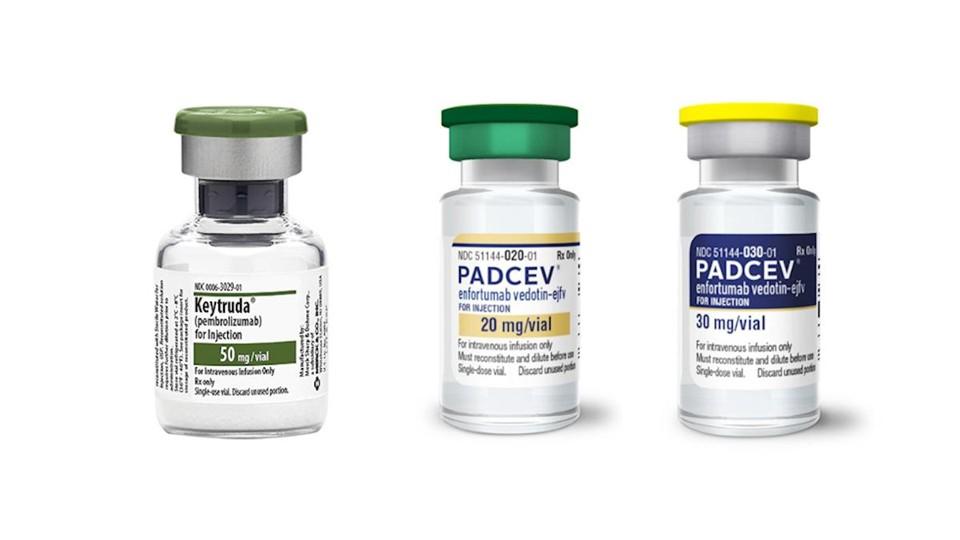
Patients with muscle-invasive bladder cancer in England and Wales can now receive NHS treatment with a regimen of MSD's Keytruda and Astellas' Padcev – before and after surgery – to prevent or delay the disease from coming back.
Final draft guidance from reimbursement authority NICE covers use of the peri-operative regimen for MIBC patients who are both eligible to receive cisplatin-based chemotherapy and those who are not, for example, because they are elderly and frail.
This is the first time a treatment option has been approved for MIBC patients ineligible for chemo, who account for almost 50% of all MIBC cases. In addition, there have previously been no options for treatment in the pre-surgery (neoadjuvant) setting, according to NICE.
In 2023, 18,389 new bladder cancer cases were diagnosed in England, and around 25% of all bladder cancers are MIBC – with the tumour growing into the bladder muscle layer – at diagnosis.
The recommendation is based on the results of two clinical trials, KEYNOTE-905 and KEYNOTE-B15, which showed that the combination of MSD's PD-1 inhibitor Keytruda (pembrolizumab) with Astellas' nectin-4-directed antibody-drug conjugate (ADC) Padcev (enfortumab vedotin) demonstrated a statistically significant improvement in event-free survival (EFS) and overall survival (OS) compared to standard treatment.
"A diagnosis of muscle-invasive bladder cancer can be life-changing," said Jeannie Rigby, chief executive at patient advocacy group Action Bladder Cancer (ABC).
"Too many patients are left with uncertainty and currently have very few treatment options – these patients can face a poor outcome," she added. "Access to new and innovative treatments that can change this is crucial. ABC UK and bladder cancer patients welcome this decision – the continued progress in bladder cancer treatment and care is vitally important."
Astellas has hiked its peak sales expectations for Padcev to $3.4 billion on the promise of extending its use in bladder cancer, and yesterday showed that the product remains on track with a near-55% increase in sales to JPY 158 billion (almost $1 billion) in the first half of its current fiscal year. Partner Pfizer books sales of the drug in some markets, including the Americas.
Meanwhile, approval for MIBC has given MSD a further opportunity to extend Keytruda's role in bladder cancer treatment – it was approved to treat non-muscle-invasive bladder cancer (NMIBC) in 2020 – and build towards estimated full-year 2026 sales of $32 billion-plus, ahead of the start of patent expirations in 2028.