RevMed hails first-line data with pancreatic cancer drug
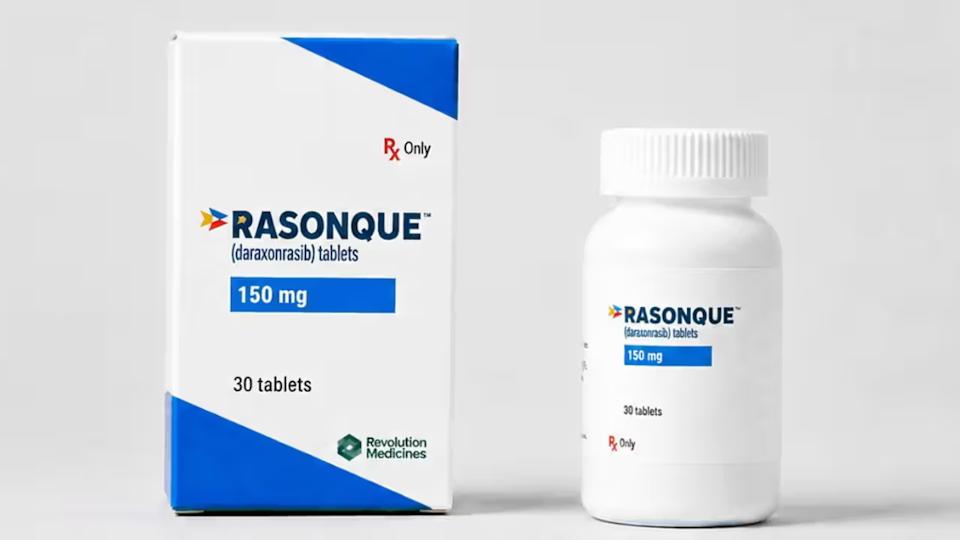
Revolution Medicine's pan-RAS inhibitor Rasonque is already growing fast as a second-line therapy for pancreatic cancer, and new data suggest it is on track to break into the frontline setting as well.
Updated results from the phase 1/2 RMC-GI-102 open-label study, reported at the EORTC-NCI-AACR (ENA) Symposium in Barcelona, Spain, show that Rasonque (daraxonrasib) given in combination with chemotherapy to patients with metastatic pancreatic adenocarcinoma (PDAC) achieved an objective response rate of nearly 61%, including 8% complete responses, and a disease control rate (DCR) of more than 90%.
Moreover, median progression-free survival (PFS) came in at 12.8 months, and 12-month overall survival (OS) was nearly 77%, which compares favourably with historical data on first-line PDAC treatment with chemo alone.
Rasonque has been applauded as a major step forward in the treatment of pancreatic cancer, a notoriously aggressive and hard-to-treat disease, and has already been approved for PDAC patients who have received at least one prior systemic therapy and those ineligible for multiagent systemic therapy.
Since its FDA approval in August, the product has romped away commercially, generating sales of around $198 million in the third quarter of this year, outstripping analysts' expectations and setting it on a pathway to reach around $700 million by the end of the year.
By some estimates, peak sales of the drug could come in between $10 billion and $20 billion, given the massive need for improved pancreatic cancer treatment, although that will rely on expanding its label to include previously untreated patients, which depends on the outcome of the ongoing RASolute 303 study.
Wungki Park, of Memorial Sloan Kettering Cancer Center in the US, who is an investigator for both RMC-GI-102 and RASolute 303, said the high response rates, deep complete responses, durable disease control, and median PFS exceeding one year "provide a compelling rationale to further evaluate daraxonrasib as a potential first-line treatment option."
Now, focus will shift to RASolute 303, which is due to complete enrolment in the first half of next year and complete in the first half of 2028, with full data due the following year.
"What is particularly exciting is the potential to move beyond chemotherapy as the mainstay of treatment for pancreatic cancer," commented Prof Shivan Sivakumar, a translational oncology specialist at the University of Birmingham in the UK, who was not directly involved in the phase 1/2 study.
"By targeting RAS, a fundamental driver of the vast majority of pancreatic cancers, we may be entering an era where molecularly targeted therapies can meaningfully improve outcomes for patients," he added.
He cautioned that the finding comes from a relatively small, early-phase study involving just 61 patients, without a randomised control group, and RASolute 303 will be critical in determining whether this combination genuinely improves survival compared with standard chemo.
"If these findings are confirmed, this could represent one of the most significant advances in the first-line treatment of metastatic pancreatic cancer in recent years," said Sivakumer.