Lilly beats Novo to China with an oral GLP-1 for obesity
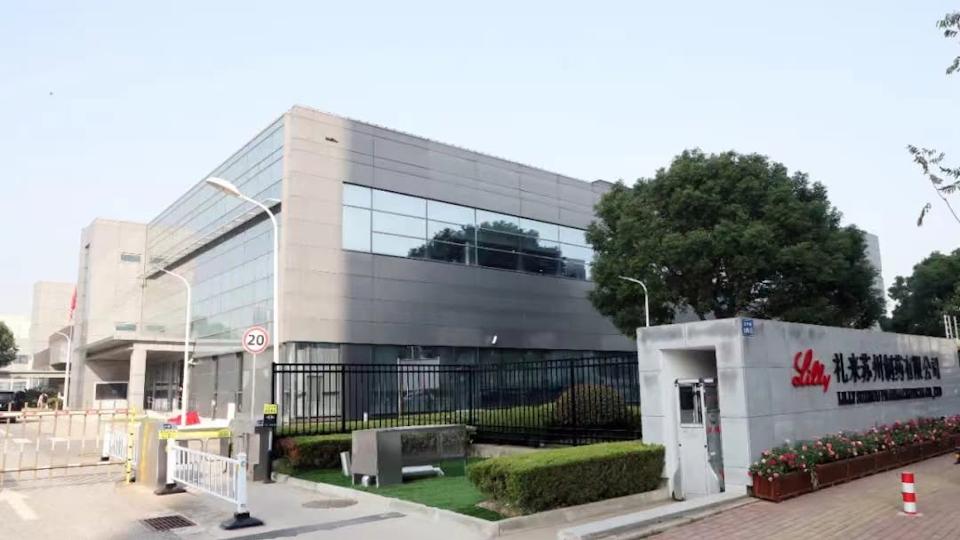
Eli Lilly's facility in Suzhou, China.
China has approved Eli Lilly's orforglipron, according to the company's Chinese subsidiary, which says it is the first oral GLP-1 agonist to be greenlit in the country for weight management.
The approval gives Lilly first-mover advantage in China – the world's second-largest pharma market – and an edge over Novo, its main rival in the market for overweight/obesity drugs. Globally, Novo is losing market share to Lilly in the injectables category, but it currently still has a dominant position in the oral category.
China represents a massive commercial opportunity, given that it has the largest population of overweight and obese people in the world, with over half of its adults – exceeding half a billion people – falling into that category, along with roughly one in five Chinese children and adolescents.
Projections suggest the combined overweight and obesity prevalence among Chinese adults could reach more than 65% by 2030. At the same time, rates of related conditions like high blood pressure and cardiovascular disease are also rising fast.
Orforglipron, known as Foundayo in the US and the UK, its first two markets, becomes another option in China for weight loss alongside Lilly's weekly injectable formulation of tirzepatide and Novo's similarly-dosed semaglutide, which have been available there since 2024.
Lilly said in a statement that an oral treatment is important as the route of administration is "one of the important factors affecting adherence" in overweight/obesity. It also said that a marketing application for orforglipron in type 2 diabetes – an indication where Novo already has approval in China for oral semaglutide – is currently under review at the National Medical Products Administration (NMPA) regulatory authority.
Lilly clearly sees China as a way to rapidly build orforglipron's sales, which have lagged behind Novo's oral version of semaglutide. Earlier this year, the company announced a $3 billion investment programme in the country to expand its supply chain capacity over the next 10 years, including a major expansion of plants in Suzhou and Beijing that will be involved in supplying orforglipron to the domestic market.
In China, weight-loss drugs have to be self-funded by patients, as they have no public health insurance coverage and are almost never covered by private health policies. Out-of-pocket sales are heavily driven by middle- and high-income urban residents.