FDA okays Rinvoq as first systemic vitiligo therapy

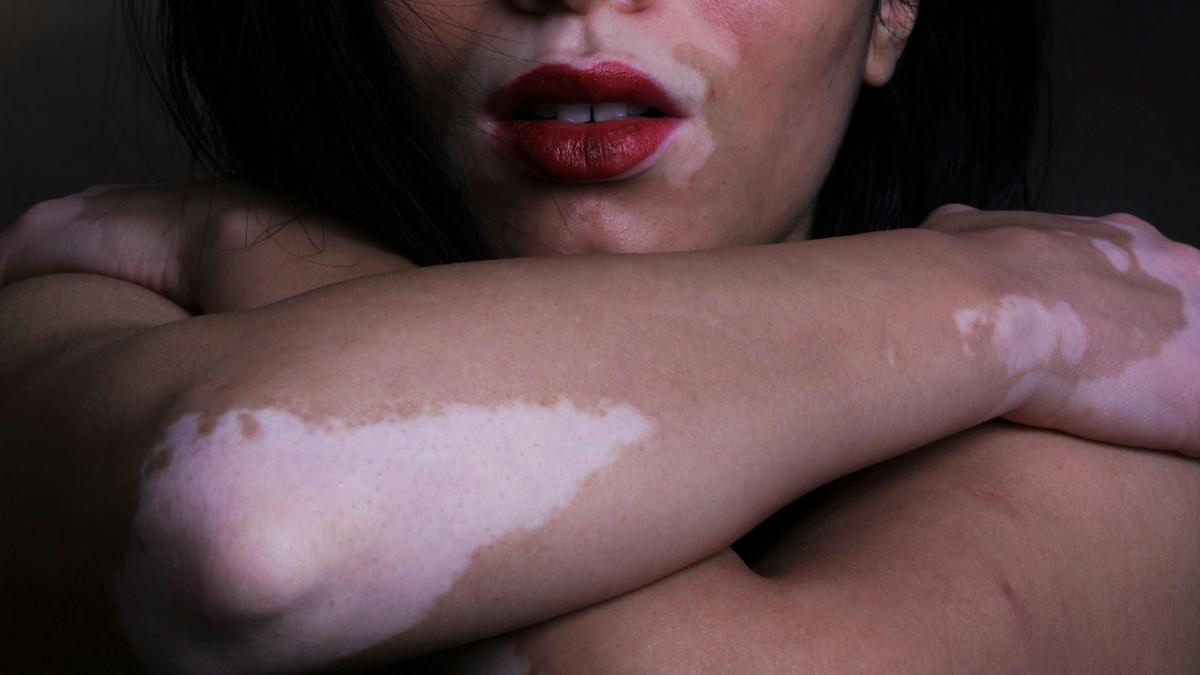
Indian man with vitiligo.
AbbVie's JAK inhibitor Rinvoq has become the first systemic therapy approved for nonsegmental vitiligo (NSV) – the most common form of the skin lightening disorder – in the US, adding to a lengthening list of approved indications for the blockbuster brand.
Rinvoq (upadacitinib) can be used to treat patients aged 12 years and older with NSV, becoming an oral alternative to Incyte's Opzelura (ruxolitinib), a cream formulation of the JAK inhibitor that became the first medical treatment approved to repigment vitiligo-affected skin in 2022.
Rinvoq's approval is based on the phase 3 Viti-Up-1 and Viti-Up-2 trials, which showed that a daily 15 mg tablet, taken once daily, led to statistically significant improvements in total body pigmentation and facial repigmentation, respectively measured using the T-VASI 50 and F-VASI 75 scales.
Across the two studies, around a quarter of patients treated with Rinvoq saw an F-VASI 75 response at 48 weeks, compared to 6% of the placebo group. Moreover, an open-label extension phase for the two studies showed that the proportion of responding patients rose to 55% at 76 weeks. Similarly, roughly 20% of patients had a T-VASI 50 response at 48 weeks, compared to 6% of the control group, rising to more than 40% at the 76-week timepoint.
Seemal Desai, president of the Global Vitiligo Foundation, said that NSV is a chronic, unpredictable autoimmune disease with a burden that extends well beyond visible pigment loss, affecting patients physically and emotionally.
"Treatment has historically focused on individual areas of depigmentation rather than addressing the disease more broadly," according to Desai, who was an investigator in the Viti-Up trial programme.
For AbbVie, NSV becomes the 10th approved indication in the US for Rinvoq, which was first launched in 2019 for rheumatoid arthritis, and has since grown into a $10 billion-a-year product thanks to expansion into areas like inflammatory bowel disease. The drug has recently been approved for both vitiligo as well as hair loss condition alopecia areata in Europe. The FDA is due to decide on the alopecia areata indication in early 2027.
Analysts have predicted that vitiligo could add seven hundred million dollars a year to peak sales projections, pushing them towards or exceeding the $13 billion level before generic competition arrives from the mid-2030s onwards.
Other oral systemic therapies are on the horizon, including Pfizer's TEC/JAK3 inhibitor Litfulo (ritlecitinib) – already approved for alopecia areata – and Incyte's selective JAK1 inhibitor povorcitinib, which have both cleared phase 3 trials and are currently being prepared for regulatory filings.
Photo by Loris Boulinguez on Unsplash