A complex biological landscape of protein function unlocked in Israel
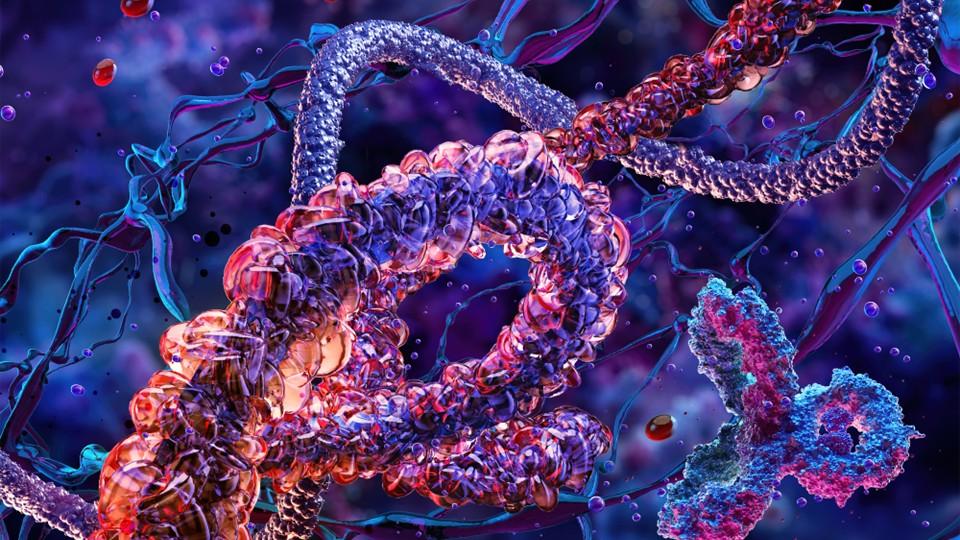
Epiproteomics refers to the landscape of modified and unmodified proteins. Central to this field of study are post-translational modifications (PTMs), chemical alterations that occur post-synthesis, modulating the function, stability, localisation, and interactions of proteins. And Promise Bio is a start-up pioneering precision medicine solutions using this landscape, together with artificial intelligence (AI), to transform immune-mediated disease treatment.
Built on groundbreaking research from Israel’s Weizmann Institute of Science, Promise Bio developed the first cloud-based platform for broad epiproteomics, helping researchers uncover disease mechanisms, tailor therapies, and discover new drug targets.
Furthermore, the company announced at the end of February 2026 the launch of the Frontier Epiproteomic Innovation Grant, an R&D access initiative designed to support biotech companies advancing novel therapeutics with clear translational potential. Powered by Promise Bio's broad-epiproteomic platform and scientific expert analysis from existing or newly-generated mass-spectrometry data, the initiative will provide selected participants with deeper biological insights.
In order to find out more about the launch of the grant, and the company and the science itself, pharmaphorum spoke with Promise Bio’s co-founder and CEO, Ronel Veksler, MD, PhD.
Enabling early, precise diagnosis and personalised treatment strategies
Promise Bio’s advanced AI-driven system integrates proteomics and multi-omics data, focusing on PTMs to identify unique biomarkers and disease pathways. Only in December 2024 did it announce its emergence from stealth with an $8.3 million seed investment, led by Awz Ventures, and with funding via AION Labs’ venture seeding track from AstraZeneca and Pfizer, the funding aiming to accelerate the development of its computational platform. Indeed, that year, it was recognised by TechCrunch as one of the most disruptive scientific start-ups.
Promise’s platform enables early, precise diagnosis and personalised treatment strategies, with especial applications in IBD and other autoimmune conditions.
“Proteins are the building blocks and engines in our body […] Everything in our body is proteins,” stated Veksler. “Our ability to study proteins [had been] limited to mostly looking at the abundance of proteins, meaning how much of each protein was within whatever sample we were taking or something like that. But we’ve known for years that, actually, if we want to move closer from just looking at abundance to the function, to understanding function – the function lies not in the abundance. The function lies in a variety of regulatory mechanisms or small changes that happen to proteins after they are created.”
In other words, epiproteomics; or, “the thing that opens the door to move closer to function,” in Veksler’s words.
“We can use that for designing new diagnostic tests,” Veksler continued. “We can use it to design and develop new and better drugs, and we can also combine them to understand better how we fit the right medication to the right person […] It's relevant to all diseases, but it's especially relevant to complex, chronic diseases like autoimmune diseases, immune-mediated diseases, renal diseases, and cardiometabolic diseases and neurodegeneration, neuroinflammation… All the diseases that are not driven by a mutation in the DNA, like cancer.”
Indeed, Promise Bio’s “mission and goal”? For breakthroughs in epiproteomics to “allow what genomics did for oncology.”
Research and innovation at the cutting-edge, through global collaboration
That ambitious journey began in years of foundational research conducted by Dr Assaf Kacen, co-founder & CTO of Promise Bio, in the lab of Professor Yifat Merbl, scientific co-founder of the company, at the Weizmann Institute of Science. The research featured in Nature Biotechnology in 2023 and laid the foundation for developing Promise Bio's computational platform, which enables broad-scale profiling of up to 64 post-translational modifications from mass-spectrometry data without requiring customised chemical enrichment or additional laboratory procedures.
The $8.3 million seed investment noted above, along with a grant from the Israel Innovation Authority, strengthened the company's ability to scale its cutting-edge technology and expand its research capabilities.
“One of the things that allowed the technology that they developed is the interdisciplinary nature of [Merbl’s] lab,” said Veksler. “If we look at modern biology, it's not enough to be a really good biologist; you need to be able to have a very strong computational foundation and also really good understanding of the chemistry. And it's all intertwined because biology is complex.”
This interdisciplinary notion, this foundation of collaboration, feeds into Promise Bio’s general modus operandi, working with research institutes and foundations across the globe in several disease areas.
“Our current collaborations are mainly in immune-mediated diseases,” explained Veksler. “So, inflammatory bowel diseases like Crohn's, colitis, [as well as] rheumatoid arthritis, psoriatic arthritis, lupus […] And we've been seeing great interests from companies developing drugs in neurology, specifically neurodegeneration. The reason for that is [there was] the first blood-based biomarker that was introduced for early detection of Alzheimer's disease. And this biomarker is actually a modified protein. Eli Lilly now have a drug that is directly targeting a modified protein in the brain that is FDA approved for Alzheimer's.”
The Frontier Epiproteomic Innovation Grant, and beyond
Under the terms of the Grant, selected companies will receive comprehensive epiproteomic profiling of up to 200 samples, including detection of up to 64 post-translational modifications (PTMs), proteoform-specific analysis, quality control, advanced bioinformatics, and expert scientific interpretation.
Open to clinical-stage biotech companies working in immunology, neurology, or cardio-renal-metabolic diseases, the Grant will give priority to proposals that “pose clearly defined, decision-relevant questions, such as elucidation of mechanisms of action, biomarker discovery, patient stratification strategies, and drug-response prediction.”
“In order to advance, we need to move beyond protein abundance, and we are leading the way there,” asserted Veksler. “We are now at a perfect storm, in the sense that there is a convergence of three major trends. The first one is the rise of precision medicine companies in oncology. So, you have companies like Terra, Guardian, Tempus, Caris, that have used genomics-based methods to revolutionise or to transform oncology, and they introduced tests that are used by millions of people. These tests are also used by pharma companies in their clinical trials. They are adopted by and endorsed by the FDA as part of clinical trials.
“And the data that these companies produced also introduced innovations in business models. So, that's one area of innovation […] The two other macro trends are the rise of proteomics, to be specific, mass spectrometry-based proteomics […] and then third is AI.
“The only way we can analyse the best, complex amount of data we get from proteomics is with the computational resources that we have today that were not here three to five years ago […] It's a blue ocean out there. It’s the right time, we have the right technology; we are really at the cutting edge of what's possible today,” concluded Veksler.
Applications for the Grant are now open, with a submission deadline of 15th April.
About the interviewee

Ronel Veksler, MD, PhD, is co-founder & CEO of Promise Bio. He holds an MD-PhD from Ben-Gurion University and a BSc in Electrical Engineering from the Technion, and is the recipient of multiple awards for academic excellence. His experience spans across medicine, research, product management, and algorithm development. After practicing medicine for several years, Veksler joined C2i-Genomics, where he served as the senior director of product, before co-founding PromiseBio. With his interdisciplinary experience, Veksler is connecting the dots at the intersection of cutting-edge science, medicine, and technology, to promote precision medicine for patients with complex diseases.