As Ebola deaths climb, search begins for vaccine
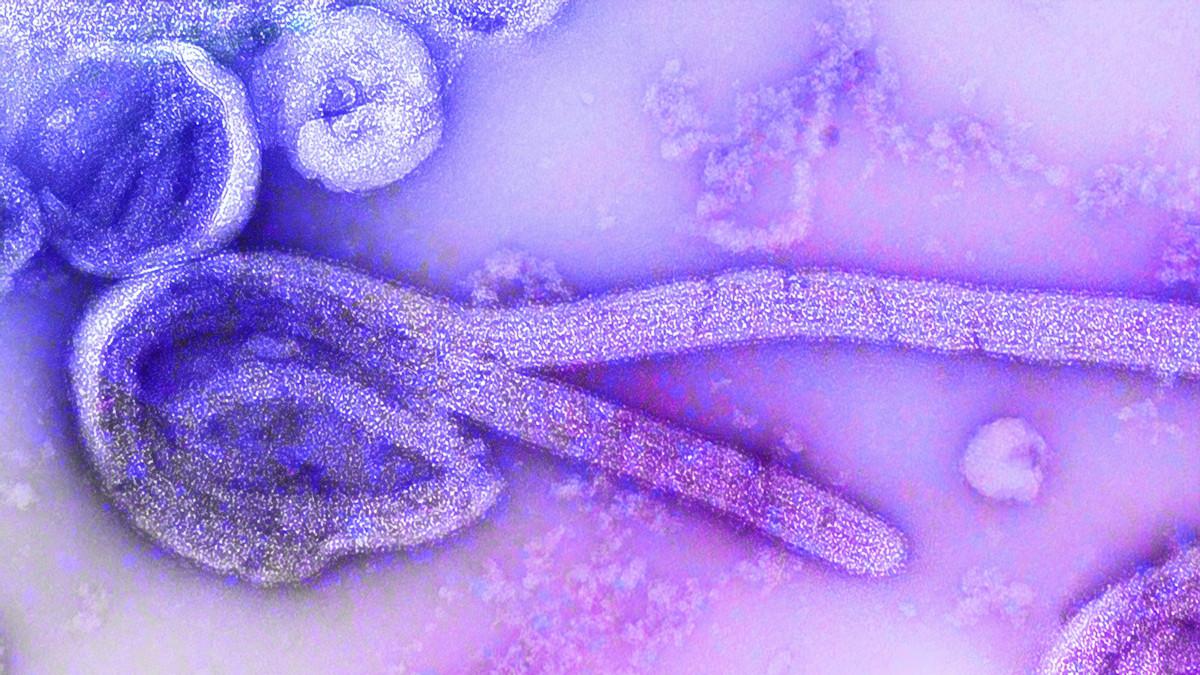
Electron microscopic image of the 1976 isolate of Ebola virus.
The WHO has held a closed expert meeting to identify potential vaccines for the Bundibugyo species of Ebola that is causing an outbreak in the Democratic Republic of the Congo (DRC) and facilitate their clinical testing.
The meeting was held shortly after the WHO declared the outbreak a public health emergency, and as the death toll moved above 130, with more than 540 cases recorded.
There is concern about the ability of Ebola to spread undetected for several weeks due to conflict in east DRC, funeral practices that can lead to transmission, and failings by local health authorities, according to Reuters.
Genomic testing of Ebola cases in DRC and neighbouring Uganda has confirmed that the outbreak has been caused by a variant of the Bundibugyo species, which has only caused two out of more than 40 outbreaks in the last few decades – one in Uganda in 2007 and another in DRC in 2012.
New vaccines are needed because the current shots pre-qualified by the WHO for use in Ebola outbreaks – MSD's Ervebo and now largely discontinued Johnson & Johnson's Zabdeno/Mvabea – target the more common Zaire species and may not provide good protection against Bundibugyo, which differs genetically from Zaire by around a third.
According to a report in the journal Science, the experts at the WHO meeting discussed several vaccines that, in experiments over the past 15 years, have shown varying ability to protect monkeys from Bundibugyo, but have not yet advanced into human testing.
One possible strategy discussed at the meeting would be a regimen that combined a first dose of a vaccine developed at vaccine nonprofit IAVI that targets another species (Sudan) that is already in clinical trials, with a second dose using Ervebo.
Ebola is a viral haemorrhagic fever that has an average fatality rate of more than 50% and typically results in the first instance from exposure to the virus in animals. The genome sequencing data – from three cases so far – is consistent with "a single recent introduction followed by onward person-to-person spread," according to Prof David Matthews, a virologist at the University of Bristol in the UK.
"That is useful because it suggests this outbreak can potentially be traced and interrupted as it has been in the past," he added. "Repeated independent spillovers from an animal source would complicate the efforts to stop the outbreak."
There are also concerns that the two FDA- and WHO-approved treatments for Ebola, Regeneron's Inmazeb (atoltivimab, maftivimab, and odesivimab) and Ridgeback Bio's Ebanga (ansuvimab), will also be less effective against Bundibugyo.
Matthews also said that further sequencing "will also help make sure that any vaccine or antibody-based countermeasure in development will be closely matched to the virus causing this outbreak."
South Korean biotech Hyundai Bioscience has said it is willing to supply clinical trial doses of its broad-spectrum antiviral Xafty (niclosamide), saying it has shown activity against Ebola in lab testing and could also work against hantavirus, currently in the headlines amid an outbreak on a cruise ship that has claimed three lives.