Simplification, standardisation & AI-enabled industry: Veeva R&D and Quality Summit 2026
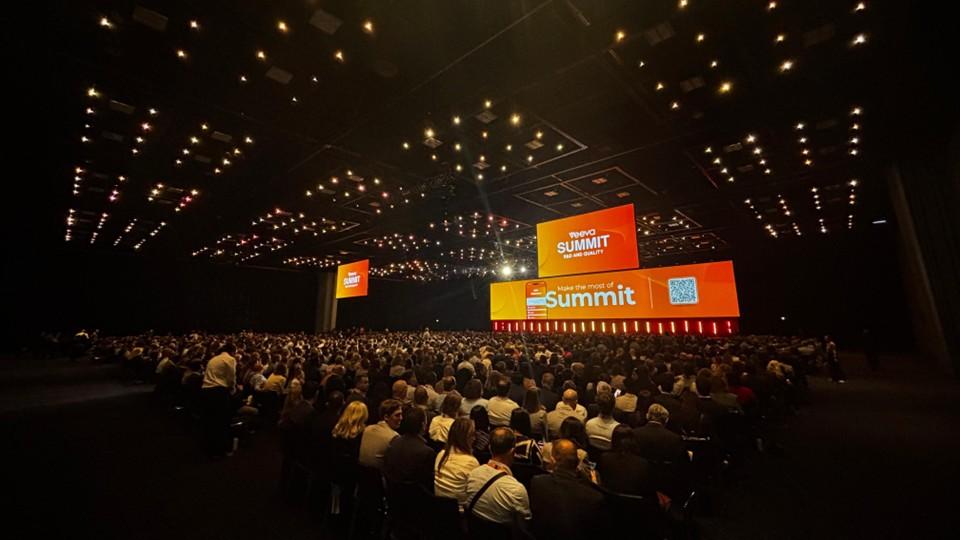
This week, 28th-29th May, the Veeva R&D and Quality Summit took place in Copenhagen, Denmark. Focused on innovating together, and together advancing the industry, the Summit this year highlighted an intention on one, complete industry cloud for greater impact, and for greater benefit for patients – AI-enabled.
Veeva delivers the industry cloud for life sciences with software, AI, data, and consulting. Committed to innovation, product excellence, and customer success, Veeva serves more than 1,500 customers, ranging from the world's largest pharmaceutical companies to emerging biotechs.
Rik Van Mol, senior VP of R&D and Quality opened the conference, noting how Copenhagen is a special place for he and the Veeva team, harking back as it does to the 2015 Summit location. But, whether a veteran or first time attendee to Veeva’s summits in Europe (or the US), the ideas exchanged onsite, the relationships built, and the dots connected – all move the industry forward.
Van Mol concentrated attendees’ attention on the visions and values of Veeva: building the industry cloud for life sciences, doing the right things, focusing on customer success, employee success, and on speed in these.
Veeva’s products are organised in four clouds: Development, Quality, Commercial, and Data. Breaking these down, the Development Cloud covers Clinical, Regulatory, and Safety, for example; while Quality covers Quality Assurance, Training, and Quality Control.
A core Veevan goal is to simplify and to standardise, removing friction and helping with innovation. Indeed, the long-term intention is to complete and fully become the ‘Industry Cloud’, to connect industry – to patients, HCPs, hospitals, research sites, and to regulators – as, currently, data is not flowing within that ecosystem.
Enabling AI in a whole industry ecosystem
Given the whole world is in the midst of a large-scale AI revolution, Van Mol noted the sense of industry similarly being AI-enabled. So it was he introduced to the stage Veeva’s global strategy leader, president of the Development Cloud, Jim Reilly, to explain why Veeva wants to be the partner of choice in bringing the promise of AI into reality.
An AI-enabled industry involves, and going forward will more deeply involve, agentic biopharma, where agents do most of the work for and beside those within, allowing them to do more meaningful work and build relationships with peers and partners – delivering therapies to patients more effectively and more quickly.
Many companies are trying to figure out greater efficiency and greater value from AI. Veeva’s MAAP architecture, the new enterprise technology foundation, offers a receiving and returning cycle of models, agents, and applications working together, which will achieve desired outcomes, said Reilly.
The tried and tested – and trusted – core applications are here to stay, but an evolution into a dual mode is needed; not just controlled by the human end user, but also controlled by agents. So it is that Vault will be in dual mode.
It’s fair to say that Veeva’s AI capabilities and strategy represent a major leap forward in terms of focus and investment. Reilly tunnelled down into Vault AI, Falcon, and agentic authoring – these increase productivity in Development and Quality. Falcon operates outside of Vault and offers agentic labour, while within Vault there will be standard agents and custom agents. Vault AI is currently agentically available for Safety and Quality; later this year, Veeva will deliver its first agents in Clinical and Regulatory.
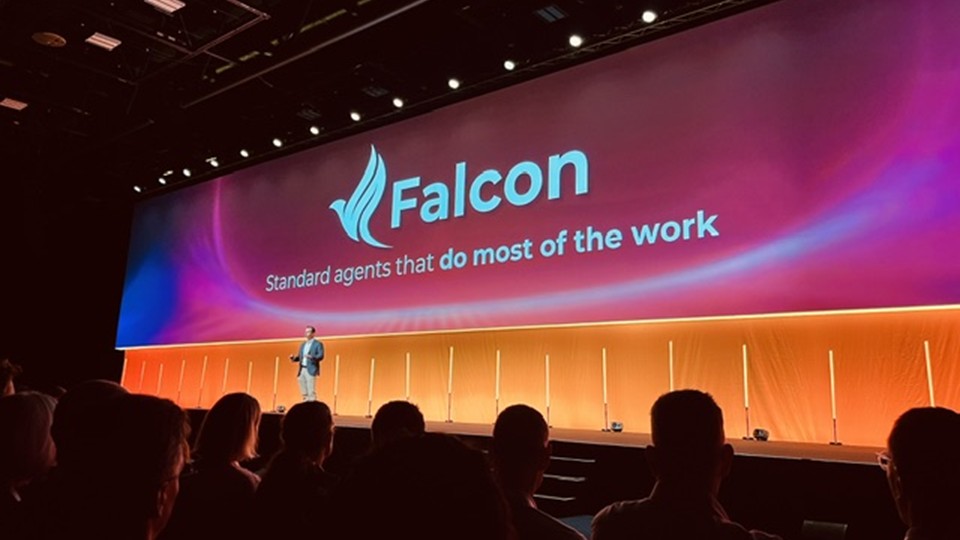
Reilly’s AI discussion focus was, however, very much on Falcon, with standard agents that do most of the work: “Think of it like agentic labour,” he said.
Standardised specifically for industry, Veeva Falcon is a new agentic AI platform designed to support key drug development processes across Clinical, Regulatory, and Safety teams. The first agents will focus on the Development area, with Clinical automated TMF, with Safety case intake and processing, and with Regulatory interaction intake and response. Falcon will be available for early adopters from November 2026.
Meanwhile, agentic authoring is an application that produces drafts of many submissible documents proactively. It will work natively with Vault RIM and with Word, to give writers a familiar experience, helping to tailor content with the inclusion of the AI element.
Moving beyond system legacy
Having everything on one platform eliminates the need for legacy systems, Avril England, general manager of Vault, noted in her demonstration of a menu of the new capabilities. And it is this necessary move away from legacy systems that was reiterated again and again during this year’s R&D Summit.
In client testimonies, Thomas Dieffenbronn, Novartis’ global head of operational excellence development, and Petter Gallon, Sobi’s director of global quality systems, discussed their companies’ respective experiences lately with Van Mol.
Gallon stated how “happy” Sobi are to be part of the Veeva journey. Being fully virtual, he emphasised the crucial importance of having “true and trustworthy data.” Dieffenbronn, meanwhile, described Novartis’ 10,000 associates trying “to turn innovations into medicines.” For this, he said, “legacy systems and technology are not necessarily suited.” Rather than “transform everything at the same time” like Sobi, Dieffenbronn described Novartis’ two-principle-approach: change happens on the ground with the end users, and the need for horizontals that need to be in place infrastructurally.
In terms of AI, Sobi has a “true Veeva AI” up and running, and “We like that,” Gallon said: all data in the same system is a “goldmine.”
And for Dieffenbronn? The logic is to start from the end-to-end workflow. Essentially, it is “where agents and AI provide simplicity, quality improvement, and speed across the board.” A triumvirate of improvements that, in the end, will mean better outcomes for patients.
Novo Nordisk, Sobi, and Syneos Health Consulting: Scaling clinical efficiency with Veeva EDC and CDB
A session on the second day of the Summit explored how biopharmas of all sizes leverage Veeva EDC and CDB to gain full ownership of their data and scale efficiency. From early implementation to global expansion, experts shared strategies to maintain oversight, automate manual reconciliation, and sustain operational momentum long after the initial go-live.
Pieter Voermans, head of clinical data management at Sobi, a Stockholm, Sweden-headquartered global biopharma company specialising in haematology, immunology, and adjacent areas, began.
Sobi really kicked off with Veeva in 2023, with a speedy progress to first live study within months. It currently has six studies in Electronic Data Capture (EDC), which provides an end-to-end environment to collect, review, and process site-reported patient trial data, and one in the Clinical Database (CDB), which provides a central environment to manage all trial data, automate workflows, and orchestrate review across the clinical ecosystem. Sobi is currently in progress with a Safety Database.
Sobi’s learnings, Voermans shared, were to work closely with QA, even closer with IS/IT, and embrace collaboration and connect with peers.
Michael Dyrvig, director of digital product at Novo Nordisk, described the company’s three years of Veeva CDMS implementation, DataNow, which has sought to lower the burden on CRAs and site staff and improve user centricity. No further trials will start on the legacy system from next month, June 2026.
Novo is taking knowledge from its learnings “as fast as possible.” In hindsight, said Dyrvig, they would have planned trials after early adopters, as there was too long a period where they didn’t have a direct trials connection.
And Phoebe Benson, senior implementation manager at Syneos Health R&D Consulting, spoke about transitioning to Business as Usual (BAU). Syneos are business services providers, largely for process management and change design. Benson discussed how to succeed in the Veeva implementation journey in the long-term.
BAU is fundamentally different these days, due to technology that keeps changing, expectations that keep shifting, trade-offs that are unavoidable, and the need for organisations to adapt. Instead, BAU must become a product operating model, Benson said, not a handover moment. Within this, there must be a bridge between technology and operations, and continuous enablement and behavioural reinforcement.
Overall, actively design the transition of ownership, she advised, rather than remain mere recipients of change: “If teams are only exposed to the final state, they won’t feel responsible for what comes next.”