WHO names three 'priority' Ebola drugs for trials
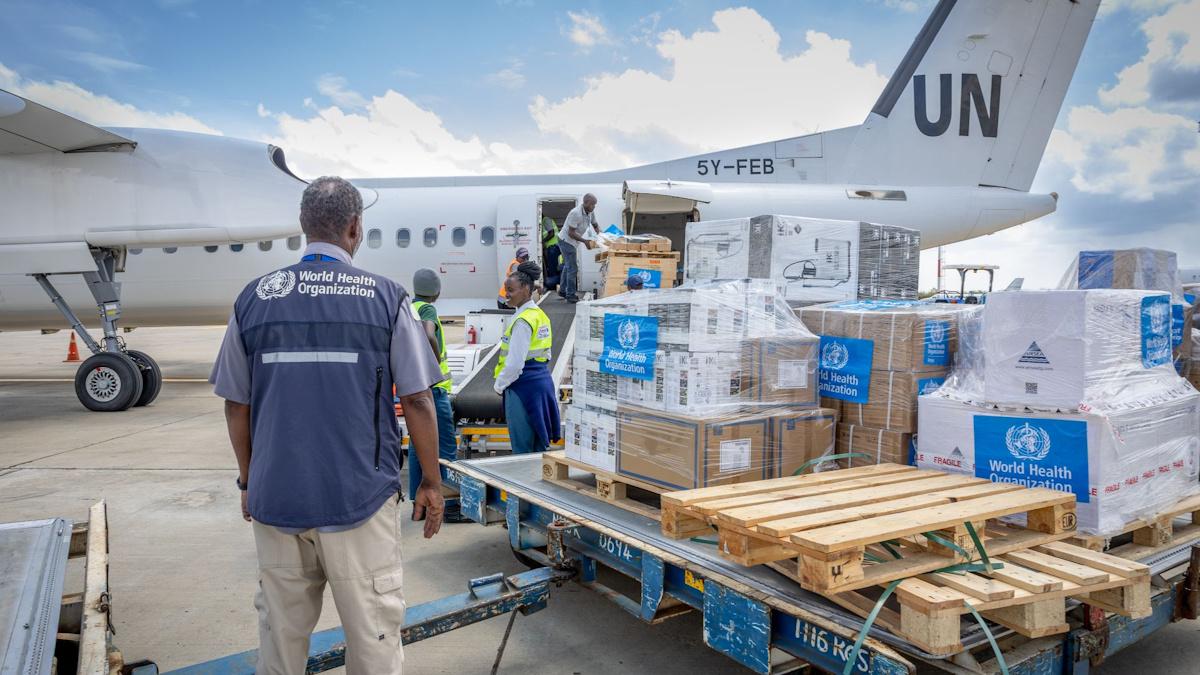
WHO mobilisation of emergency supplies to DRC for the Ebola outbreak in 2026.
The World Health Organization (WHO) has identified drugs from Regeneron, Mapp Bio, and Gilead Sciences that should be fast-tracked through clinical testing to respond to the current outbreak.
The UN health agency's independent experts have said Regeneron's maftivimab, Mapp's MBP134, and Gilead's remdesivir should be trialled in patients infected with the Bundibugyo form of Ebola currently infecting more than 1,000 people in the Democratic Republic of the Congo (DRC), with cases also reported in neighbouring Uganda.
At last count, the Bundibugyo outbreak had led to 10 confirmed deaths, with another 223 suspected, although the WHO has said it could be much larger as the virus is thought to have circulated undetected for some time. It has an estimated fatality rate of 24.6%, lower than the average of 50% observed across all Ebola outbreaks since the 1970s.
Regeneron said that maftivimab is the most potent of the three antibodies included in its already-approved Inmazeb Ebola therapy, adding that the WHO has recommended it be studied as a monotherapy in the current outbreak, and supplies are already available for that purpose.
Mapp's MBP134, meanwhile, is another antibody billed as a 'pan-Ebola' candidate designed to cover the four species that are known to infect humans.
Remdesivir, an antiviral, was an important part of the response to the COVID-19 pandemic, and the WHO would like to see trials of the drug as a monotherapy and in combination with the two antibodies.
Prophylaxis candidates
Turning to prevention, the WHO has identified Gilead's obeldesivir – a follow-up to remdesivir that has been shown in non-human primates to be protective against lethal Ebola infection – as its priority candidate for post-exposure prophylaxis.
For large-scale vaccination purposes, it has identified the single-dose rVSV Bundibugyo vaccine being developed by the International AIDS Vaccine Initiative (IAVI) and Oxford University/Serum Institute of India's ChAdOx1 Bundibugyo as the most promising candidates at the moment. However, both those vaccines need additional preclinical work to be carried out before they will be ready for human testing.
New vaccines are needed because the current shot pre-qualified by the WHO for use in Ebola outbreaks – MSD's Ervebo – targets the more common Zaire species and may not provide good protection against Bundibugyo. The WHO said this "should not be used outside carefully designed research settings, to allow for its performance against [Bundibugyo virus disease] to be assessed."
In its update, the agency said it is "working closely with the governments of the Democratic Republic of the Congo and Uganda to facilitate the implementation of research evaluation of these products."