Jemperli label extended to include rectal cancer
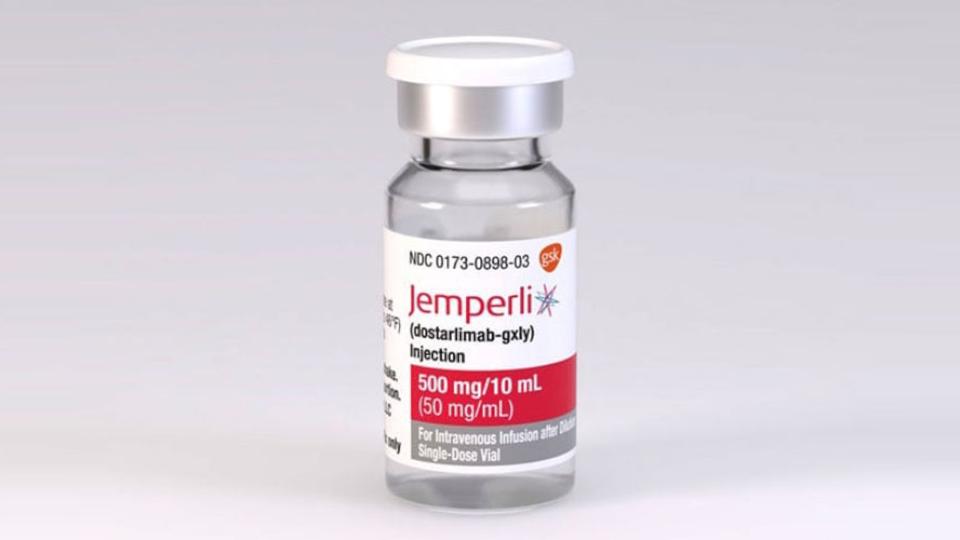
GSK's PD-1 inhibitor Jemperli has been cleared by the FDA as a pre-operative treatment for rectal cancer that can eliminate or delay the need for chemotherapy, radiotherapy, and surgery that can have a lasting impact on patients' daily lives.
The accelerated approval for Jemperli (dostarlimab) covers its use as a monotherapy in previously untreated stage II or stage III locally advanced rectal cancer that has mismatch repair deficient (dMMR) or microsatellite instability-high (MSI-H) mutations.
Rectal cancer affects around 730,000 people globally each year, with between 5% and 10% of patients having the dMMR/MSI-H subtype.
Current standard of treatment for these patients includes chemotherapy, radiation, and surgery, but these can have lasting consequences, including bowel, urinary, and sexual dysfunction, as well as secondary cancers and infertility, according to the FDA. In some cases, patients go on to need a permanent colostomy.
The approval stems from the results of the phase 2 AZUR-1 trial which, in an interim readout reported by GSK earlier this year, showed that Jemperli achieved a sustained clinical complete response rate of 47% at 12 months, with an overall response rate of 79%.
Moreover, 71% of the 154 treated patients needed no further treatment beyond Jemperli monotherapy while remaining free of disease progression, and no disease recurrences were reported among responders after a median follow-up of more than two years.
The full data is due to be presented at the ESMO cancer congress in Madrid, Spain, which gets underway later this week.
Jemperli is the first and only approved immunotherapy for adults in the US with MSI-H/dMMR locally advanced rectal cancer, according to GSK's chief scientific officer, Tony Wood.
"This approval offers a new treatment approach and represents an important step towards more personalised care for these patients," he said.
Jemperli was a late entrant into the PD-1/PD-L1 inhibitor category but has gathered momentum as a growth driver in GSK's oncology business thanks to a drip-feed of indications in endometrial cancer and dMMR/MSI-H solid tumours.
Sales rose by a third in the first half of the year to £480 million ($644 million), driven by some impressive survival data in endometrial cancer, and the new rectal cancer indication could help GSK reach its target of £2 billion-plus in peak sales. Around half of that is expected to come from indications in colorectal and head and neck cancer.
If achieved, that will help GSK reach its target of reaching over £40 billion in annual revenues by 2031.
Converting the accelerated approval in rectal cancer to a full approval will likely depend on the AZUR-2 study, which is comparing perioperative Jemperli, given before and after surgery, to the standard of care of surgery followed by watchful waiting or chemotherapy in dMMR/MSI-H rectal cancer. Results from that are due in 2028.
"People facing rectal cancer are often thinking not only about treating their disease, but also worrying about what life will look like afterwards," said Michael Sapienza, who leads the Colorectal Cancer Alliance, a patient organisation.
"The possibility of avoiding chemotherapy, radiation, and surgery represents a meaningful advance for patients and their families."