GSK to file Jemperli for rectal cancer after phase 3 readout
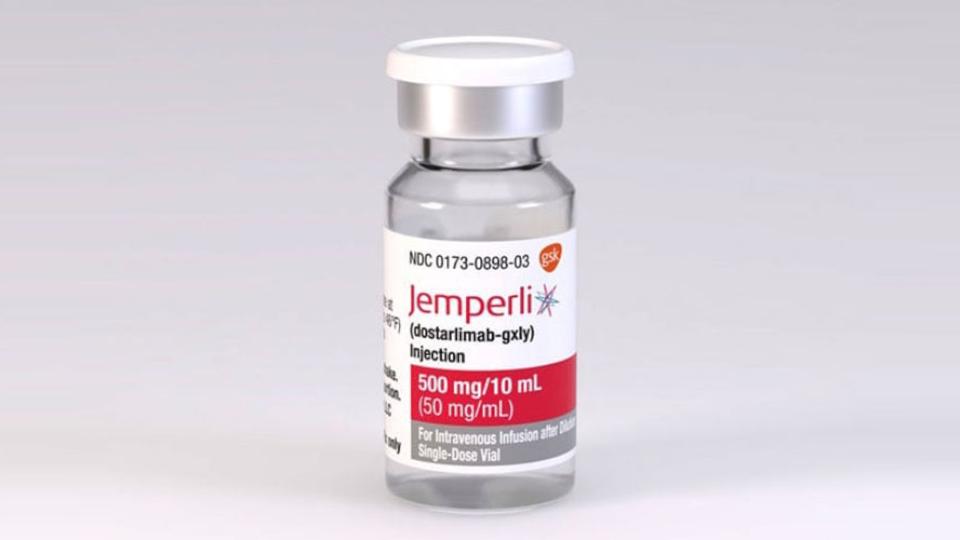
GSK's pivotal AZUR-1 trial of cancer immunotherapy Jemperli, as a way to delay or eliminate surgery in pre-operative rectal cancer, has delivered a positive result, setting up regulatory filings.
Interim results from the phase 2, single-arm study in patients with stage 2/3 mismatch repair deficient/microsatellite instability-high (dMMR/MSI-H) locally advanced rectal cancer met its primary objective, showing a meaningful and sustained clinical complete response rate at 12 months with PD-1 inhibitor Jemperli (dostarlimab) as a monotherapy.
The results position the drug as "the first immunotherapy capable of eliminating or delaying the need for chemotherapy, radiation and surgery for some patients in this population," said GSK, adding that it intends to share the results with health authorities, including the FDA. In the US, Jemperli has won an accelerated review for this indication.
Rectal cancer affects around 730,000 people globally each year, with between 5% and 10% of patients having the dMMR/MSI-H subtype.
The company's head of oncology R&D, Hesham Abdullah, said: "For many patients today, rectal cancer treatment comes with the tolerability burden and lasting impacts from chemotherapy, radiation and surgery. These data demonstrate that some patients may be able to avoid those interventions while remaining free of detectable signs of cancer."
Current treatment options can often be effective but can have a deleterious effect on patients' quality of life, for example, the lifelong need for a colostomy bag, physiological impairment, and infertility.
Jemperli was a fairly late entrant into the PD-1/PD-L1 inhibitor category but has steadily gathered momentum as a growth driver in GSK's oncology business, with sales rising 40% to £232 million ($310 million) in the first quarter of this year, thanks to new survival data in endometrial cancer.
The company has said that AZUR-1 – as part of a broader move into colorectal cancer for Jemperli – is a key inflexion point for the drug as it chases down its target of £2 billion-plus in peak sales of the drug.
Around half of that total is expected to come from endometrial cancer, where Jemperli is approved with chemotherapy for adults with primary advanced or recurrent tumours, with another £1 billion coming from colorectal and head and neck cancer.
GSK is also running AZUR-2, comparing perioperative Jemperli, given before and after surgery, to the standard of care of surgery followed by watchful waiting or chemotherapy in dMMR/MSI-H rectal cancer, which GSK has described as a "significantly higher opportunity."