CEPI puts $60m behind three Ebola vaccine candidates
The Coalition for Epidemic Preparedness Innovations (CEPI) has made $60 million available for clinical trials of vaccines for the Bundibugyo species of ebolavirus, with Moderna's mRNA candidate claiming $50 million of the fund.
Another $8.6 million is being made available to a vaccine being developed by the University of Oxford and Serum Institute of India, with $3.2 million earmarked for use by the International AIDS Vaccine Initiative (IAVI), which is also working on a candidate.
The announcement comes as the ongoing Bundibugyo outbreak, concentrated on the Democratic Republic of the Congo, has claimed a suspected 220 lives, out of around 1,100 cases, although, the International Rescue Committee (IRC) claims it may be more widespread than reported and could be the worst ever recorded.
Some infections have also been seen in neighbouring Uganda, which has identified one death and nine cases, while two suspected cases are being investigated in Brazil.
CEPI played a pivotal role in the hunt for vaccines against COVID-19, with Moderna's mRNA shot a key component of the pandemic response, so, it makes sense that the biotech will claim the lion's share of the fund as a proven technology that can deliver a candidate quickly.
The $50 million pot will go towards preclinical testing and phase 1 clinical trials, as well as simultaneous manufacturing of doses to enable large-scale phase 2/3 trials to begin immediately if initial human testing shows the candidate is safe and stimulates an effective immune response.
The University of Oxford's ChAdOx1 platform also proved its value in COVID-19, resulting in the AstraZeneca shot that was also widely used during the pandemic and distributed in many world markets by Serum Institute. The funding will cover preclinical testing and development activities for a ChAdOx1-derived Bundibugyo shot, as well as manufacturing for clinical trials and the creation of a master virus seed stock that can be used as the starting material for vaccine manufacturing.
IAVI's share will also be used to make a master virus seed stock and initiate testing of a candidate based on the same technology as is used in the current Zaire ebolavirus shot, using material originally developed at The University of Texas Medical Branch.
Last week, the WHO named the Oxford and IAVI candidates among several priority drug and vaccine candidates for clinical development against Bundibugyo.
"CEPI's investment in three promising Bundibugyo virus vaccine candidates is an important step forward in our collective response," said WHO Director General Tedros Adhanom Ghebreyesus.
"A Bundibugyo vaccine could help to control this epidemic and strengthen preparedness for future outbreaks," he added. "This is exactly the kind of cross-sectoral collaboration that epidemic response demands."
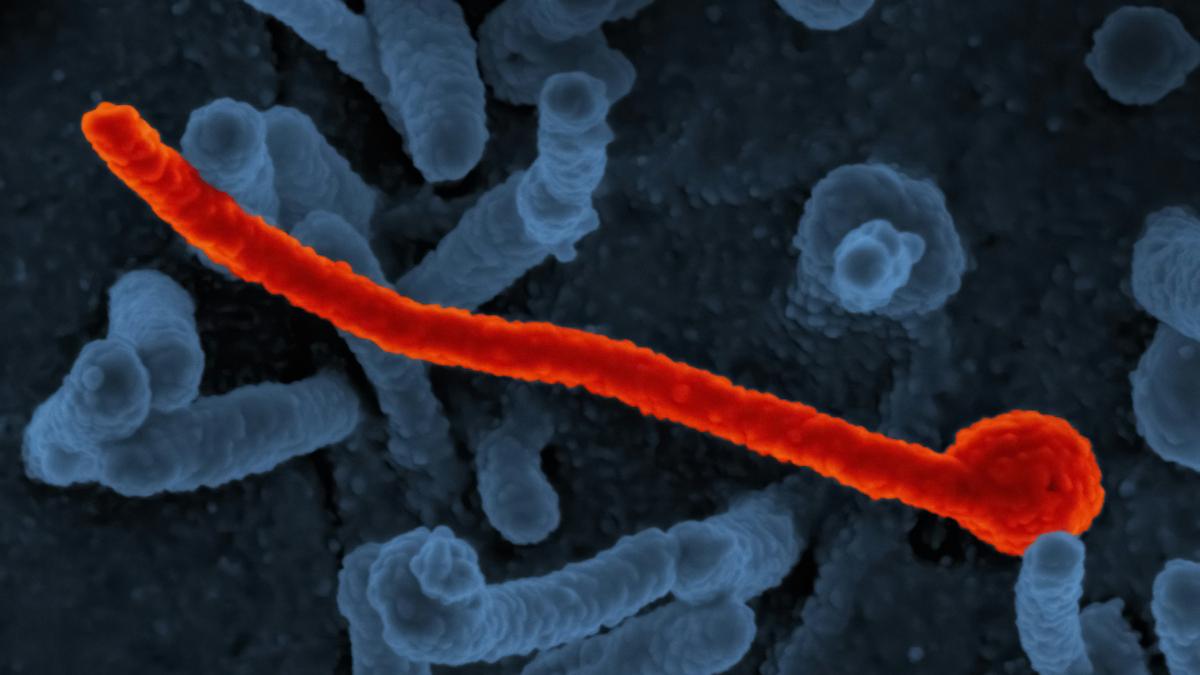
Photo by National Institute of Allergy and Infectious Diseases on Unsplash