Brukinsa data raises chemo-free hope for mantle cell lymphoma
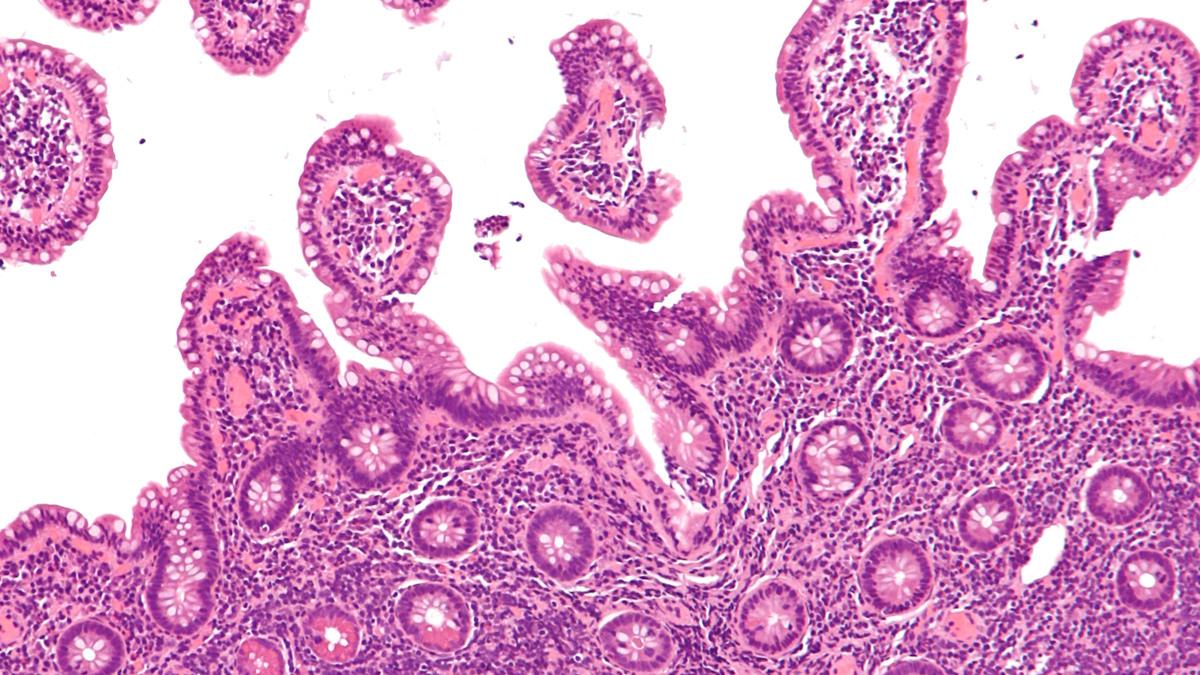
Intermediate magnification micrograph of mantle cell lymphoma of the terminal ileum.
Patients with newly diagnosed mantle cell lymphoma (MCL) could avoid chemotherapy with a regimen based on BeOne Medicines' Brukinsa and rituximab.
That is the conclusion of the MANGROVE trial, which compared oral BTK inhibitor Brukinsa (zanubrutinib) plus rituximab to chemoimmunotherapy with bendamustine plus rituximab in frontline MCL.
It is the first late-stage study to evaluate a BTK inhibitor-based chemotherapy-free regimen against standard chemoimmunotherapy in this setting, and showed that Brukinsa reduced the risk of disease progression or death by 43% – a result that BeOne said has "practice-changing potential." Data on overall survival (OS), a secondary endpoint, remains immature for now, but shows a "strong trend" in favour of the Brukinsa arm, according to the company.
If Brukinsa's label is extended to reflect the MANGROVE results, treatment-naïve MCL patients could avoid up to two years of infusions needed with the chemoimmunotherapy regimen, according to Amit Agarwal, BeOne's chief medical officer.
It could also spare older, frailer MCL patients from the gruelling side effects of chemo, such as nausea and vomiting, hair loss, and severe immune suppression.
"We believe it would be very meaningful for patients to be free from the burden of frequent infusions," said Agarwal. "This is what it means to state that Brukinsa is foundational: another study where it anchors frontline therapy and extends its leadership across B-cell malignancies."
To date, BTK inhibitors have been tested mainly as an addition to chemo in previously untreated MCL, rather than replacing it.
For example, AstraZeneca's Calquence (acalabrutinib) became the first drug in the class to be approved as a frontline option last year, in combination with bendamustine and rituximab, based on the results of the ECHO trial, which enrolled patients ineligible for autologous stem cell transplant (ASCT).
Johnson & Johnson's older BTK inhibitor Imbruvica (ibrutinib), meanwhile, has also expanded into first-line MCL as a combination with rituximab, cyclophosphamide, doxorubicin, vincristine and prednisolone (R-CHOP) in previously untreated MCL patients eligible for ASCT.
BeOne said it plans to file for approval for the new Brukinsa indication in the US and other markets later this year.
First approved in 2019 for MCL patients who have received at least one prior therapy, it has since had its label extended to include various lines of treatment across Waldenström's macroglobulinaemia (WM), marginal zone lymphoma (MZL), follicular lymphoma (FL), and chronic lymphocytic leukaemia (CLL), with sales rising 49% to $3.9 billion last year.
Another trial due to read out for Brukinsa in the coming months is the CELESTIAL-TNCLL study in previously untreated CLL, looking at an all-oral, chemo-free combination of the BTK inhibitor with BeOne's next-generation BCL2 inhibitor sonrotoclax.
Top image by Nephron via Wikipaedia – Own work, CC BY-SA 3.0