BMS shakes up R&D under CMO Cristian Massacesi
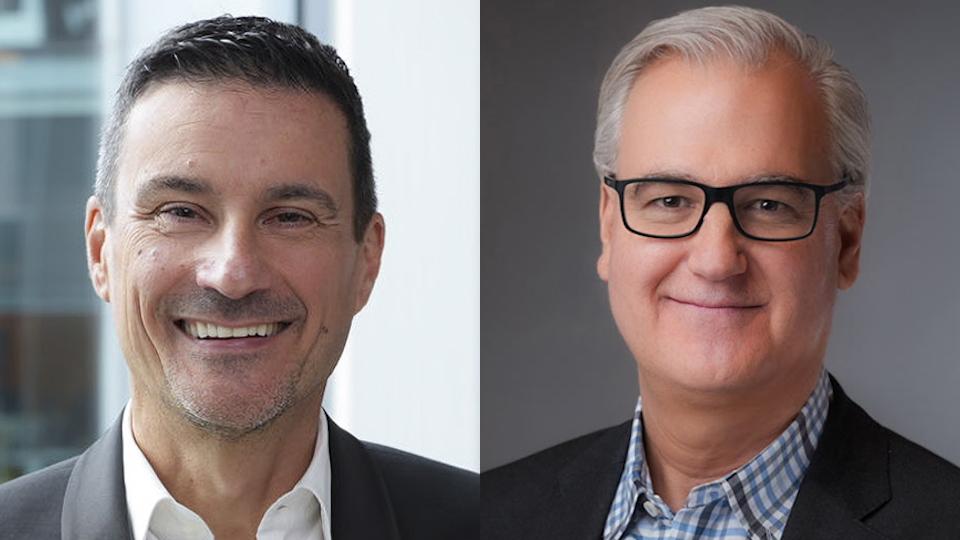
Cristian Massacesi (l) and Robert Plenge (r).
Bristol Myers Squibb is combining its R&D operations into a single unit that will be led by chief medical officer and head of development Cristian Massacesi and will also see the departure of chief research officer Robert Plenge.
The new structure will come into effect on 1st January, and Plenge has agreed to stay on in an advisory capacity until next March to help ease the transition to a unified organisation covering early discovery through late-stage clinical trials.
"Increasingly, traditional boundaries between research and development are collapsing," said BMS' chief executive, Christopher Boerner. "Under Cristian's leadership, this new structure will more closely connect our scientific and clinical expertise across R&D, accelerate decision-making, and ultimately enhance portfolio execution."
The shake-up comes at a time when BMS is viewed as having somewhat mixed prospects, with a strong set of late-stage projects and data readouts coming up that is offset by the threat of patent expirations for blockbuster products – including cancer immunotherapy Opdivo (nivolumab) and anticoagulant Eliquis (apixaban) – from around 2028 onwards.
There's no indication yet whether the restructuring will have an impact on staffing levels or facilities in BMS' R&D operations. Its main sites in the US include BMS' R&D headquarters in Lawrenceville, New Jersey, and others in Massachusetts and California, while its European sites are located in the UK, Switzerland, and Spain, and is also has facilities in India and China.
Massacesi's elevation to the top role comes just over a year after he joined BMS from AstraZeneca, where he spent four years as CMO for both AZ and its rare disease unit Alexion, and as chief development officer for oncology. Plenge, meanwhile, joined BMS via the $74 billion takeover of Celgene in 2019, and became CRO in 2023.
"This is an exciting time at BMS, with immense scientific potential and an important opportunity to deliver on the promise of our pipeline while building what comes next," said Massacesi.
"Our R&D teams are advancing exceptional science, and uniting them as one team will enable us to translate our most promising discoveries into medicines for patients with greater speed and focus."
BMS' top pipeline prospects include Johnson & Johnson-partnered Eliquis successor milvexian – currently playing catch-up with Bayer's already-approved Sunharbo (asundexian) in the oral Factor XIa inhibitor class – as well as BioNTech-sourced pumitamig for non-small cell lung cancer and its CELmoDs portfolio for multiple myeloma, led by recently-approved Zenbexus (iberdomide) and late-stage candidate mezigdomide.