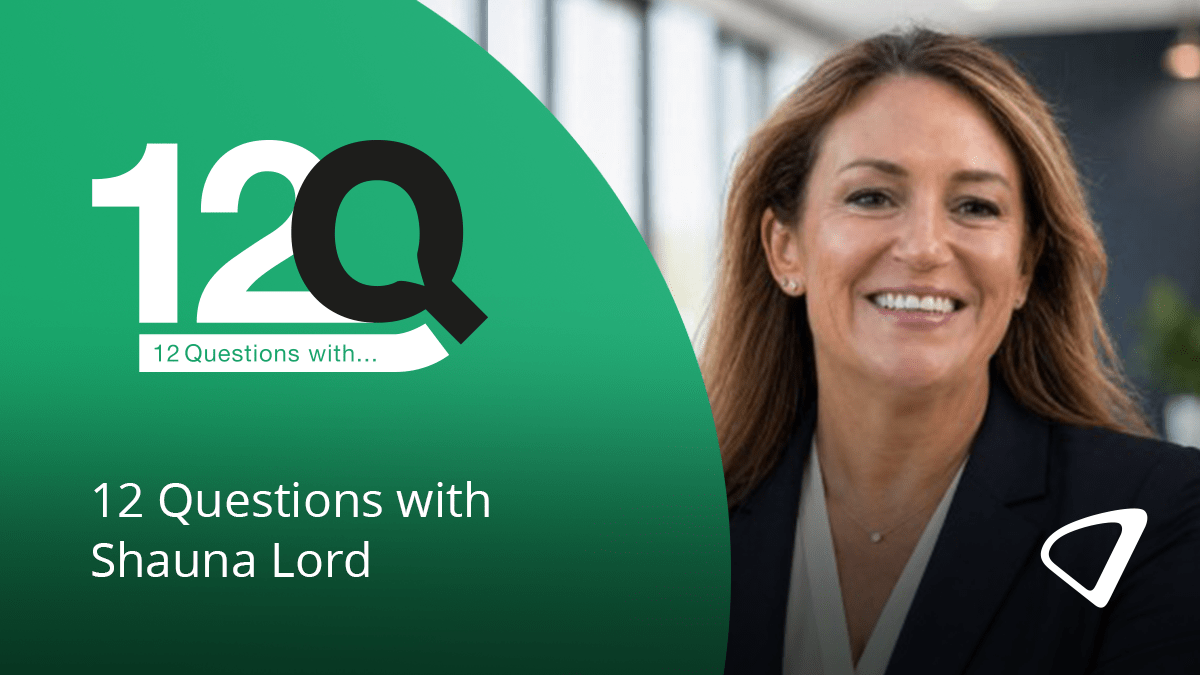
12 Questions with Shauna Lord
This article was funded and written by GSK.
Shauna Lord recently joined GSK as Business Unit Head Specialty (UK Commercial) to lead the Specialty business in the UK, which brings together the company’s respiratory and hepatology capabilities to accelerate patient access to transformational treatments. Lord’s focus is on delivering integrated evidence and access strategies that ensure the right patients can receive the right therapies at the right time.
What’s your background prior to this role and how did it prepare you for the work you do now? Over my career, I’ve learned that working in oncology is both an honour and a responsibility: an honour because the work can change lives, and responsibility because patients and families depend on us to get it right. I’ve worked across science, clinical development, and market organisations - aligning evidence, access, and supply in global and market contexts. What keeps me steady is a clear set of values (put patients first, act with integrity, and be accountable for impact), a genuine passion for improving outcomes, and a commitment to lead through complexity with empathy and rigour. That means asking hard questions, testing assumptions, and making pragmatic choices that balance scientific promise with real world access. At the end of the day, I measure success by whether therapies reach patients sooner and improve lives.
What is your proudest professional accomplishment to date? Rather than a single moment, I’ve been fortunate to build a rewarding career in oncology to date, working with brilliant cross-functional teams to turn scientific promise into patient access. Mostly focused on new launches, I’ve helped design evidence packages that answer payer and clinician questions, negotiated access pathways, and ensured market-level operational readiness. That work brings both privilege and pressure, but grounding decisions in patient impact, integrity, and collaboration has produced measurable outcomes. The collective impact and the teams I partnered with are my proudest achievements.
What motivates you about working in pharma? What really motivates me is the combination of patient impact and strategic delivery. I get energised by taking great science and turning it into a clear value story that clinicians, payers, and patients can understand. That means building the right evidence, designing access pathways, and aligning commercial, medical, and market access colleagues to remove barriers to uptake. I lead with outcomes in mind - whether that’s uptake, adherence, or improved quality of life - and I measure success by the lives we enable and the impact we can have, not just numbers on a dashboard. Keeping decisions ethical and patient-centred, while also ensuring commercial sustainability, is what makes the role rewarding day to day.
What is your personal mission statement? What values keep you centred in your work? My mission is to translate scientific promise into timely patient access. I’m guided by patient benefit, integrity, curiosity, and collaboration - and I believe it’s the collective focus and expertise of cross-functional teams that delivers this. I lead by listening, setting clear shared goals, removing barriers, and empowering people with the autonomy and development they need to deliver measurable clinical and commercial impact.
What are your biggest short-term goals for this year and next year? Having joined GSK recently, I’m excited to be part of a talented, ambitious team. Over the next 12-24 months, my goals are simple and aligned: deliver outstanding respiratory and hepatology launches, create a culture of learning and development, and unlock our people’s potential to scale patient impact.
What are the most important professional skills in your work and how do you hone them? In my current role, the essential skills are strategic commercial thinking, people leadership, disciplined execution, stakeholder influence, and patient‑centred decision‑making. I believe I maintain and continue to develop them through regular market and performance reviews, focused coaching and development 1:1s, a tight weekly execution rhythm with data‑driven KPIs, and close partnership with cross‑functional colleagues to ensure our decisions are well‑considered, compliant, and deliver patient impact.
If you could change one thing about the pharma industry, what would it be? As a company, we continually work to embed the patient perspective throughout the entire lifecycle of a medicine - from discovery and development through to real-world use. Engaging closely with patient organisations and learning directly from lived experiences helps ensure that what we develop is meaningful, relevant, and truly responsive to patient needs.
There is an opportunity to build further on this by integrating patient insights more systematically and earlier in decision-making, strengthening the use of real-world evidence, and ensuring continuous feedback loops once medicines are in use. Keeping patients at the centre at every stage is essential to delivering better outcomes and is fundamental to the success of any modern life sciences company.
In your opinion, what has changed most about the industry since the start of your career? The industry has evolved significantly over my 25-year career, but the biggest change (outside of transformational shifts with science) is the move to data- and digital-first decision-making. We now rely on real-world evidence, advanced analytics, and omnichannel engagement to shape strategy, measure impact, and personalise customer and patient journeys - so, digital capability, data literacy, and strong cross functional partnerships are now more impactful in turning insights into action.
What do you think pharma will look like in 15 years? 50 years? In 15 years, I envisage pharma will be even more data- and AI-driven with decentralised, adaptive trials, scalable personalised therapies and outcomes-based access. In 50 years, I hope we’ll routinely prevent and cure disease and deliver therapies as integrated product-service bundles - meaning commercial success will depend on partnerships and rigorous evidence of long-term impact.
What advice would you give to a young person starting out in your field? Be curious, ask clear questions, do the right thing, and work with purpose - they help you learn, find opportunities, protect you, patients, and data, and focus on what matters. As the field evolves, get comfortable with data and AI.
What are your hobbies? What do you do in your free time? I’m a mum of two teenage boys, so family time with them and my husband is my top priority. I am a regular gym-goer, however, if there’s a free weekend or school break, we love to travel. I often go back to Ireland to see my wider family. I have a close circle of friends and siblings, and just spending time with them always leaves me feeling very content.
What’s the best film or TV show you’ve watched in the last year? I’ve rewatched Succession several times - I’m a terrible channel-surfer otherwise. It’s brilliantly written and acted, darkly funny and full of twists, but what really draws me in is how it’s a masterclass in organisational politics and family dynamics. It offers sharp lessons on power, leadership, loyalties, and integrity. Brillant series - and I will probably watch again!
Do you have any pets, what are their names and what are they like? Six years ago, I finally gave in to the kids’ pleas to get a dog. Monty, our cockapoo, bounced into our family during COVID and has remained the best, most joyful addition to our home. He’s loving, affectionate, and endlessly playful; greeting everyone with the nearest shoe or toy he can find. He’s the best companion, and a great reminder to slow down, be present, and take walks!
Connect with Shauna Lord on LinkedIn
NP-GB-NA-ABST-260001, May 2026