ASCO 26: Three cancer survivors share lessons for the field
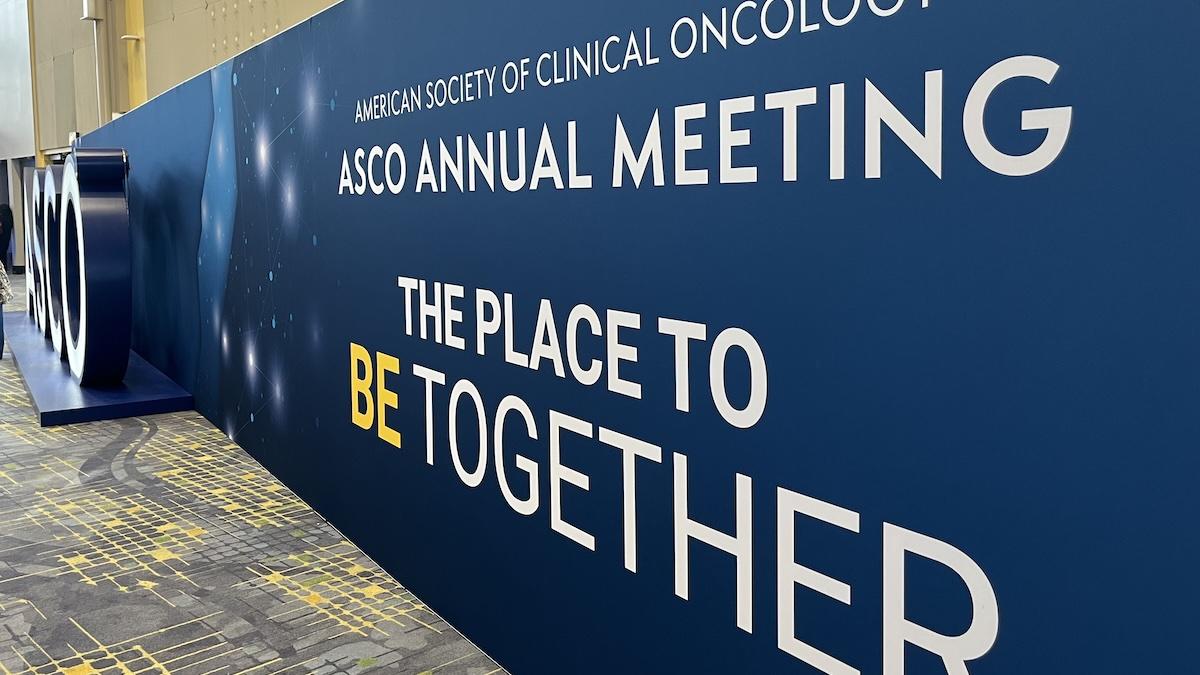
Yesterday was National Cancer Survivors’ Day. At ASCO in Chicago last week, three cancer survivors shared parts of their stories during the ASCO Voices session on Friday. Each of them spoke about lessons they learned through diagnosis and treatment and out on the other side of survivorship – and shared lessons caregivers can learn to improve cancer care for future patients.
Megan Claire-Chase: Clinical trial inclusion is life or death
Megan Claire-Chase, a breast cancer survivor and patient advocate, spoke about her experience as a woman of colour whose cancer didn’t present in the ways her physicians expected.
“It turns out I had these symptoms and these side effects and things that my doctors had never seen before in a patient,” she said. “So when a doctor tells you 'Oh my gosh, you're outside of my expertise. I know longer know what to do for you'. First of all, I respect that. But also, that's too scary.”
Claire-Chase had grown up in Black communities where clinical trials were rightly distrusted because of historical precedents like the Tuskegee syphilis study. But her experience made her realise the consequences of those insufficiently representative trials.
“That's when I started to think about clinical trials differently,” she said. “I mean, what do you do when treatment works on paper but your body didn't get the memo? Wasn't even a footnote? My perspective changed and I really started to think 'Wow. Clinical trials are not the enemy. That lack of representation is.’”
To secure that representation, investigators have a lot of work to do to support traditionally excluded communities and make sure all kinds of people have the opportunity to be part of studies.
“Representation is not just about checking a box,” she said. “It is about building systems that are safe, effective, and more importantly have broader eligibility criteria. … At the end of the day, patients like me, we deserve to be part of the trials. We deserve to have treatments that work in our bodies too.”
Jenna Benn Shersher: Treating the whole person means making space for creative expression
Jenna Benn Shersher, the founder of Twist Out Cancer, started a blog after being diagnosed with the rare disease gray zone lymphoma at the age of 29.
“Initially this blog was a place for me to share just updates about what was going on -- the diagnosis, the treatment plan,” she said. “But then it turned into something very different. It turned into my primary coping mechanism. It was a place where I could process and really open up my innermost thoughts and feelings, my vulnerabilities, my deepest fears, my hopes and dreams.”
It wasn’t just the writing but the community she found through the writing that led her to start her organisation. Now Twist Out Cancer runs a programme called “Brushes with Cancer” where artists are paired with people dealing with cancer.
“Over a period of six months, the inspirations open up about their grief, their identity shifts, their fear, and their resilience, and the artist creates a work of art that's reflective of that journey,” Shersher explained.
The mission is to help patients find their voice and to promote whole-person healing.
“Cancer is not only biological,” she said. “It's emotional. It's psychological. It's relational. And art and storytelling create a language for these moments.”
Boluwatife Adeola Aofolaju: The end of treatment isn’t the end of the story
Nigeria-based Boluwatife Adeola Aofolaju wasn’t able to attend ASCO in person, but shared her story via a video. Aofolaju is a brain tumour survivor, scientist, and advocate for paediatric cancer patients.
She spoke about the impact of brain fog, mental lapses, hormonal changes and more after her cancer was officially in remission.
“I had survived. But for me that was when a different journey began: A quieter journey, much more difficult than the treatment that I went through. An even more confusing journey, the journey that no one had really prepared me for,” she said. “I was fighting battles that no one could see. And one of the hardest parts for me in all of this was that everybody expected me to just go back to normal, go back to the life that I was living before I got my diagnosis.”
Aofolaju advocates for support structures for patients like her.
“For me, there was no structured support. There was no guidance on how to deal with the emotional weight that came with surviving cancer,” she said. “My hope is that as we continue to improve cancer care, we remember that survival is not the end of the journey. There's life after survival, because beyond the scan there is a life that still needs care. There's a life that still needs support. There's a life that still needs a lot of understanding.”