Cancer patients don’t care where the breakthrough happened. They care that it reaches them.

National Cancer Survivors’ Day highlighted decades of progress against cancer, but oncology faces a new challenge: with cancer innovation becoming increasingly global, patients need faster pathways to breakthrough treatments, regardless of where they are developed.
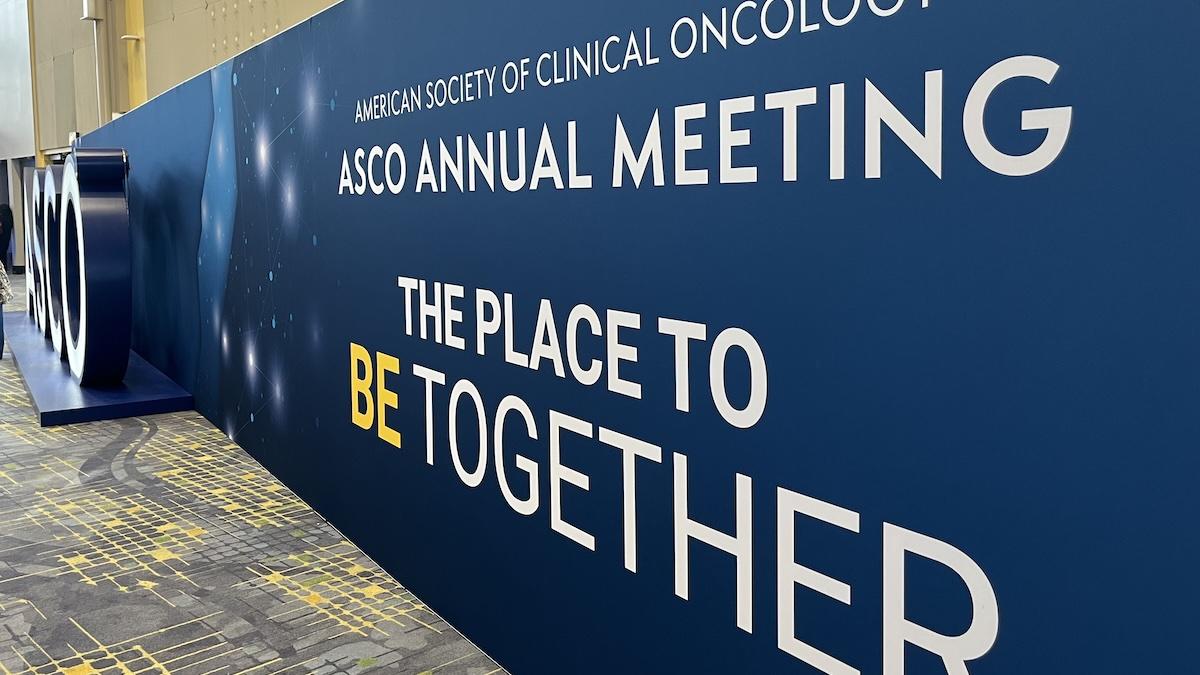
At the end of May, I asked what ASCO 2026 would reveal about oncology's new global map. In the wake of National Cancer Survivors’ Day, that question feels particularly relevant. The progress celebrated by survivors ultimately depends on a steady flow of new innovation reaching patients. As ever, ASCO showcased a cancer community delivering on that promise. It also revealed how oncology’s centre of gravity is shifting.
For the first time in the meeting’s six-decade history, a China-developed cancer medicine was presented in the ASCO Plenary Session, the few slots reserved each year for the most significant breakthroughs in global oncology. Ivonescimab, a first-in-class bispecific antibody from Akeso and Summit Therapeutics, cut the risk of death by 34% against the standard of care in first-line squamous lung cancer. The trial was designed, run, and analysed in China.
That fact crystallises a decade-long shift, and surfaces a harder question, one the US regulatory and medical bodies is now confronting. If the medical science is increasingly generated outside the United States, on what basis should it reach American patients?
A fair question, asked loudly
Policymakers and regulators are already examining how healthcare systems can maintain rigorous evidentiary standards while ensuring patients benefit from innovation as quickly as possible. Earlier this year, a Senate HELP Committee white paper on FDA modernisation highlighted the challenge of accelerating access without compromising confidence in the evidence underpinning regulatory decisions.
If the policy challenge is difficult, the science adds another layer. Populations are never identical. In 2022, the FDA declined to approve the PD-1 inhibitor sintilimab following review of a trial conducted solely in China, concluding that the data had limited applicability to the US patient population. The issue wasn’t the quality of the science itself. It was whether results generated in one healthcare setting could be confidently extrapolated to another.
The instinct to demand a full set of domestic data for every foreign medicine is understandable. It is also the regulatory equivalent of redesigning every car at the border. It buys reassurance at the cost of speed, and patients pay the difference in time.
And so, as oncology innovation becomes increasingly global, the challenge is determining when population differences are significant enough to change the clinical conclusion.
The biology is real, but narrower than the rhetoric
Pharmacogenomics tells us that allele frequencies for key drug-metabolising enzymes vary between populations, and those variations can matter for dosing and safety in certain drug classes. But two facts temper the headline. For many oncology agents, human efficacy and safety signals travel across ethnic borders far more reliably than preclinical data ever did, and the variants that matter most are often uncommon. Further, the United States is itself among the most genetically diverse countries on earth; any medicine that works across the American population is already working across enormous variation. The question is not whether two populations are identical, which they never are, but whether the difference is large enough to change the clinical conclusion. That is empirical, and the tools to answer it already exist.
The crosswalk already has a blueprint
Regulators have spent two decades building the machinery to let evidence travel between populations without starting from zero. Bridging studies, formalised under the ICH E5 framework, test whether foreign data extends to a new region by confirming consistency of efficacy, safety, and pharmacokinetics, rather than repeating the full registrational trial. Where an overseas Phase III has already shown a survival benefit, a US bridging study can often confirm it using a faster endpoint such as response rate, rather than waiting years for survival data to mature again. Initiatives like Project Orbis, which allows concurrent review across international regulators, show the FDA already operating as part of a connected global system, rather than a sealed national one.
The opportunity is not to choose between global and locally-generated data. It is to build a fast, rigorous crosswalk between them, so a genuine breakthrough is neither waved through without scrutiny nor trapped behind years of duplicative trials while patients wait.
Why US infrastructure remains a critical advantage
This is where America’s existing strengths become particularly valuable. Few countries can match the depth of US clinical research infrastructure: a national network of academic comprehensive cancer centres, the publicly funded trial networks that reach patients in their own communities across thousands of sites, and the large community-based research organisations that extend first-in-human studies far beyond the major cities. Together, they run a substantial share of the world’s earliest-phase oncology trials and have contributed to the development of most cancer therapies that the FDA has approved in the past decade. Infrastructure like that is not a barrier to global innovation. It is the fastest, most credible way to validate it for American patients, turning the United States from a country that simply receives or rejects global science into one that can confirm and adopt the best of it faster than anyone else.
The original argument was that the firms leading the next decade will be those that adopt a more adaptive model, connecting discovery, communications, market access, and physician engagement in real time. The data question is the same argument in another register. Translating evidence across populations is a coordination challenge as much as a regulatory one. It needs clinical, regulatory, real-world evidence, and commercial teams working from a shared view the moment a promising overseas readout appears, not eighteen months later. The organisations that connect those dots in real time, increasingly enabled by AI and shared data, will move a validated medicine from an ASCO plenary stage in Chicago to a patient in Minneapolis in a fraction of the time their competitors take.
The real opportunity
The questions being raised here are important. Biology matters. Local evidence matters. Scientific rigour matters. But so does ensuring that patients benefit from meaningful innovation as quickly as possible. The opportunity is not to choose between global and local evidence, but to create efficient pathways that connect them.
Oncology innovation has gone global. The cancer patients waiting for new medicines do not care where the breakthrough happened. They care how quickly it reaches them. The next leaders in this field will be the ones who build the bridge that turns global innovation into timely patient access, and in doing so help create the next generation of cancer survivors.
About the author

Claire Gillis is CEO of VML Health, a global health communications network. She is a scientist, health economist, entrepreneur, and business leader, with an academic foundation in pharmacology. Her campaigning for health equity has awarded her The Women in Marketing Leadership Award for contributions to Health and Wellness and she has also been included in the HERoes women role model lists from Yahoo Finance.