12 Questions with Julia Jakl
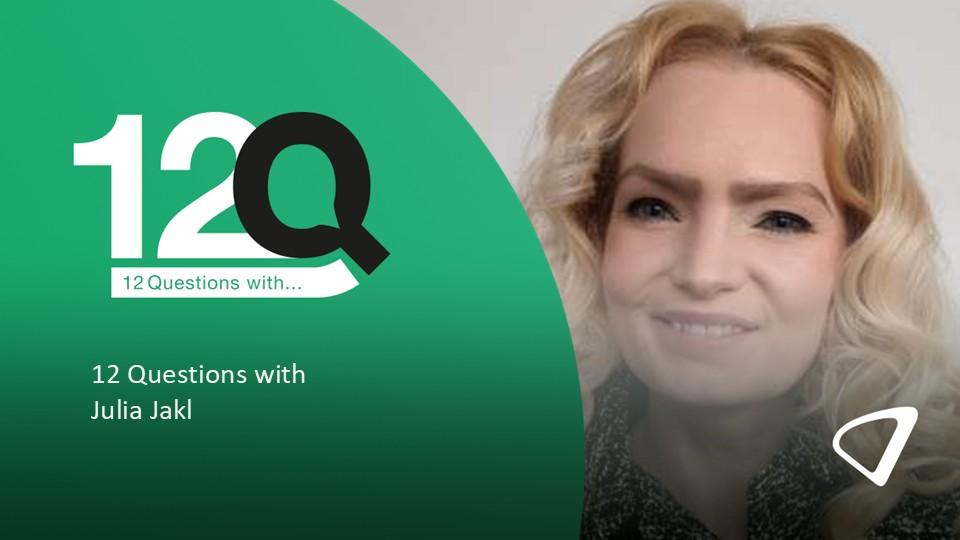
Julia Jakl is VP and Business Unit Head, Oncology UK at GSK. With more than a decade of experience across oncology and haematology, she has held leadership roles in Austria, the UK, and global headquarters, including building and leading oncology and haematology businesses and supporting the launch of innovative medicines across multiple tumour types. Jakl holds a PhD in Molecular Biology from the Medical University of Vienna.
What are the main responsibilities of your current role? It has been an incredible opportunity to be appointed as the VP Business Unit Head of Oncology at GSK UK. My primary responsibility is to ensure that people living with cancer can benefit from the latest scientific advances and innovative therapies. A key part of that is working closely with our very talented cross-functional teams to bring these medicines to patients. Many of our colleagues have first-hand experience of treating and caring for those affected by cancer, which brings a valuable perspective to the work we do. Equally, I see my role as fostering a culture of collaboration, inclusion, and continuous development, enabling people to thrive and deliver meaningful impact.
What was your background prior to this role, and how did it prepare you for the work you do now? My career in healthcare began more than a decade ago in oncology, an area I have remained passionate about throughout my career. Since then, I have held a variety of commercial and leadership roles across global, regional, and local markets, working with healthcare professionals, policymakers, and multidisciplinary teams to improve access to innovative treatments. Having worked across both solid tumours and haematological cancers, I have developed a broad understanding of the evolving oncology landscape. This experience has given me stronger appreciation of the importance of partnership, and a patient-centred approach in driving meaningful progress in cancer care.
What is your proudest professional accomplishment to date? It is really hard to pinpoint one accomplishment. I have been fortunate to contribute to the launch of several cancer therapies across complex healthcare systems globally. Just as importantly, I am proud of the people I have helped develop along the way. Seeing colleagues I have coached and mentored step into leadership roles and achieve more than they thought possible is incredibly rewarding.
What are some of your biggest ongoing challenges in your work? One of the biggest challenges we continue to face is ensuring scientific innovation reaches people living with cancer where they are, and as quickly as possible. While the pace of innovation continues to accelerate, integrating these advances into routine clinical practice within the NHS can be more challenging, especially in oncology, where modalities are more complicated. A key priority for GSK is working closely with all stakeholders, particularly the NHS, to help create conditions where medicines are available in a timely manner, but also, crucially, preparing healthcare systems to be ready to administer the next generation of innovative therapies and provide the required surrounding care.
What motivates you about working in pharma? What continues to motivate me is the opportunity to make tangible differences in people’s lives. More than a decade into my career, that sense of purpose remains strong as ever. Cancer touches so many people, either directly or through someone they love, and I have personally seen that impact. I am also motivated by the pace of scientific progress we are seeing; we are entering an exciting era of personalised medicine, where treatments are increasingly tailored to an individual’s genetic profile, enhancing our ability to develop more precise, targeted treatments.
What are your biggest short-term goals for this year and next? I have three key priorities. First, ensuring that eligible patients can benefit from the innovative medicines we have available today. Second, preparing for the next wave of oncology innovation by supporting the development and launch readiness of our expanding pipeline, including opportunities in lung and gastrointestinal cancers. Third, continuing to work in partnership with the NHS and wider healthcare community to help ensure healthcare systems are ready to adopt new advances in cancer care.
What are your biggest long-term goals for five years or ten years from now? I have joined GSK at a particularly exciting point in its journey. After selling much of its oncology portfolio in 2015, GSK has been steadily rebuilding its presence in oncology, initially in gynaecological cancers, but more recently expanding into haematology and other tumour types. Today, we have an exciting pipeline, and over the next few years we want to build on that momentum and establish GSK as a strong presence in oncology. As a UK head-quartered company, another goal is to continue our commitment to supporting NHS England and the wider life sciences ecosystem through investment in local clinical trials and working with all stakeholders to improve access to innovative medicines, including the provision of surrounding care.
What do you see as the biggest challenges facing the industry right now? One of the biggest challenges facing the industry right now is keeping pace with the rapid evolution of innovation. Our understanding of cancer has significantly changed in recent years, leading to more targeted approaches to care. While this creates tremendous opportunities for those living with cancer, it raises expectations around how quickly they translate into meaningful improvements. As an industry, we need to continue investing in R&D to ensure we realise the full potential of these advances.
If you could change one thing about the pharma industry, what would it be? I would like to see the pharmaceutical industry collaborate more effectively across the healthcare ecosystem. As innovation becomes increasingly complex, delivering the best outcomes for patients requires more than medicines alone. It depends on strong partnerships across research, diagnostics, healthcare delivery, and patient care to ensure innovation can be translated into real-world impact.
What are your hobbies? What do you do in your free time? Outside work, I enjoy riding my horse and exploring remote parts of the world. Time spent in nature, whether at home or travelling, allows me to switch off, recharge, and reconnect with wildlife and the natural world.
What is your all-time favourite book? It would probably be George Orwell’s 1984. I have come back to it at different stages of my life and think it’s a book that resonates differently depending on what you are experiencing. What I find particularly compelling is its reminder of the importance of critical thinking, taking individual accountability, and being willing to challenge assumptions.
If you could have any job other than the one you have now, what would you choose? I honestly think I would have ended up on the same pathway or doing something quite similar to what I am doing now. I’ve always wanted to do work that has a meaningful impact, and that’s certainly what drew me to oncology. Over the years, working in this field has been incredibly rewarding, and I feel fortunate to be able to contribute to something that can make such a difference to people’s lives.
Connect with Julia Jakl on LinkedIn
NP-GB-NA-BRF-260013