UK first in Europe to clear Boehringer's IPF drug Jascayd
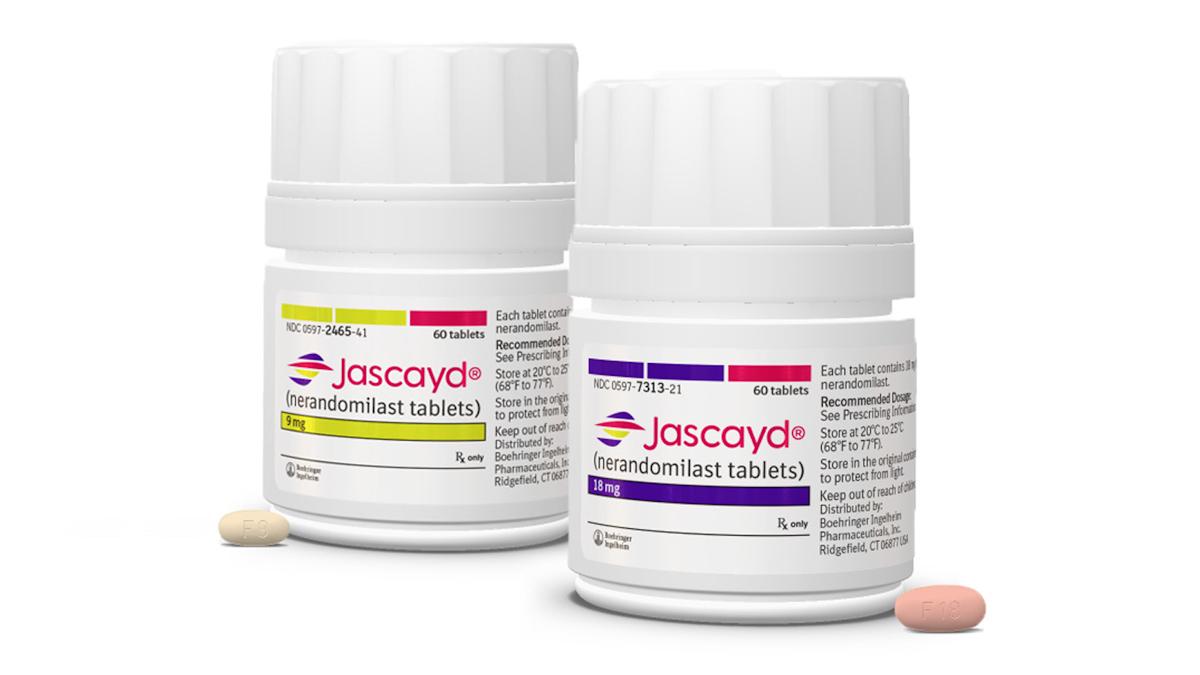
Boehringer Ingelheim has the first European approval for its new idiopathic pulmonary fibrosis (IPF) therapy, Jascayd, after the UK's MHRA gave a green light to the drug.
Phosphodiesterase (PDE) 4B inhibitor Jascayd (nerandomilast) has been cleared as a twice-daily, oral therapy for adults with IPF as well as progressive pulmonary fibrosis (PPF), an umbrella term for diseases caused by progressive scarring to the lungs.
It is the first new treatment approved in the UK for IPF – a disease that has a five-year survival rate of around 46%, comparable to some cancers – in more than a decade. More than 5,000 people in the UK die each year from IPF, which represents around one in 100 deaths nationwide.
First-in-class Jascayd is a successor to Boehringer's blockbuster kinase inhibitor Ofev (nintedanib), which is one of the most widely used antifibrotic therapies for IPF alongside Roche's rival Esbriet (pirfenidone).
The new drug is designed to address more aspects of the disease – combining antifibrotic activity with immunomodulatory and vascular effects – whilst avoiding the side effects seen with Ofev and Esbriet. In particular, the two older drugs are associated with gastrointestinal side effects that lead to a fairly high rate of treatment discontinuation.
The MHRA approval comes a few months after Jascayd was approved in the US, and stems from the FIBRONEER-IPF and FIBRONEER-ILD trials, which showed that Jascayd treatment was associated with a slower decline in lung function – measured by forced vital capacity or FVC – compared to placebo over 52 weeks of follow-up.
Moreover, combined data from the two studies showed a 59% reduction in the risk of death versus placebo in patients who received the recommended 18 mg twice-daily dose of Jascayd as a monotherapy, which approached but did not quite meet the threshold for statistical significance.
Now, attention turns to reimbursement authority NICE, which is carrying out an appraisal of Jascayd to see if its use for IPF and PPF by the NHS is cost-effective. Boehringer said it expects guidance to be published in September.
"Progress toward this new treatment option will be welcomed by people living with pulmonary fibrosis," said Daniel Saxton, chief executive of the patient charity Action for Pulmonary Fibrosis (APF).
"For a condition where there have been very limited therapies for many years, developments like this represent an important step forward," he added. "Early diagnosis and referral to specialist care will also remain essential so people have the best possible chance to benefit from treatments that can help slow disease progression."