Boehringer, Brainomix plan new trial of lung fibrosis AI
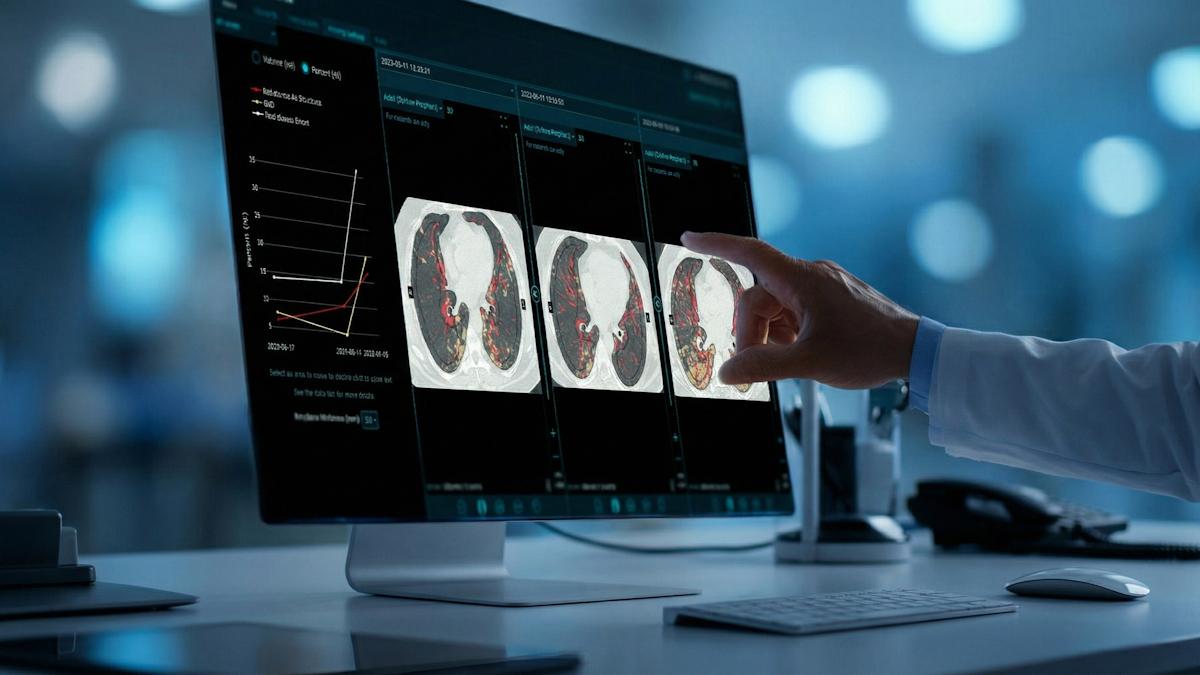
Boehringer Ingelheim's alliance with digital health company Brainomix on an AI-enabled tool for diagnosing interstitial lung diseases (ILDs) has been broadened with a large-scale, prospective clinical trial.
The two companies have been working together since 2024 on applying Brainomix's e-Lung software in a real-world setting to assist in the diagnosis of ILDs such as progressive pulmonary fibrosis, and are scheduled to present the findings of the retrospective REVISE-PPF study at the American Thoracic Society (ATS) conference later this week.
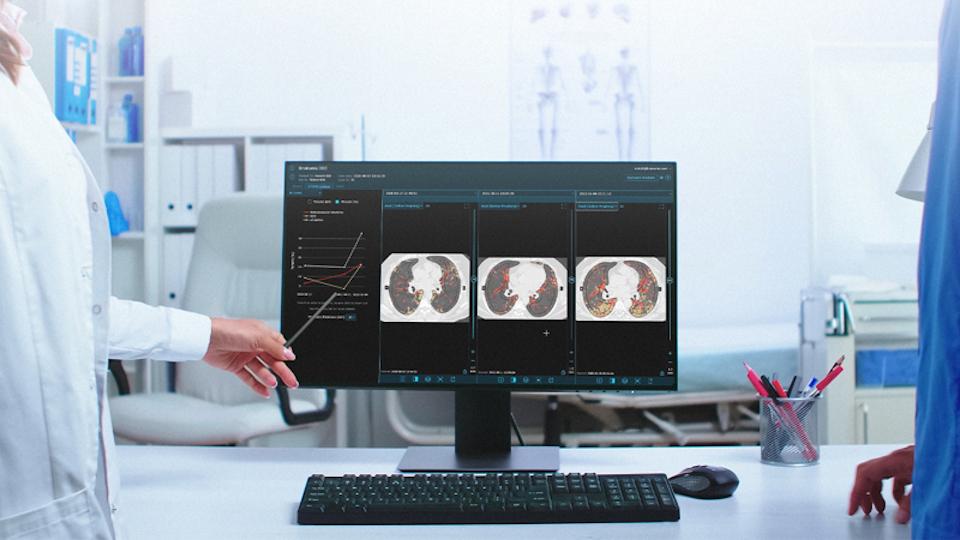
In REVISE-PPF, e-Lung was used to look for subtle changes that are indicative of ILDs on historical CT scans, seeing how well the digital tool was able to predict the results of conventional clinical assessments, with results suggesting it could shorten PPF diagnosis times by more than two years.
Now, Boehringer and Brainomix will see if they can reproduce that success in the prospective PROGRESS-PPF study, which will be conducted at multiple pulmonary care sites in the US and will put e-Lung through its paces as part of the ongoing care of patients as they progress through the health system.
The aim is to evaluate whether the routine use of the FDA-approved software can support earlier clinical diagnosis of PPF, enabling treatment to begin sooner and, hopefully, improving patient outcomes.
If left untreated, patients with PPF can have a lifespan as short as five years from diagnosis, but it can be hard to distinguish the disease from other respiratory conditions. Early diagnosis and intervention can play a major role in identifying patients who may benefit from drug treatment.
Boehringer sells one of the first drug treatments specifically used to treat idiopathic pulmonary fibrosis (IPF) and progressive ILDs – Ofev (nintedanib) – and last year secured FDA approval for a new therapy, Jascayd (nerandomilast), in both IPF and PPF.
"The evidence generated to date for e-Lung is highly compelling, showing the technology has the potential to accelerate diagnosis by more than two years," said Dr Michalis Papadakis, chief executive and co-founder of Brainomix.
"This next phase will enable us to evaluate that potential at scale, providing robust real-world validation of what we expect could be a transformative advancement in the patient care pathway," he added.
e-Lung has also been used as a tool to assist in the clinical development of new therapies. For example, it was deployed in a phase 2 trial of AstraZeneca's anti-IL13 antibody tralokinumab to track IPF progress over time, although, the study failed to show efficacy for the antibody.