Novo taps Anthropic's Claude AI for drug discovery

Novo has added Anthropic's Claude to its drug discovery toolkit, shortly after the tech firm revealed a new AI workbench for researchers that can be used to bring new medicines to patients more quickly.
Under the terms of the alliance, Novo – now rebranded from Novo Nordisk – will use Anthropic models and recently-launched Claude Science to "advance scientific reasoning for […] R&D and agentic software engineering."
The companies said they will jointly address key drug discovery challenges identified by scientists and computational teams at Novo, and develop solutions for specific scientific challenges, as well as workflows, to support biological reasoning. Novo has already used Claude to create NovoScribe, a tool that can generate clinical study reports (CSRs) in minutes, rather than months.
Novo chief executive Mike Doustdar, who is in the midst of a major turnaround effort at the Danish group as it struggles to maintain market share in its core diabetes and obesity categories, said the aim is to make it "the world's most AI-driven healthcare company, building on Novo's current AI initiatives with other technology partners."
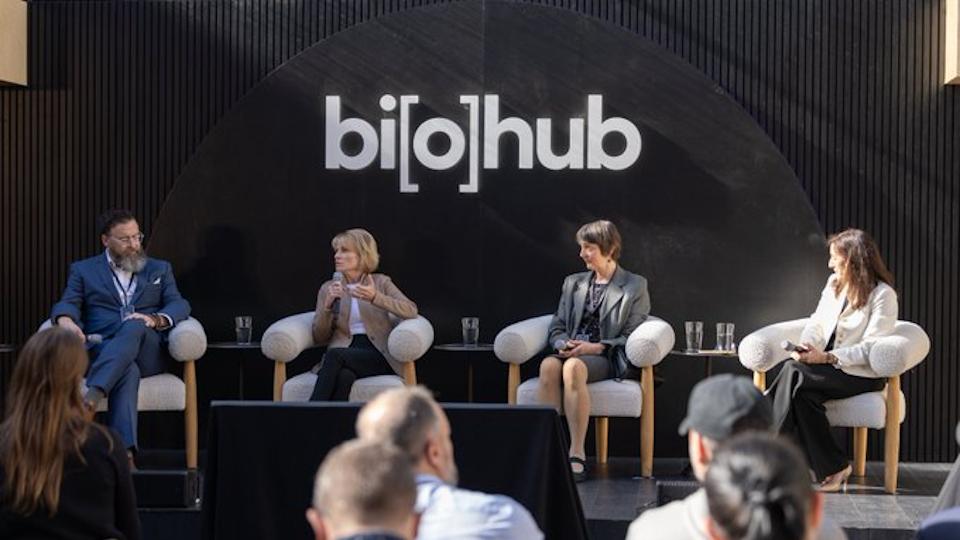
Those partnerships and initiatives include the creation of a London AI hub in collaboration with Amazon Web Services (AWS) that will use AI tools such as Amazon Bio Discovery and Amazon Bedrock to identify drug targets, design new medicines, and connect genomic, imaging, and clinical data.
Novo is also working with OpenAI to introduce AI across its internal processes, from drug discovery to commercial, and with NVIDIA on customised generative AI (GenAI) models for early research and clinical development.
"AI can help us increase productivity in R&D and compress the path from research to marketed product," said Doustdar. "But beyond this, AI tools can also offer completely new scientific opportunities and aid reasoning and understanding of human biology and drug mechanics."
The pharma industry is accelerating its adoption of AI technologies in an attempt to boost R&D productivity, which has been plagued by inefficiencies that have raised the cost of bringing a new medicine to market for decades.
"By giving leading researchers access to safe, capable, and trusted frontier models, we can shorten research timelines, improve outcomes, and discover medicines and treatments that significantly improve human life," claimed Dario Amodei, CEO of Anthropic.
Industry's embracing of AI comes as tech companies are starting to issue warnings about the safety of the technology, amid reports that some AI agents are starting to converse with each other in dialects that are hard for humans to understand and monitor, collude to bypass guardrails on their capabilities, and break out of test environments to execute their own tasks and modify their own models.
Photo by Omar Lopez-Rincon on Unsplash