AI, Content, & Commercial Transformation: Veeva Commercial Summit 2026
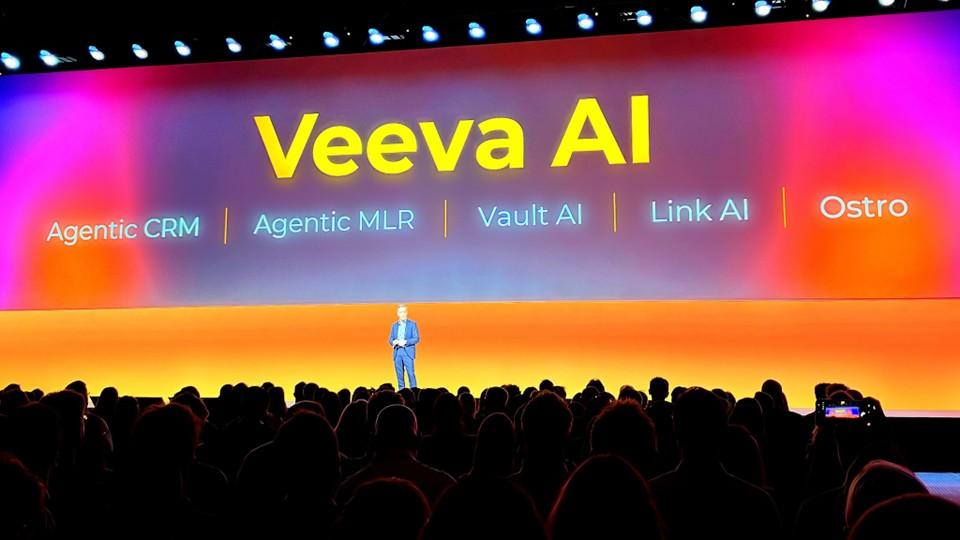
On Wednesday 11th November, Veeva Commercial Summit kicked off its first appearance in a new location, swapping the familiar warmth of sunny Madrid, Spain, for a more drizzly and atmospheric Copenhagen, Denmark.
It was, as Chris Moore, Veeva Europe President, remarked, “ Less vitamin D, and more hygge.”
Contrasting the rather gloomy skies outside the venue, Moore opened the two-day event with a warm message of optimism, and a vision of a new “golden age” for life sciences. Thanks to the work of dedicated teams and organisations, he said, diseases that were once thought to be incurable now have viable treatments making their way to patients around the world. At the same time, artificial intelligence (AI) has moved from promising prospect to practical reality for life sciences companies.
Now, Moore said, the goal is to find ways to use this technology to “make a difference”, and help get vital treatments to patients faster. This notion of speed would become a central theme of this year’s summit.
Reflecting on Veeva's own evolution over nearly two decades, Moore outlined three priorities for the years ahead: continuing to build out the company's industry cloud, strengthening connections across the life sciences ecosystem, and delivering compliant, industry-specific AI solutions.
While they may be on the ambitious side of innovation, these priorities will underpin the growing breadth of Veeva's platform, which now spans four clouds, 15 suites and more than 60 applications across development, quality, commercial, and data functions. Unsurprisingly, AI was a recurring theme here. Moore spotlighted a suite of emerging capabilities, including Agentic CRM, Agentic MLR, Vault AI, and Link AI, which are designed to surface insights and improve engagement with healthcare professionals and patients. And as Moore prepared to pass the mic on to our next speaker, he left us with a clear message to take away from Copenhagen: technology is not the biggest barrier to realising this new golden age of life sciences; outdated systems are.
Inside the agentic launch
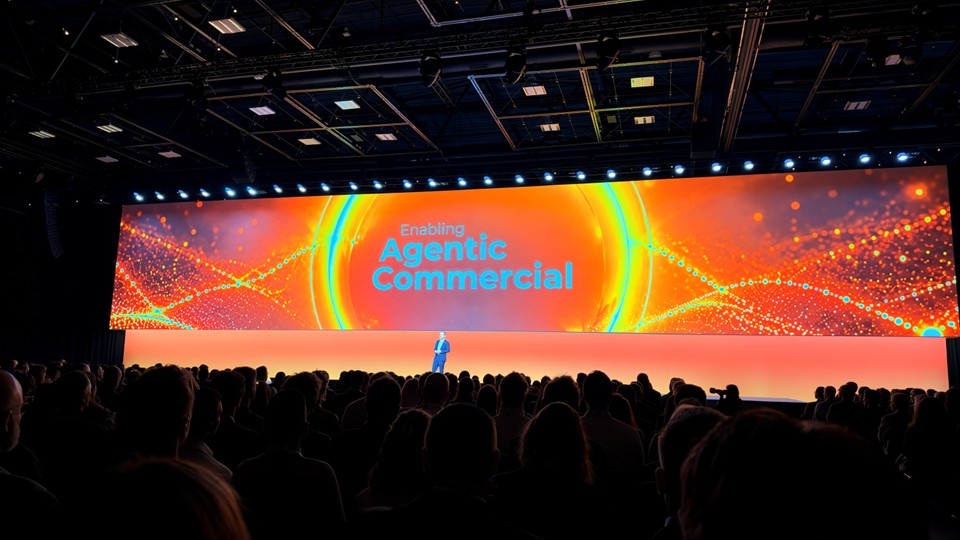
Arno Sosna, President of CRM suite, opened his keynote with a stark reminder that "this industry lives and dies by product launches", arguing that despite years of investment and preparation, 58% of drug launches still fail to meet expectations. Even successful products can take five to seven years to reach peak sales.
That, he argued, is where AI could become a genuine turning point for industry.
In introducing Veeva's vision of the "agentic launch", Sosna painted a picture of a future in which AI could be used to help companies achieve higher peak sales 10% faster than through traditional launch approaches. By his own admission, it is a bold claim. But it underpins what Veeva sees as the next evolution of commercial execution.
For Sosna, successful launches depend on three key ingredients. Commercial, medical, and marketing teams must work as one. Digital, field, and agentic channels also need to operate in harmony. And perhaps most importantly, organisations must be able to capture meaningful commercial evidence as it emerges in the real world.
"Siloes do not work," he told attendees.
Much of the session focused on how conversational AI is making that possible. Sosna reflected on CRM's long-standing image problem, admitting that many users have, in the past, viewed the technology as little more than a compliance requirement or data-entry tool. AI, particularly conversational AI, is changing that perception. Instead of simply storing information, CRM can now act more like a companion. Users can query data through natural language, access relevant medical and commercial content instantly, and prepare for customer interactions through a far more intuitive interface.
The most impactful development, however, may be happening in the field. Sosna described how ambient AI can listen to conversations, generate transcripts, populate call reports, and flag compliance issues automatically, reducing, or even eliminating, much of the manual administration that has traditionally distracted field teams from customer engagement.
The result is a stream of real-time commercial evidence. According to Sosna, 65% of agentic call reports are now uncovering treatment barriers and other insights that would previously have remained hidden. This means that potential commercialisation issues, such as formulary challenges, unanswered questions, content gaps, and prescribing obstacles, can all be identified far earlier, as teams have a much clearer picture of what is happening during a launch.
"You're no longer flying blind," he said.
Fixing content's compliance bottleneck
Of course, powering the type of agentic CRM described by Sosna requires content – and lots of it. This was the focus for our next speaker, Emma Highland VP Strategy, Commercial Content.
"We need to talk about content," she said as she took to the stage. It was a fitting introduction to a discussion centred on one of the industry's biggest pain points: getting content approved and into the market quickly enough to keep pace with an increasingly dynamic commercial environment.
The challenge is a familiar one. Content volumes continue to grow, while medical, legal, and regulatory (MLR) teams face mounting demands on their time. Hyland was keen to acknowledge the importance of that work. After all, she explained, these teams play a critical role in protecting patient safety, maintaining compliance, and safeguarding the industry's reputation. However, she also spotlighted an uncomfortable truth for the industry: the process many organisations rely on today was never designed for the speed and scale of an agentic launch.
As commercial teams gain access to real-time insights about what's resonating with customers and where messaging needs to evolve, the pressure is on to act quickly. "All that agility means nothing if your content sits in review for weeks," Hyland told attendees.
Her answer is agentic MLR.
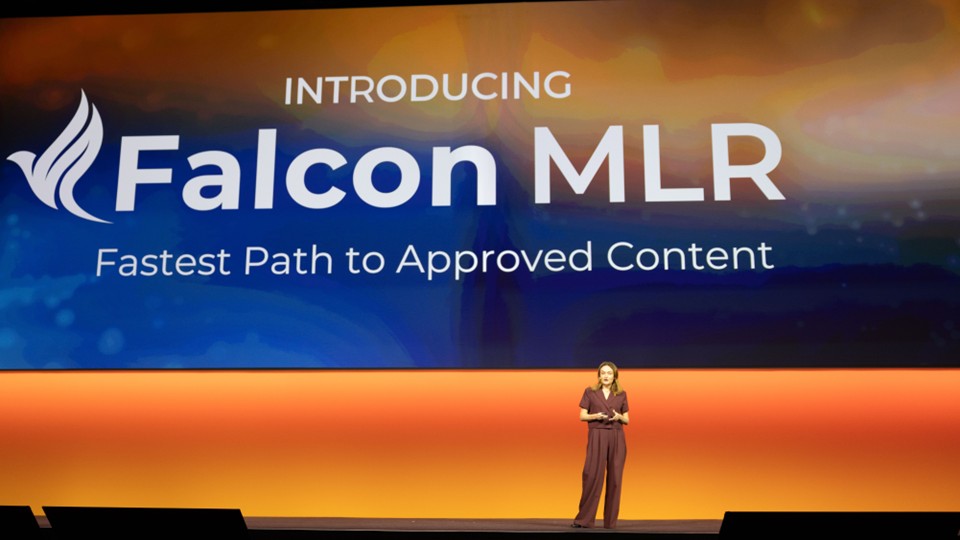
Introducing Falcon MLR, Veeva's AI-powered review platform, Hyland described a future in which AI acts less like a piece of software and more like an expert colleague, helping teams identify issues earlier, reduce repetitive review work and accelerate the path to approval.
The opportunity, she argued, starts long before formal review. By embedding AI further upstream in content creation, organisations can catch potential compliance issues earlier and create materials that are more likely to move smoothly through the approval process. According to Hyland, more than 10 biopharma companies are already using Falcon MLR in this way, with some reporting approval timelines shrinking from months to weeks, and even from weeks to days.
But the longer-term vision goes further still. She explained how, rather than simply highlighting potential issues, future versions of the technology could execute on recommendations and move approved content through workflows automatically. It's an ambitious goal, and one that will require organisations to rethink processes as well as technology.
Turning every question into insight
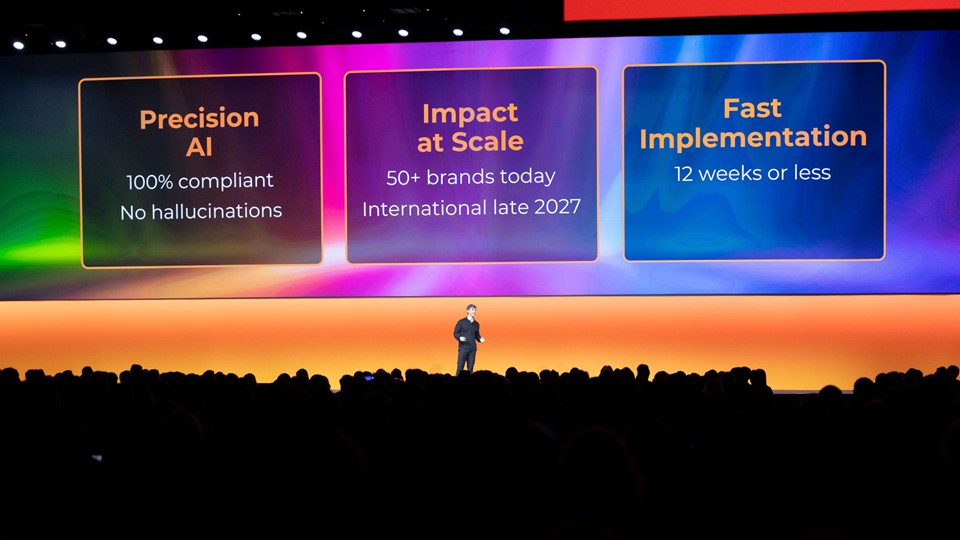
Despite all the discussion around launches, content, and commercial execution, Chase Feiger, CEO of Veeva Ostro, brought the conversation back to the people at the centre of it all: patients and healthcare professionals.
Drawing on his own experience as a doctor, Feiger argued that finding and understanding information about treatment options remains unnecessarily difficult for both HCPs and patients. Brand websites are often packed with dense, highly technical content that can easily overwhelm users when they are looking for straightforward answers.
"We have a moral obligation to patients and HCPs to fix this experience," he told attendees.
According to Feiger, 60% of healthcare professionals feel overwhelmed by digital pharma engagement, while the vast majority of patients struggle to fully understand branded healthcare content. At a time when people increasingly expect information to be delivered through intuitive, conversational interfaces, he questioned why access to potentially life-changing treatment information should feel more complicated than using everyday consumer technology.
That challenge led to the creation of Ostro's conversational AI platform, which aims to provide instant, compliant responses to patient and clinician questions while eliminating the hallucination risks associated with general-purpose AI models. Rather than forcing users to navigate lengthy websites or submit cumbersome information requests, the platform enables them to ask questions naturally, access referenced source material, and continue exploring related topics through guided recommendations.
For Feiger, however, the value extends beyond simply improving the user experience.
Every interaction creates a clearer picture of the information people are searching for, the questions they cannot answer themselves, and the gaps that still exist within a brand's content ecosystem. Those insights can then inform future content development, help field teams better understand customer needs, and support more meaningful engagement when representatives meet with healthcare professionals.
The company's early pilots within medical affairs have produced similarly encouraging results. Instead of waiting days for responses through traditional medical information request channels, healthcare professionals can receive answers immediately through a conversational interface, while medical science liaisons gain greater visibility into emerging questions and areas of interest.
The vision Feiger outlined was ultimately a simple one: make trusted medical information easier to access. In doing so, organisations can not only improve the experience for patients and clinicians, but also gain a richer understanding of the questions, concerns and unmet needs that shape treatment decisions.