AI can give drug hunters more answers. The real advantage is asking deeper questions.

This article was funded and written by UCB UK & Ireland.
IE-OT-2600109
November 2026
Drug discovery has never suffered from a shortage of interesting science. The harder problem is deciding which science has the potential to become a medicine.
That distinction matters as artificial intelligence (AI) becomes increasingly embedded in research. AI can interrogate large datasets, identify patterns difficult for scientists to see unaided, help generate hypotheses, and support the design and assessment of potential therapeutic molecules.
These are significant capabilities. But they do not change a fundamental reality of drug discovery: biology is extraordinarily complex, and our understanding of it remains incomplete.
So, perhaps the most useful question is not whether AI can make drug discovery faster. It is whether it can help scientists learn quicker and make better decisions from what they learn.
Drug discovery is a problem of uncertainty
At the beginning of a discovery programme, we start with a lot of questions. Is the biology causally involved in disease, rather than merely associated with it? Is the target tractable? Will intervening in it produce the effect we expect? Can we create a molecule capable of meaningfully testing that hypothesis?
None of these questions can be answered simply by accumulating more information. Indeed, our capacity to generate data can exceed our ability to determine which data actually matters.
Drug discovery is therefore, at its heart, an exercise in learning. The objective is not to remove uncertainty – that is impossible – but progressively to identify it, test it, and reduce it sufficiently to make the next decision.
This is where AI could be particularly valuable. Scientists now work across genomic and genetic data, imaging, structural biology, molecular data, disease models, and clinical observations. Whilst not fully replacing experimentation, AI offers new ways to find relationships across that complexity, explore hypotheses, and help scientists recognise signals that warrant investigation.
More answers make judgement more important
As technology increases the number of hypotheses we can generate and analyses we can perform, scientific judgement becomes more important.
An algorithm can identify a correlation, but it cannot, by itself, establish that the correlation represents biology worth pursuing as a medicine.
Scientists still have to determine what evidence would falsify a hypothesis, recognise when a compelling result may be an artefact, and decide which uncertainty matters enough to resolve.
They also need to recognise when the evidence is telling them to stop.
Sometimes the right decision is to terminate a project because its underlying hypothesis no longer withstands scrutiny, which ultimately allows scientific effort to move elsewhere.
AI may give us more ways to interrogate a hypothesis, but it does not absolve us of the responsibility to challenge it. As computational outputs become more convincing, scientists may need to become more demanding about evidence, not less.
The science has to matter to the person who receives it
Drug discovery begins with science, but its purpose is to address an unmet need.
We cannot judge an opportunity solely by the strength of a biological signal, novelty of a target, or our ability to design a molecule against it. We also need to ask more questions: Who could benefit from this science? What is missing from their current care? What would meaningful benefit look like? And does the biology give us a credible way of getting there?
Those questions should influence discovery choices early. Being able to identify more targets or design more potential molecules does not tell us which opportunities matter most.
A disease may have existing treatments and still carry substantial unmet need. People may experience inadequate disease control, treatment burden, side effects, loss of function, or aspects of their condition that current medicines do not address. By understanding those gaps, we can help determine which mechanisms are worth investigating, the characteristics we seek in a potential medicine and what we, and the patients we are hoping to serve, consider a meaningful outcome.
Collaboration expands what is possible
Translating advances in AI into meaningful benefits for patients requires us to think not only about the science we pursue, but also how we work together to advance it. This is reflected in UCB's participation in the Federated AI Therapeutic Engineering (FAITE) consortium, where pharmaceutical companies are exploring how federated and active learning can improve predictions of biologic properties while protecting proprietary data. By enabling collaboration across the industry, the ambition is to accelerate scientific learning and ultimately improve our ability across the sector to develop medicines that make a meaningful difference to patients.
Alongside these broader collaborations, advancing individual scientific questions increasingly requires bringing together the right expertise, as no single discipline can provide all the capabilities needed. One example is UCB's Digital Antibody Research Collaboration (DARC) with the University of Southampton, bringing together UCB's expertise in drug discovery and digital antibody development with the University of Southampton's capabilities in computational chemistry, molecular simulation, and computational methodology to advance computational antibody design.
Whether collaborating across industry or bringing together complementary expertise, the opportunity is to learn more than we could in isolation. But making the most of that opportunity requires careful scientific judgement, as the difficult questions sit at the interfaces: whether the biological question has been framed appropriately for the model; whether the data is sufficient to support the inference being made; and what it means when a computational prediction fails experimentally. A discrepancy may expose a weakness in the model, but it may equally reveal an assumption about the biology that needs to be reconsidered.
AI therefore makes collaboration and integration of expertise more important, not less. Its value depends not only on the sophistication of an algorithm, but on the quality of the scientific reasoning around it – the questions scientists pose, the evidence they use to challenge its outputs, and what they choose to investigate when prediction and biology diverge.
Better tools should raise the standard of the science
AI will undoubtedly become more capable; models will improve, datasets will grow, and the boundary between computational and experimental research will continue to blur.
But perhaps the more consequential change will be subtler.
These technologies should help scientists spend less effort navigating information and more effort interrogating what it means.
That requires responsible use, including understanding where data comes from, recognising the limitations and biases of models, testing predictions experimentally, and remaining willing to change direction when reality contradicts the model.
It also means resisting a temptation that accompanies every powerful technology: mistaking what has become possible for what is worth doing.
For a drug hunter, the test is more demanding. Does this help us understand disease better? Does it change the quality of the experiment we can design? Does it improve a decision? And does that decision give us a better opportunity to pursue science capable of addressing a meaningful unmet need?
The objective is not a discovery process in which the machine is always right. It is one in which we can find out that we are wrong sooner, understand why, and ask a better question next.
AI can expand what scientists are capable of seeing. What ultimately matters is what we choose to pursue with that knowledge.
About the author
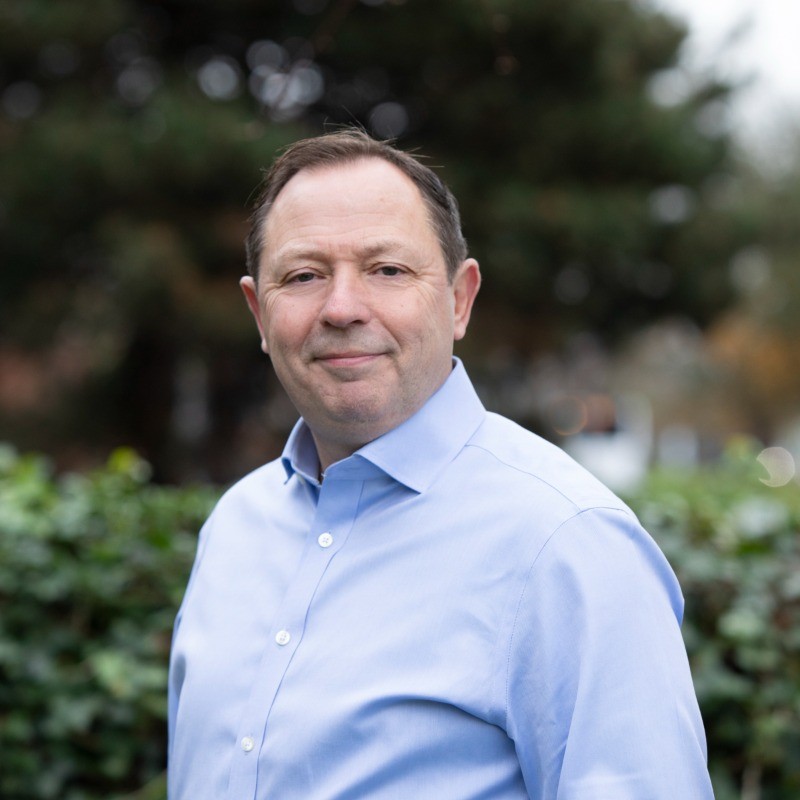 Dr Stevan Shaw is SVP Head of UK Research and UK R&D Site Head at UCB. Dr Shaw is a leading immunologist with more than 30 years of experience at UCB, where he has played a pivotal role in the development of many of the antibody-based therapeutics developed at the company’s UK research campus. Dr Shaw joined UCB, via Celltech, as an immunology research graduate and completed his PhD in Immunology, focused on lymphocyte biology, at Imperial College London while working for the company. Over the past three decades, Dr Shaw has held various research roles within UCB, including some time in the US working in immunology target discovery, as head of preclinical pharmacology and head of immunology research in the UK. Today, Dr Shaw is responsible for UCB’s pre-clinical strategy and science for the research portfolio, focussed primarily on discovery of therapies for severe immunological conditions. He holds several patents and has published many peer-reviewed papers.
About UCB

UCB, Brussels, Belgium is a global biopharmaceutical company focused on the discovery and development of innovative medicines and solutions to transform the lives of people living with severe diseases of the immune system or of the central nervous system. With more than 9,000 people in approximately 40 countries, the company generated revenue of € 7.7 billion in 2025. UCB is listed on Euronext Brussels (symbol: UCB). The UK is one of three global R&D hubs. Follow us on LinkedIn @UCB UK or at https://www.ucbpharma.co.uk