Moderna shows in vivo CAR-T hand in R&D update
At its latest R&D update, Moderna revealed a move into the pioneering in vivo CAR-T category, adding another treatment class to its R&D capabilities.
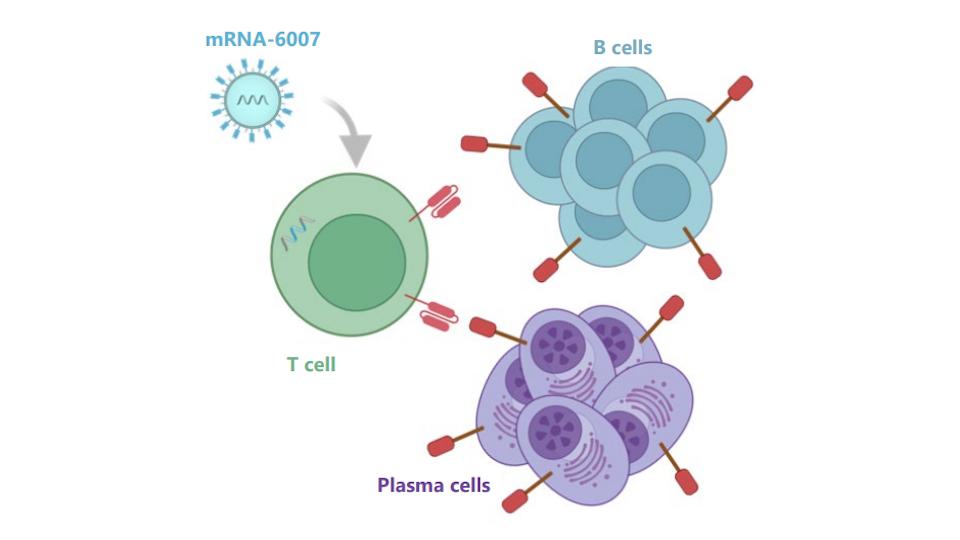
It has nominated a lead candidate in the in vivo CAR-T programme, codenamed mRNA-6007, which is designed to deplete B-cells in autoimmune diseases and will be developed in the first instance for systemic lupus erythematosus (SLE).
In vivo CAR-T is making waves because, unlike the ex vivo CAR-T therapies that have revolutionised the treatment of some blood cancers, they don't require the costly and lengthy process of harvesting, modifying, and cultivating patients' own cells. They also avoid the need for patients to undergo aggressive lymphodepletion therapy to destroy their bone marrow before treatment, which can limit eligibility in older, frailer people.
Rather, in vivo CAR-Ts involve the direct infusion of vector particles into the patient – mRNA delivered in lipid nanoparticles (LNPs) in the case of Moderna's platform – which modify circulating T-cells in the body so they can recognise and destroy disease-causing cells. In the case of autoimmune diseases, they target B-cells that produce autoantibodies, act as antigen-presenting cells, and secrete cytokines that drive inflammation.
The approach holds the potential to transform CAR T-cell therapy into an off-the-shelf treatment that can be used at scale across a broader patient population. Moreover, as there is evidence that the potency of ex vivo CAR-T tends to wane over time, using an in vivo modality that can be redosed easily can help to maintain efficacy.
Moderna's chief scientific officer for therapeutics research, Lin Guey, said that Moderna's approach has some advantages over other in vivo CAR-T platforms, including the ability to target intracellular and complex proteins and simultaneously edit multiple genes or pathways within a target T-cell.
"mRNA-6007 is the sentinel programme designed to unlock a scalable in vivo CAR-T modality," she told those attending the Moderna Science update, noting that the company is planning follow-on projects in other autoimmune disease and oncology applications.
Animal studies have shown that the in vivo CAR-T can achieve dose-dependent B-cell depletion in the spleens of non-human primates, with no evidence of liver toxicity. Now, Investigational New Drug (IND) studies are underway to prepare the way for human testing, said Guey.
"In vivo […] CAR-T is a scalable, controllable way to reset pathogenic B-cell immunity [and] Moderna's mRNA platform makes us uniquely positioned to lead in autoimmunity," she added.
Moderna's chief executive, Stéphane Bancel, said the move into in vivo CAR-T is part of a strategy to expand across multiple new treatment modalities, beyond the company's established presence in mRNA vaccines, cancer immunotherapies, and rare disease therapeutics.
For example, Moderna has also started clinical trials of its first T-cell engager (TCE) – BCMA, GPRC5D, and FcRH5-targeted mRNA-2808 for multiple myeloma – and based on initial data has advanced a second candidate for ovarian cancer, mRNA-2151, into full development with human testing due to start next year.
"At the same time, we are driving innovation by using data, AI and machine learning, and robotics to accelerate discovery and continuously improve how we execute for near-term growth while fuelling the next generation of mRNA medicines for patients around the world," said Bancel.