J&J adds rare disease wAIHA to Imaavy's potential uses
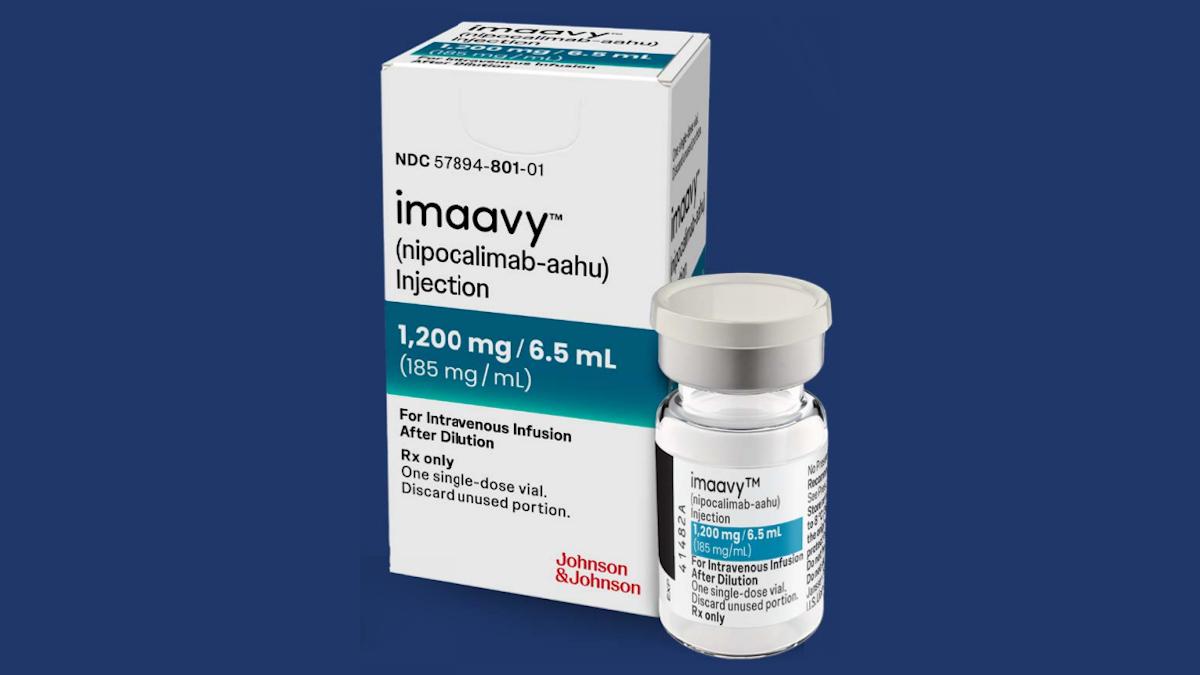
Johnson & Johnson's 'Swiss army knife' drug Imaavy has shown efficacy in patients with warm autoimmune haemolytic anaemia (wAIHA), a rare autoimmune disorder with no FDA-approved treatments.
In wAIHA, the immune system erroneously produces antibodies that attack and destroy the body's own healthy red blood cells. It causes symptoms like fatigue, weakness, and shortness of breath, and can be a life-threatening condition if not treated effectively. Current therapy relies on corticosteroids, immunosuppressant medicines, and the anti-CD20 antibody rituximab.
Already approved for generalised myasthenia gravis (gMG), and with positive clinical results in hand for other indications, including lupus and Sjögren's disease, FcRn inhibitor Imaavy (nipocalimab) has been billed as a potential $5 billion-a-year blockbuster – despite a failed programme in rheumatoid arthritis.
The first readout from the phase 2/3 ENERGY study showed that Imaavy at a dose of 30 mg/kg achieved a significant and durable haemoglobin response in patients with wAIHA, with three times as many patients showing improvement as in the placebo group, at 24 weeks.
The effect was fast as well: overall, patients treated with this dose of the FcRn inhibitor showed a mean haemoglobin improvement of at least 1g/dL as early as week one, with no change recorded in the placebo arm at that timepoint.
Nearly two-thirds of patients achieved haemoglobin levels of 10 or more g/dL, and a 2 g/dL improvement on their baseline level, at 24 weeks.
The results are due to be presented at the European Haematology Association (EHA) congress, which gets underway in Stockholm today.
"These data…showed the rapid onset of effect and durable improvement in anaemia which occurs by targeting the autoantibody-mediated destruction of red blood cells in people living with warm autoimmune haemolytic anaemia," said Bruno Fattizzo of the University of Milan in Italy.
"Achieving haemoglobin improvements this quickly and at this scale is important in clinical practice, as it could help improve the debilitating fatigue that people living with [wAIHA] experience," he added.
There was more good news for patients with wAIHA earlier this year when Hutchmed reported positive phase 2/3 results with its oral Syk inhibitor sovleplenib, which is now being prepared for filing in China.
Meanwhile, other drugs in clinical development for the disorder include Sanofi's BTK inhibitor Wayrilz (rilzabrutinib) and Zenas BioPharma's CD19xFcγRIIb bispecific antibody obexelimab.