FDA clears at-home start dose for Alzheimer's drug Leqembi
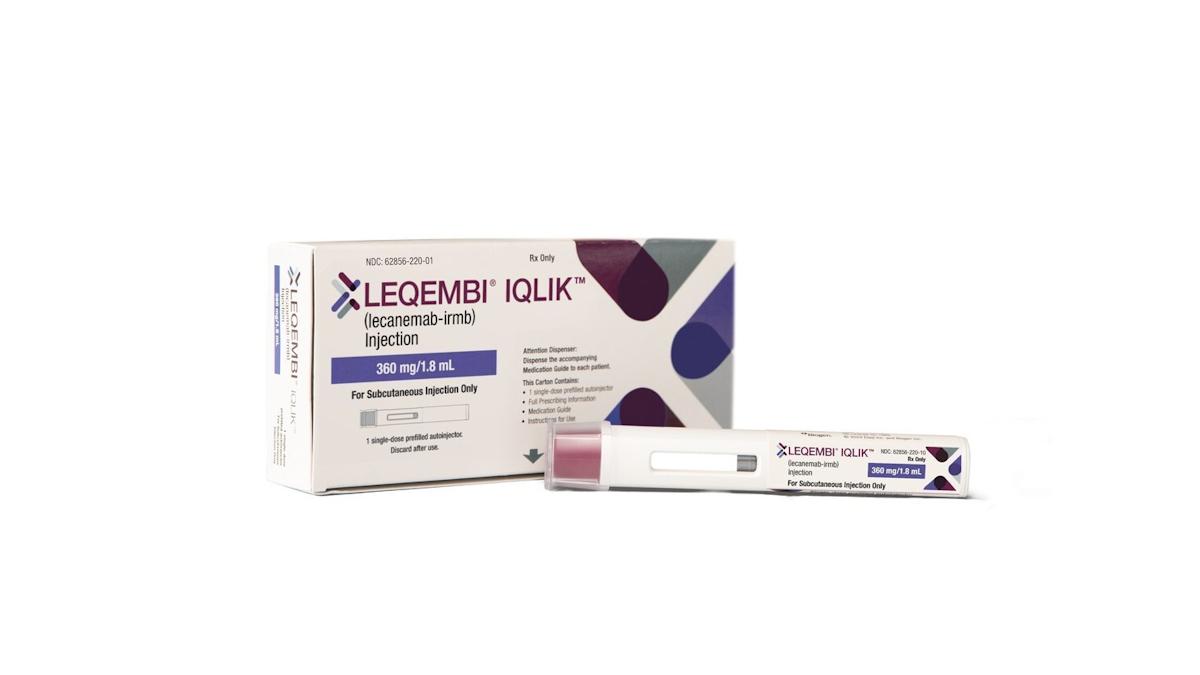
After a delay, Eisai and Biogen have won FDA approval for their new subcutaneous formulation of Alzheimer's disease therapy Leqembi as a starting dose, adding to its current use as a maintenance therapy.
The Leqembi Iqlik (lecanemab) formulation of the anti-amyloid antibody is seen as key to accelerating the uptake of the treatment, as it sidesteps the need for regular visits to infusion clinics that are costly for health systems and burdensome for patients.
The FDA approval of Leqembi Iqlik for maintenance therapy last September, after an initial course of intravenous induction therapy with the drug, already seems to have added to the sales momentum for Leqembi, with sales in the first quarter of this year rising 74% to $168 million.
With the subcutaneous induction dose approval, Eisai and Biogen are expecting sales this year to breach the $1 billion threshold, more than three years after it was first launched.
The review of the once-weekly injection was delayed by the FDA for three months after it asked for a major amendment to the marketing application, so the approval will come as a relief to both Eisai and Biogen.
Previously, patients had to start Leqembi treatment using the IV formulation, with two-weekly infusion clinic visits for 18 months, followed by once-monthly maintenance infusions or a switch to Leqembi Iqlik. Now, the starting dose can be delivered using an autoinjector, once a week, as two separate 250 mg injections that take around 15 seconds to deliver.
In clinical trials, there was no difference between the subcutaneous and intravenous formulations in their ability to clear amyloid plaques from the brain, a hallmark of Alzheimer's, and the two routes were equivalent with regards to safety, including for potential serious ARIA reactions that can cause swelling or micro-bleeds in the brain.
Howard Fillit, co-founder and chief science officer emeritus of the Alzheimer's Drug Discovery Foundation (ADDF), said the approval marks a new era in the treatment of the disease.
"For the first time, patients and their care partners have meaningful choice in how anti-amyloid treatment is delivered," he added.
"As treatment approaches continue to expand, innovations in drug delivery will play a critical role in improving access to therapies, supporting the investigation of potential combination treatments, and advancing a precision medicine approach to Alzheimer's care."
The approval also lends Eisai and Biogen a competitive edge over their only rival in the anti-amyloid category of Alzheimer's treatments, Eli Lilly, whose Kisunla (donanemab) generated $124 million in sales in the first quarter of this year.
Lilly is not developing a subcutaneous version of Kisunla, but is instead working on a next-generation amyloid-targeting Alzheimer's drug, called remternetug, that is suitable for subcutaneous injection.
Remternetug – which is being evaluated with subcutaneous dosing frequencies ranging from weekly to quarterly – is in a phase 3 trial programme, including pivotal studies TRAILRUNNER-ALZ 1 and 2, which have now started to generate results.