Leqembi sales grow again after subcutaneous approvals
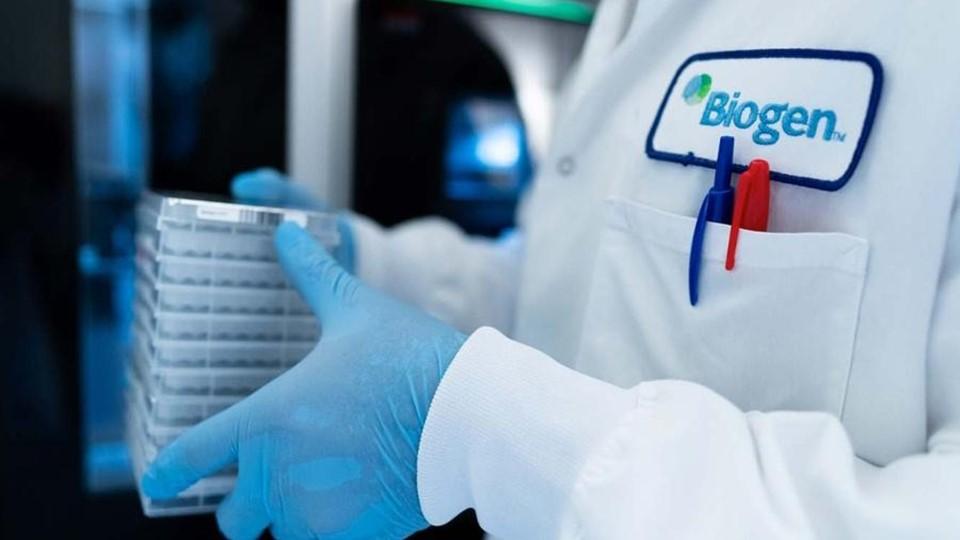
Biogen
Biogen's second-quarter results show that sales of Alzheimer's disease therapy Leqembi are continuing to ramp up, driven by a new formulation that avoids the need for infusion clinic visits.
Eisai-partnered anti-amyloid antibody Leqembi (lecanemab) had global sales of $184 million in the second quarter, up 15% on the same period of 2025, with $97 million of that total coming from the US.
That is less impressive than the 74% to $168 million reported in the first quarter, but while the tally came in below analyst expectations, the shortfall was only around $2 million.
The steady underlying growth in Leqembi revenues follows two approvals of a subcutaneous injection version of the drug – called Leqembi Iqlik. Last year, it was cleared as an alternative to infusions during the maintenance phase of treatment, and earlier this month for induction therapy, meaning that patients can receive all their treatment at home or in care settings, without having to attend hospital.
The latter approval is seen as the lever that will finally push annual sales of the drug above the $1 billion threshold, three years after it first reached the market, and gives Biogen and Eisai another edge over Eli Lilly's Kisunla (donanemab), which generated $124 million in sales in the first quarter of this year.
Leqembi's performance helped Biogen offset a steep decline in its multiple sclerosis franchise revenue, along with solid sales growth for Skyclarys (omaveloxolone) for Friedreich's ataxia – acquired as part of its $7.3 billion takeover of Reata Pharma – and post-partum depression (PPD) therapy, Zurzuvae (zuranolone), up 29% to $168 million and 53% to $71 million, respectively.
Empaveli (pegcetacoplan), used to treat C3 glomerulopathy (C3G) and paroxysmal nocturnal haemoglobinuria (PNH), and added as part of Biogen's $5.6 billion acquisition of Apellis earlier this year, romped away with a 123% climb to $46 million, while SOD1-positive amyotrophic lateral sclerosis (ALS) therapy Qalsody (tofersen) also contributed, with 20% growth to just under $32 million.
Biogen chief executive, Chris Viehbacher, said the solid result comes as Biogen is entering "a period of registrational readouts" starting this year, including anti-BDCA2 antibody litifilimab in lupus, anti-CD38 antibody felzartamab in rare kidney disease IgA nephropathy (IgAN), and SCN1A-targeting zorevunersen in Dravet syndrome.
"We are realising our vision for the New Biogen, one positioned for sustainable growth with a growing commercial business, a multi-year late-stage data flow, and an expanding early-stage pipeline," he added.