ESMO26: Ris-rez offers hope of osteosarcoma breakthrough
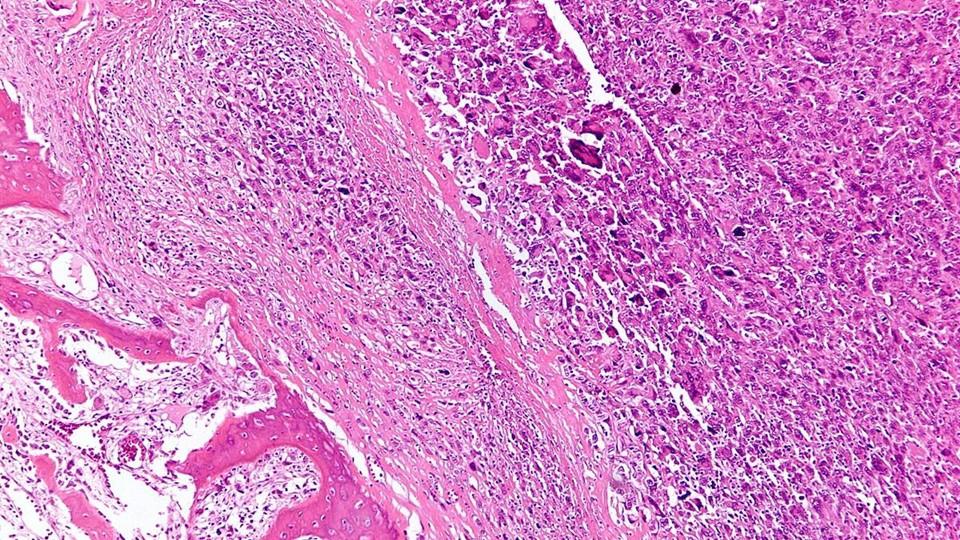
There have been few improvements in the treatment of osteosarcoma for decades, but a new study suggests GSK's B7-H3-directed antibody–drug conjugate (ADC) risvutatug rezetecan (ris-rez) could change that.
In the ARTEMIS-011 trial, the ADC reduced the risk of disease progression compared with standard chemotherapy in Chinese patients relapsed or refractory osteosarcoma, a rare and hard-to-treat form of bone cancer with no FDA-approved treatments that typically affects children and young adults.
Results presented at ESMO by Lu Xie of Peking University in China showed that ris-rez improved median progression-free survival (PFS) by 67% compared to gemcitabine/docetaxel chemotherapy in osteosarcoma patients previously treated with two or more lines of chemo, coming in at 5.5 months and 1.4 months, respectively.
That was accompanied by higher disease control rates – 76% versus 33% after 7.1 months of follow-up – and a trend towards improved overall survival, although safety could have a role to play in ris-rez's practice-changing potential.
Serious (Grade 3 or greater) adverse events were seen in 92.5% of the ris-rez-treated arm versus 83.3%, and one patient receiving the ADC experienced interstitial lung disease (ILD) that subsequently resolved. Side effects that were considered treatment-related, mostly haematological, were seen in 63.8% and 28.6%, respectively.
ESMO commentator Dr Nathalie Gaspar from the Gustave Roussy Cancer Campus said it was promising that several partial responses were observed with this ADC as monotherapy in a heavily pre-treated population, with an overall response rate (ORR) of 15%.
"Combining ADCs with different types of chemotherapy or with multikinase inhibitors or immunotherapy is a rational strategy to be investigated, which may lead to improved efficacy," she added.
However, Gaspar cautioned that the "haematological toxicity profile of these agents can be problematic alongside the chemotherapy currently used in osteosarcoma. There may also be broader toxicities that we do not yet fully understand, but we need to know who is affected and whether other treatments are likely to interact with ADCs."
GSK licensed rights to ris-rez outside China, Hong Kong, Macao, and Taiwan from Hansoh in December 2023 for $185 million upfront and another $1.525 billion is potential milestone payments.
A few weeks earlier, it tapped the Chinese biotech for a B7-H4 targeted ADC that has also featured at ESMO, mocertatug rezetecan (mo-rez), for $85 million upfront and up to $1.5 billion in milestones.
GSK said the ARTEMIS-011 result will support a regulatory filing for ris-rez in China, as it carries out its own phase 2 trial of the drug in an international patient population.