ESMO26: Neoadjuvant Enhertu fails in early breast cancer
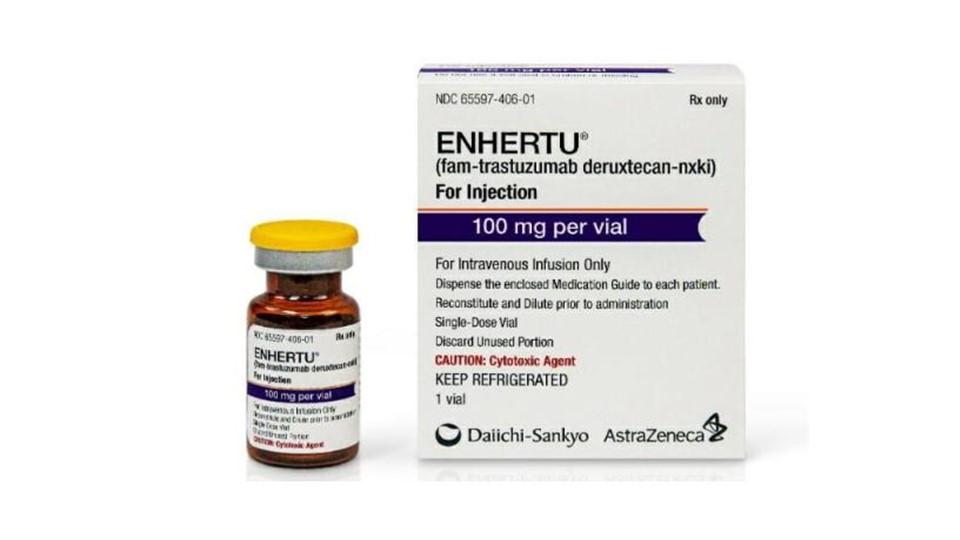
AstraZeneca and Daiichi Sankyo's Enhertu failed to show efficacy as neoadjuvant therapy for early-stage HER2-low breast cancer, despite showing a clear benefit in advanced forms of the disease.
In the investigator-led TALENT trial, treatment with Enhertu (trastuzumab deruxtecan) before surgery, with or without endocrine therapy, achieved low rates of pathological complete response (pCR) – i.e., no invasive cancer cells are found in the breast tissue and sampled regional lymph nodes when examined under a microscope – in patients with HR-positive, HER2-low early breast cancer.
Despite objective response rates (ORRs) of 62% to 72%, pCR rates were low and were described as "sobering" in ESMO's statement on the results.
After eight cycles of treatment, a pCR was observed in 7% of patients who received Enhertu alone, 3% with Enhertu plus anastrozole, and 9% with Enhertu pre-surgery followed by adjuvant chemotherapy.
Adding in patients who achieved residual cancer burden (RCB) scores of 0/1 – or residual disease – the proportions rose to 16% to 17%, but the overall conclusion is that neoadjuvant treatment with Enhertu can cause tumours to shrink, but not disappear.
It's well established that achieving pCR is a challenge with HR-positive breast cancer, but the investigators had hoped that Enhertu's strong efficacy in the DESTINY-Breast04 study of metastatic HER2-low breast cancer, which included an HR-positive cohort, would yield better results.
It's a rare miss for Enhertu, which has chalked up a string of regulatory approvals across multiple tumour types and stages, catapulting it into a $5 billion-a-year product for AZ and Daiichi Sankyo last year.
While the main conclusion of the study is that neoadjuvant Enhertu was unable to convert tumour shrinkage into pathologically clear tissue at the time of surgery in early-stage HER2-low breast cancer – and adding in endocrine therapy or post-surgery chemo barely lifted rates – some signs could guide future curative-intent studies.
For instance, there was a greater chance of response in tumours with higher HER2 levels at baseline – even though they still fell in the HER2-low category – so future studies could be designed to enrich patients in this group.
The investigators also found that Enhertu treatment led to a decrease in tumour cell HER2 expression, while other markers like TROP2 stayed elevated. That might suggest a rationale for sequential treatment with Enhertu followed by a TROP2-directed therapy like Gilead Sciences' Trodelvy (sacituzumab govitecan) or AZ/Daiichi's Datroway (datopotamab deruxtecan).
Trodelvy is being compared to physicians' choice of therapy in the SASCIA trial, involving patients with HER2-negative early breast cancer – including an HR-positive subgroup – at high risk of relapse after neoadjuvant chemo. Meanwhile, the I-Spy2.2 study of Datroway, looking at neoadjuvant sequential therapy, includes a cohort of patients with HR-positive, HER2-negative stage 2/3 breast cancer.