Bayer plans filings for cardiac amyloidosis imaging agent
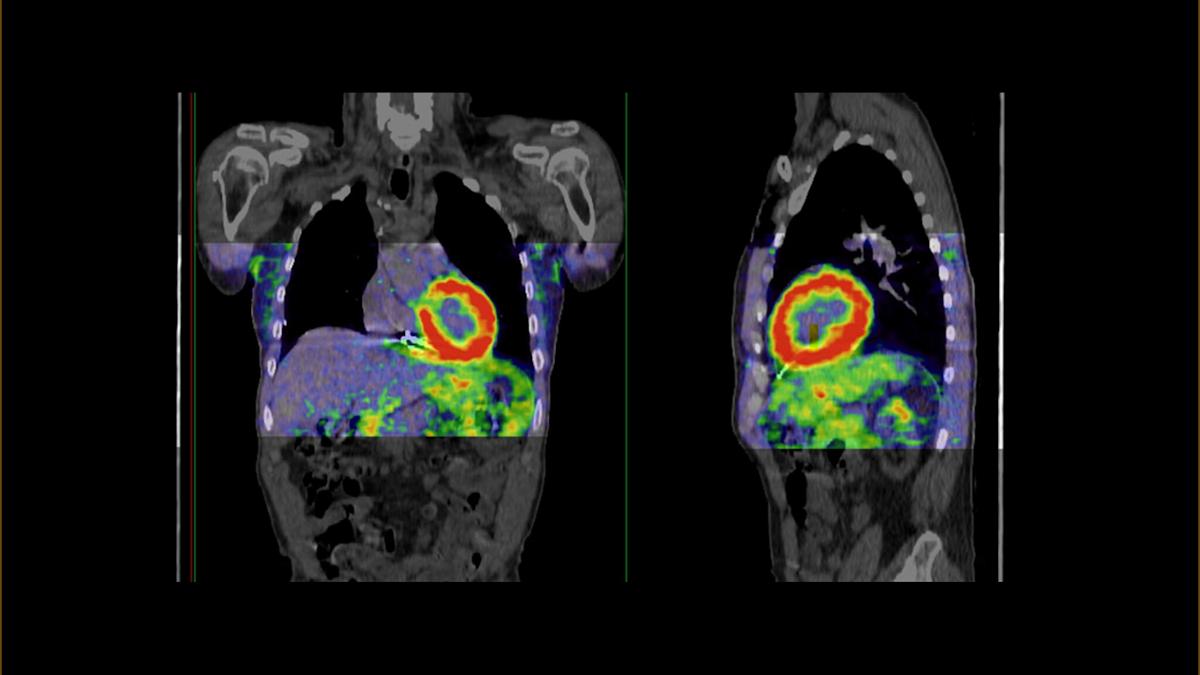
Radiotracer-enhanced PET/CT scan, showing positive uptake in the heart of patient with cardiac amyloidosis.
Armed with new phase 3 data, Bayer is preparing to file for approval of a new PET imaging agent that could accelerate the diagnosis of diseases associated with the buildup of amyloid in the heart.
The REVEAL study of the radiotracer – iodine 124 evuzamitide (formerly AT-01) – met the criteria of both being able to identify patients with cardiac amyloidosis (sensitivity) and those without (specificity) based on visual interpretation of scans by a trained specialist.
The data from the trial, which was set up by clinicians at Brigham and Women's Hospital, will be presented at a future medical congress, and Bayer said it intends to discuss marketing applications with the FDA and other regulators.
If approved, the radiotracer could help solve a major problem with cardiac amyloidosis – a feature of diseases including AL amyloidosis and transthyretin amyloidosis (ATTR) – namely that the lack of a single and reliable non-invasive test means that it can take two to four years between the onset of symptoms and a diagnosis.
That delay means that while approved drug treatments are available for both conditions, there may be a significant delay before they are started.
The FDA granted breakthrough status to iodine 124 evuzamitide in 2024 in recognition of its potential to improve on existing diagnostic methods based on clinical assessment, blood testing, other forms of imaging, and tissue biopsies if non-invasive approaches yield inconclusive results.
"Cardiac amyloidosis is often under- or misdiagnosed,6 impacting patients' ability to begin appropriate treatment earlier, when it may help prevent further organ damage," said REVEAL principal investigator Dr Sharmila Dorbala, who is director of nuclear cardiology at Brigham and Women's Hospital.
"Clinically, a sensitive, specific and quantitative PET tracer could help distinguish cardiac amyloidosis from other causes of heart failure, differentiate amyloid subtypes when used alongside appropriate laboratory testing, and track changes in cardiac amyloid burden over time."
That profile could also make iodine 124 evuzamitide a valuable tool for companies developing new therapies for cardiac amyloidosis.
The radiotracer – which has orphan drug designations in the US and Europe – was one of two licensed by Bayer in January from German-US biotech Attralus, marking the group's entry into the radiotracer category. The other (AT-05), also for cardiac amyloidosis, is a SPECT tracer still in early-stage clinical development. Attralus is now focusing its efforts on amyloid removal therapeutics.
The global market for radio-diagnostic tracers was valued at approximately $3 billion in 2024 and is projected to grow significantly in the coming years.