AstraZeneca joins Pfizer in MFN pricing deal with US
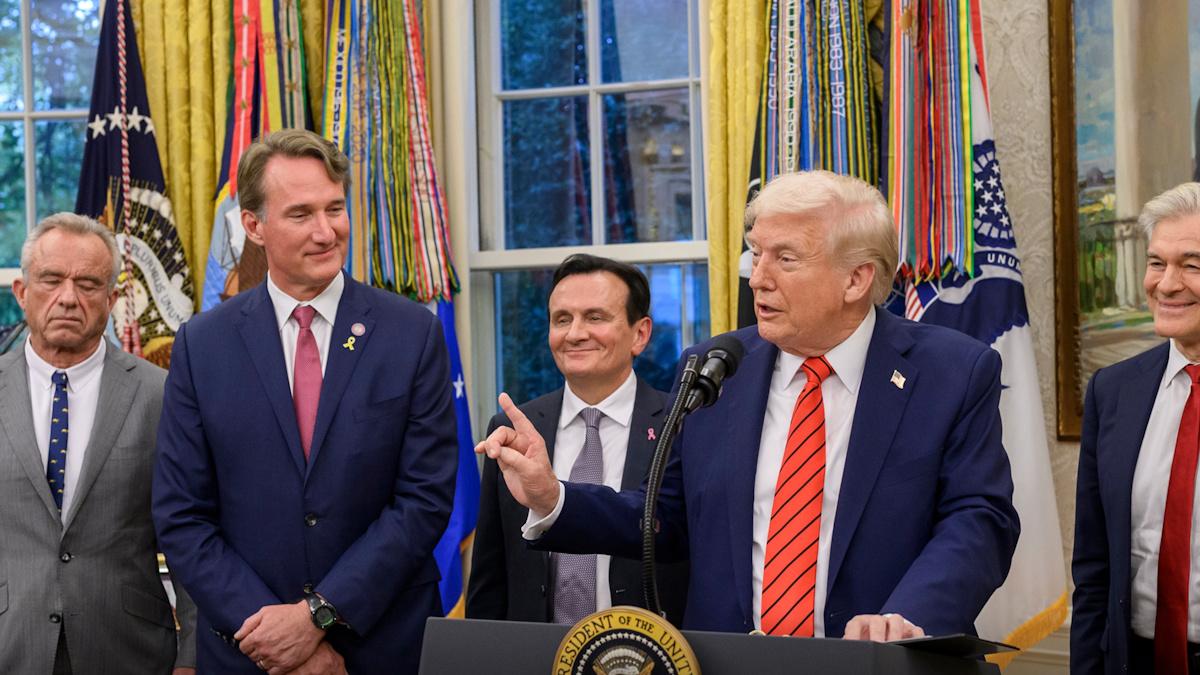
Trump announces second most favoured nation (MFN) deal, this time with AstraZeneca
AstraZeneca has become the second pharma group, after Pfizer, to reach an agreement with the Trump administration on a deal to reduce the price of its medicines in the US.
President Trump said AZ "is committing to offer Americans major discounts on their vast catalogue of prescription drugs" at Most Favoured Nation (MFN) prices, adding that in many cases these will be "the lowest price anywhere in the world."
In return, like Pfizer, AZ will get a three-year reprieve from Trump's 100% pharma tariffs as it commits to its recently revealed $50 billion programme of investments in new manufacturing and R&D facilities in the US.
It has just broken ground on the main part of the programme, a $4.5 billion active pharmaceutical ingredient (API) plant in Virginia, and said a cell therapy manufacturing facility will open in Rockville, Maryland, early next year, followed by a second major R&D centre in Cambridge, Massachusetts, in late 2026.
Some of AZ's products will also be made available at discounts of up to 80% through the recently announced TrumpRx Direct-To-Consumer (DTC) sales channel, due to launch in early 2026, which will serve as a hub for the various direct purchasing systems being set up by pharma companies.
In a statement, AZ said that the agreement covers all the elements laid out in a letter sent by Trump to 17 top pharma companies in July, asking them to provide medicines at MFN prices "to every single Medicaid patient."
It said the deal will "enable American patients to access medicines at prices that are equalised with those available in wealthy countries," but added that specific terms remain confidential.
Trump made reducing medicine prices in the US an early objective of his second term, signing an executive order in May to introduce an MFN system of reference pricing, in which the price of medicines would be tied to the lowest price paid in other developed nations.
A Department of Health and Human Services (HHS) document published in January cited RAND data, which found that US prices across all drugs – branded and generic – were nearly 2.78 times as high as prices in comparison to Organisation for Economic Co-operation and Development (OECD) countries, and at least 3.22 times as high after adjustments for estimated US rebates.
"Every year, AstraZeneca treats millions of Americans living with cancer and chronic diseases and, as a result of today's agreement, many patients will access life-changing medicines at lower prices," said AZ's chief executive, Pascal Soriot.
"This new approach also helps safeguard America's pioneering role as a global powerhouse in innovation and developing the next generation of medicines. It is now essential other wealthy countries step up their contribution to fund innovation," he added.