Amgen, AZ will pilot FDA's real-time clinical trial plan
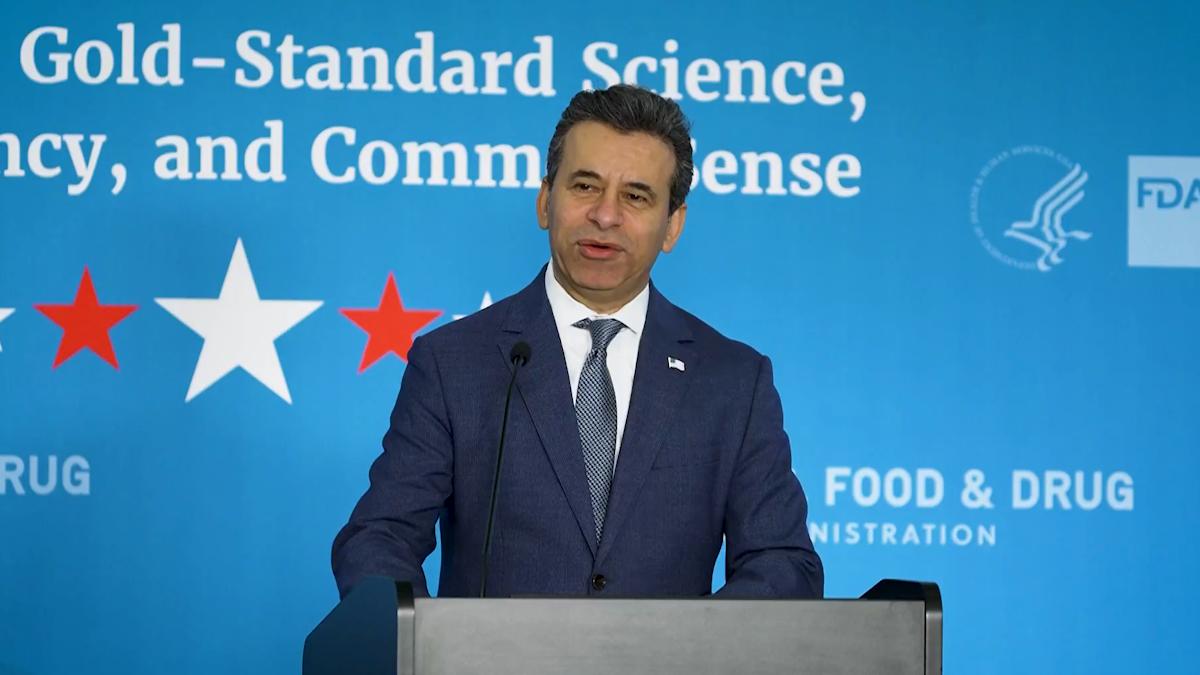
FDA Commissioner Marty Makary.
The FDA has published a plan to allow data from clinical trials to be reported to the agency as they occur, saying this could accelerate drug development timelines.
The US regulator has said AstraZeneca and Amgen have already agreed to participate in a pilot of the new model, with two trials planned that will report endpoints and data signals to the agency in real time and try to show proof-of-concept for the approach.
A request for information (RFI) has also been published to garner feedback on the real-time clinical trial (RTCT) proposal and the structure of the pilot, which is expected to commence in the summer. Comments can be submitted until 29th May.
At the heart of the plan is to use AI technologies to speed up early clinical trials, described as "a critical bottleneck in drug development, often characterised by high uncertainty, limited patient populations, and inefficient decision-making processes," according to the RFI.
"For 60 years, we've been conducting clinical trials in the same way, where key data signals can take years to reach the FDA," said FDA Commissioner Marty Makary, who announced the initiative alongside the regulator's first chief AI officer, Jeremy Walsh.
"We are boldly advancing a modern approach whereby FDA scientists can view safety signals and endpoints in real time as a trial progresses," he added, while pledging that the control of factors like patient consent and safety monitoring will remain robust.
Unlocking 'continuous' trials
The hope is that developers could move away from the concept of running sequential phase 1, 2, and 3 studies, with a gap between the end of one stage and the start of another, in favour of continuous trials that adapt as data comes in.
"This will help us accelerate promising therapies and build towards our ultimate goal of running real-time, continuous trials across all phases of drug development," said Makary.
The first of the two pilot studies is the phase 2 TrAVeRse trial of AZ's BTK inhibitor Calquence (acalabrutinib) plus AbbVie/Roche's BCL-2 inhibitor Venclexta (venetoclax) and anti-CD20 antibody rituximab in patients with treatment-naïve mantle cell lymphoma (MCL), which is being run at sites including the University of Texas MD Anderson Cancer Center and University of Pennsylvania.
Amgen's pilot study – the phase 1b STREAM-SCLC trial – will test its bispecific T-cell engager (BiTE) drug Imdelltra (tarlatamab), targeting DLL2 and CD3, in limited-stage small-cell lung cancer. Sites for that study have not yet been decided.
The FDA said it has already "received and validated" data generated in AZ's trial using a reporting framework developed by Paradigm Health, which has established "the feasibility of the technical framework required for real-time signal sharing."
"Real-time trials have been talked about for years. We demonstrated that it is not only possible, but also potentially transformative for the clinical trials ecosystem," said Walsh. "We have to consider our processes from the standpoint of a patient awaiting a potentially powerful treatment."