5 Things to watch at Fierce Pharma Week 2025: What every pharma executive should be asking

Fierce Pharma Week 2025, 8th to 11th September 2025 in Philadelphia marks a historic shift in pharmaceutical industry events. For the first time, Questex is bringing together marketing, commercialisation, medical affairs, and PR & communications professionals under one roof in recognition that pharma's biggest challenges can't be solved in silos.
What excites me most about the combined format of Fierce Pharma isn't any individual session. It's the potential for conversations that couldn't happen when these pharma functions were siloed into separate conferences. When a medical affairs leader can directly challenge a commercial strategy, when PR professionals can call out the trust implications of marketing tactics, when commercialisation teams can push back on medical compliance constraints, that's when real pharmaceutical innovation happens.
With that in mind, I’ve got some questions I hope this combined format will help us to address honestly. I hope my questions encourage you to challenge the tensions that we all know exist, but rarely get addressed directly in the industry.
I'll be at Fierce Pharma Week 2025 all four days in Philadelphia. I’m eager to dive deeper into these industry questions with you. If you're tackling any of these challenges, let's connect. Hallway conversations often provide the best insights.
With that said, here’s what I’m looking to learn in Philadelphia next week:
1. Artificial intelligence in pharma: Has the "show me" moment arrived?
My hard question: If your AI pilot hasn't moved from proof-of-concept to production in 18 months, should you kill it or double down?
Why I’m asking: After billions in pharmaceutical AI investments and countless pilot programs, I’ll be listening for a crucial shift in tone around AI at Fierce Pharma Week 2025. With Gartner just moving GenAI into the "trough of disillusionment" on their latest AI hype cycle, will pharma leaders arrive excited about AI's potential, or demanding proof of actual ROI?
Most industries are struggling to realise measurable results from their AI investments. Pharma isn’t unique there. Yet, according to BCG, as of 2022 less than 20% of pharma companies had successfully executed their pre-AI digital transformation (well below the 35% cross-industry average) with most falling short on agile governance, integrated strategy, and effective progress. Will our AI revolution – the current wave of tech-enabled change – see the same mixed results across pharma? Or have we learned from the last five years of digital transformation and are we ready to hold ourselves accountable to real business results?
I'll be attending: John Duffield's keynote "AI as a Lifeline: How I Lived the Future of the Patient Experience" (Thursday 11th September, 8:45am), to hear Duffield’s critical patient perspective on AI's real-world healthcare impact and comparing that to the vendor pitches I usually get at pharma conferences.
2. Patient engagement: Partners or marketing targets?
My hard question: If patients had access to your internal pharmaceutical marketing strategy documents, would they see themselves as partners or targets?
Why I’m asking: The Pharma Marketing track at Fierce Pharma Week promises to move beyond HCP-exclusive strategies toward patient-inclusive engagement. I’m hopeful, yet sceptical. After decades of treating "patient engagement" as code for "better direct-to-consumer marketing", is the pharmaceutical industry genuinely prepared to make patients equal partners in their care journey?
Or are pharmaceutical companies just adding patient touchpoints to the same old commercial playbook? The difference matters. Real patient engagement requires fundamental changes to how pharma measures success, allocates budgets, and designs customer experiences. Does that mean caring more about patient outcomes than prescription volumes?
I'll be attending: "Building Connected Patient Ecosystems that Deliver Education, Access, and Outcomes" (Wednesday 10th September, 10:15am), to see if Matthew Walsh (ixlayer), Rui Yang (Novartis), Nkiru Anyagaligbo (Apellis Pharmaceuticals), and Erin Cross (Healthline Media) can articulate what patient-first pharmaceutical marketing actually means operationally.
3. Medical affairs strategy: Should science override sales?
My hard question: Should pharmaceutical medical affairs teams have veto power over commercial decisions that compromise scientific integrity?
Why I’m asking: With medical affairs experiencing unprecedented elevation from support function to strategic go-to-market driver, there’s more tension than ever between commercial pressure and scientific independence. In the last year, I’ve heard firsthand multiple senior pharma leaders ask how they can align medical science liaison (MSL) targets with commercial outcomes. I’m hoping for honest discussions at Fierce Pharma Week’s Medical Affairs track about where the boundaries actually are.
Can medical science liaisons (MSLs) truly drive pharmaceutical business outcomes while maintaining FDA compliance? How do you give medical affairs teams strategic authority without compromising scientific integrity? The pharmaceutical industry keeps promoting medical affairs without providing clear governance frameworks. Meanwhile, medical teams are caught between commercial urgency and regulatory requirements, often with conflicting guidance from legal, compliance, and business leadership.
I'll be attending: "Navigating the Boundaries: MSL Compliance and the Interface Between Medical Affairs and Commercial" (Thursday 11th September, 9:00am) where Peter Lee (Kura Oncology) and Brian Moran (Vertex Pharmaceuticals) are slated to tackle the pharmaceutical compliance challenges everyone faces, but few discuss openly.
4. Pharma trust crisis: Misinformation problem or self-inflicted wound?
My hard question: Is the pharmaceutical industry's trust problem caused by misinformation, or by the industry's own communication choices over decades?
Why I’m asking: With the PR and Communications track at Fierce Pharma Week heavy on "combatting misinformation" and "building trust", I'm curious whether the industry is ready to move beyond defensive messaging. After saving the world from COVID-19, why is Big Pharma still the villain in public perception?
In 2023, Gallup found a record high 60% of Americans viewed the pharma industry negatively, with only 18% holding a positive view. This requires fundamental shifts in how pharma communicates: from reactive defense to proactive relationship building. It means acknowledging uncomfortable truths about drug pricing, healthcare access, and pharmaceutical industry practices, rather than deflecting with scientific jargon.
I'll be attending: "Combatting Misinformation and Disinformation to Maintain Public Trust" (Tuesday 9th September, 5:00pm) to hear how Tiffany Hamilton (Ocugen), Brendan McEvoy (AstraZeneca), Jennifer Gottlieb (Real Chemistry), and Kathleen Hunter (Weber Shandwick) recommend balancing public transparency with pharmaceutical business realities.
5. Launch excellence: Out with playbooks, in with innovation?
My hard question: How much of your current pharmaceutical launch success depends on competitors being equally slow to adapt?
Why I’m asking: The Commercialisation track at Fierce Pharma Week promises to reveal how traditional drug launches need to evolve to meet current market demands. With Inflation Reduction Act pricing pressure, patient empowerment, and real-time market intelligence reshaping competitive dynamics, are pharmaceutical companies using launch frameworks designed for a world that no longer exists?
The pharmaceutical companies winning today are fundamentally rethinking what launch readiness means in a market that changes daily, not quarterly. Traditional 24-month pharmaceutical launch planning cycles can't compete against companies that adapt to market signals in real time.
I'll be attending: "The old way vs. the new way: Your launch isn't broken - it's obsolete" (Wednesday 10th September, 2:15pm) where I hope Lance Hill and Jason Smith from Within3 will explain what launch intelligence actually means for commercialisation beyond the buzzwords.
What questions are driving your Fierce Pharma Week 2025 conference agenda? What pharmaceutical industry sessions are you most excited about?
About the author
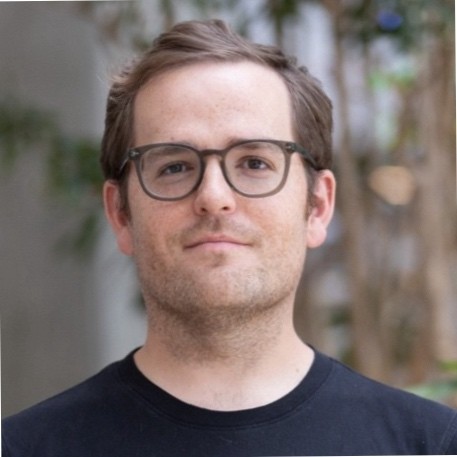 Tom Barry is the founder of Signal + Pattern, an independent advisory practice helping biopharmaceutical companies and their strategic partners rethink go-to-market strategy and accelerate digital innovation. He brings more than a decade of healthcare and life sciences experience, including five years leading enterprise digital transformation at Takeda. Through Signal + Pattern, Barry now advises both biopharma organisations and the SaaS providers, consulting firms, and creative agencies that serve them on navigating the complexity of commercialisation with strategies rooted in human-centred design, data-driven storytelling, and practical operational change. Recent work includes repositioning SaaS platforms for life sciences growth and guiding global teams through next-best-action and field force transformation initiatives.