The AI revolution will be patient-led

I predicted it in my column last month: at Fierce Pharma Week 2025, industry leaders would arrive less excited about AI’s potential and more demanding about proof of ROI. With Gartner moving GenAI into the “trough of disillusionment” and billions spent on pilots that never scaled, the skepticism was earned.
And I was right.
The exhibit hall hummed with AI vendor promises, while session rooms overflowed with questions about pilots stuck in proof-of-concept purgatory. Hallway conversations circled around millions invested with little to show. The mood wasn’t optimistic. It was defensive, sceptical, and a bit tired.
Then came Thursday morning's final keynote: John Duffield’s “AI as a Lifeline: How I Lived the Future of the Patient Experience.”
I had no idea I was about to spend the next 45 minutes fighting back tears.
When the future patient refuses to wait
John Duffield, a technology executive and futurist, began by recounting the moment his life changed: a headache that turned out to be a brain bleed that nearly killed him. In the months that followed, Duffield endured two open-heart surgeries: the first to repair his leaky aortic valve and repair an almost six-centimetre aortic aneurysm, and the second, just twenty days later, to repair a newly discovered mitral valve leak. Complications followed, including a staph infection, atrial fibrillation, and ultimately the implantation of a pacemaker.
But what stayed with me was not the medical ordeal. It was how he turned it into something that could help others.
Duffield used AI throughout his entire journey – helping him make sense of his diagnoses, talk to his children, and design tools for himself and others facing the same fears. He trained a conversational agent on his surgeon’s notes so he could ask it questions at 3AM, and eventually built Hearts & Algorithms, a platform that now guides other patients through the same journey.
AI even caught something his care team had missed: a possible genetic link between his brain bleed and valve disease. That discovery has led to additional testing, and Duffield now contributes his data to studies advancing global medical research.
I listened, deeply moved. Not because of the technology itself, but because of who was driving it and how his story paralleled my own father’s.
Two fathers. Two valves. One realisation.
In 2012, my father underwent surgery to replace his bicuspid aortic valve. The operation was technically a success, until a nurse ran after my mother in the parking lot to tell her he’d suffered a stroke on the operating table.
Three years of rehab and recovery followed. Then, in 2020, a staph infection from a routine dental cleaning left him septic. Two months hospitalised. My mother and I couldn’t visit because of COVID. We literally jumped for joy when his transoesophageal echocardiogram came back clean. Otherwise, it would have meant another emergency open-heart surgery at a community hospital during a global pandemic.
Two fathers. Two bicuspid valves. Staph infections. Both made it through.
The difference? Duffield and his family had tools my father and our family didn’t.
Listening to him discuss how he used AI to navigate his illness illuminated something I hadn’t fully appreciated before: the real AI revolution in healthcare won’t come from pharma’s AI investments, but from patients who refuse to wait.
Innovation starts at the bedside
In the Fierce Pharma exhibit hall, I saw sophisticated platforms and multimillion-dollar investments – proof of the industry’s commitment to innovation, but also a reminder of its limitations. Industry ambition often meets the friction of process, scale, complexity.
Yet, as he recovered from back-to-back heart surgeries, John Duffield built patient tools that others are already using. No procurement cycles. No pilot programs. Just necessity, creativity, and the accessibility and speed of modern AI.
The barrier to entry has collapsed. You don’t need millions of dollars, an innovation lab, and a steering committee. You need lived experience, creative thinking, and an internet connection.
That’s the real shift AI has unleashed. The AI scepticism at Fierce Pharma Week was justified, but for the wrong reasons. It’s not that AI won’t have an impact. It’s that pharma’s approach to AI innovation – top down, vendor-driven, committee-approved – isn’t designed to move at the speed of patient need.
Duffield built Hearts & Algorithms faster than most pharma companies can get a pilot approved. He didn’t wait for pharma to build the future patient experience. He lived it, documented it, and shared it. In doing so, Duffield reminds us what patient-centred innovation really looks like.
Collaboration will save lives
Pharma has three choices when it comes to AI for patient experience:
- Resist it. Try to control patient-led innovation through regulation, disclaimers, and risk management – and watch it happen anyway.
- Compete with it. Spend millions building “official” patient-support tools that take years to launch while patients create their own in months.
- Embrace it. Partner with innovators like John. Fund them. Learn from them. Amplify them. Recognise that the best breakthroughs may come from patients themselves.
The question isn’t whether pharma’s AI investments will deliver ROI. The question is whether pharma will recognise that the next wave of innovation is already happening outside its walls.
The future of patient experience won’t come from enterprise transformation programmes. It’s being shaped in hospital rooms, living rooms, and browser windows by patients who refuse to wait.
If you’re in a pharma boardroom wondering what your patient-centred AI strategy should look like, follow what John Duffield is building at thefuturepatient.com, because that’s what the future patient actually looks like.
About the author
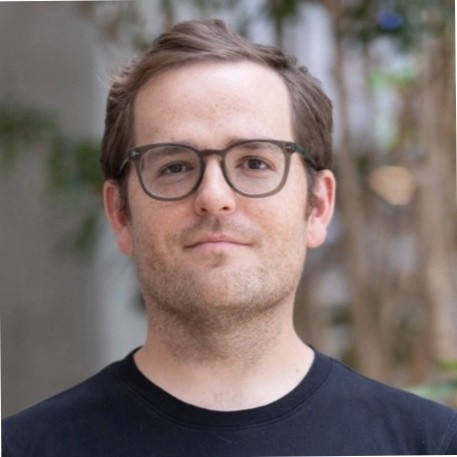 Tom Barry is the founder of Signal + Pattern, an independent advisory practice helping biopharmaceutical companies and their strategic partners rethink go-to-market strategy and accelerate digital innovation. He brings more than a decade of healthcare and life sciences experience, including five years leading enterprise digital transformation at Takeda. Through Signal + Pattern, Barry now advises both biopharma organisations and the SaaS providers, consulting firms, and creative agencies that serve them on navigating the complexity of commercialisation with strategies rooted in human-centred design, data-driven storytelling, and practical operational change. Recent work includes repositioning SaaS platforms for life sciences growth and guiding global teams through next-best-action and field force transformation initiatives.