Why UCB bet a billion dollars on cell therapy for epilepsy
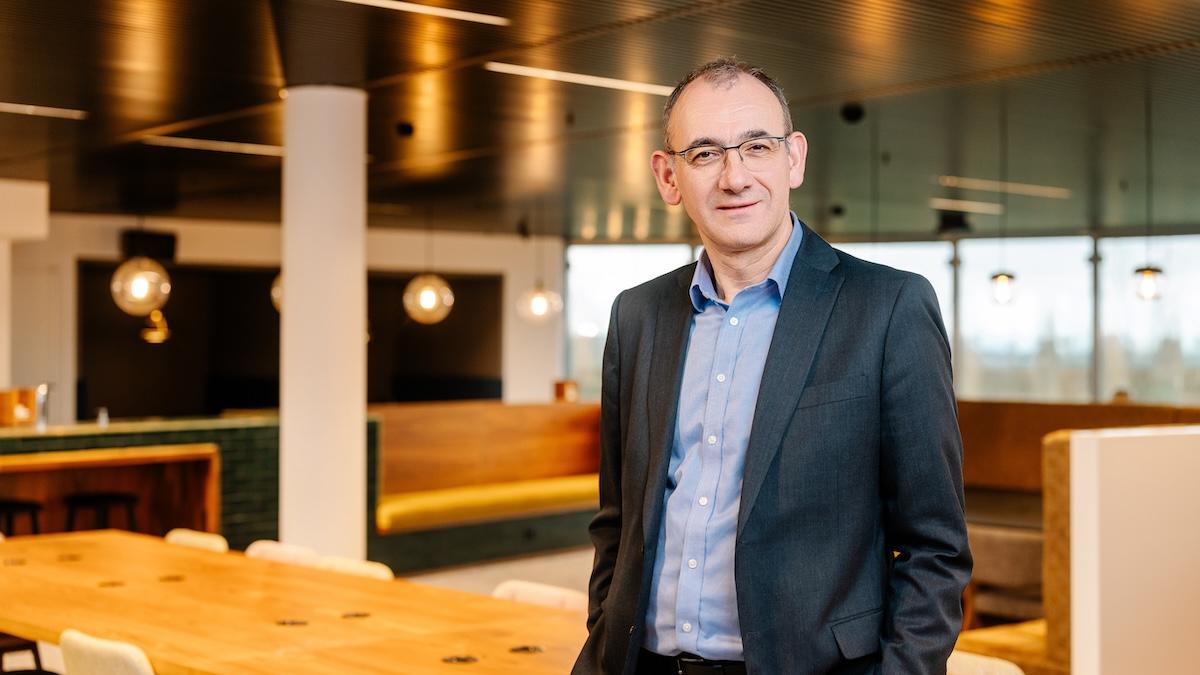
Alistair Henry, EVP and Chief Science Officer at UCB.
Last month, UCB announced its plan to pay $650 million up front, with another $500 million in milestone payments, for San Francisco-based Neurona Therapeutics.
The company is developing a cell therapy for mesial temporal lobe epilepsy that is both off-the-shelf and potentially curative – a combination that makes it well worth the bet, according to Alistair Henry, who leads UCB’s R&D organisation.
“This is an opportunity to really change the landscape for some of these epilepsy patients to move from something which is a symptomatic treatment to something which has the real potential to be curative,” he told pharmaphorum. “So that is aligned with UCB’s strategy of looking for highly differentiated medicines which are frankly game changers for patients.”
Neurona’s cell therapy works differently from the well-known CAR-T therapies that have seen success in oncology, Henry says.
“With a lot of the cancer therapies, which are the CAR-T therapies, effectively what the therapy is doing is removing a cancer cell,” he said. “What [Neurona] is doing is putting back a regulatory cell, an interneuron. It’s a GABAergic interneuron that is restoring control of the excitation states of the neurons. Because the problem with epilepsy is hyperexcitability. It's the neurons that are firing inappropriately. They've lost – by whatever means, they've lost their control.”
By introducing the interneuron, the therapy allows neurons to regulate themselves naturally, the way they do in people without epilepsy.
“It's a lovely story, actually, of using biology's answer, because this is how, this is how the rest of us do it, if you like,” he said. “The reason why you and I don't have epilepsy is that we have control over the hyperexcitability of the network, and it never comes out of control, and that's why we never have a problem. So it's really going back to 'how does nature do this?'”
By using embryonic stem cells, Neurona is able to create these interneurons in an off-the-shelf or allogeneic way, making the therapy more scalable than autologous CAR-Ts. The result, if the therapy is able to clear its Phase 3 trial, is a scalable one-time treatment for people with one of the most severe forms of epilepsy.
“These are the patients who are refractory to other medicines, so they have frankly not responded, and for whom the only other option really at this point is ablation – surgery to try and remove the focal lesion,” Henry said.
While this candidate is only for mesial temporal lobe focal epilepsy, success here could lead to similar treatments for a broader patient population.
“There are multiple different types of epilepsy,” Henry said. “So the real challenge now is to say, well, actually, could you take this type of therapy into other epilepsies? And maybe it's not the same type of interneuron that you've got to use. But the fact that we've… done it once means that it opens the door to doing it again.”
UCB found Neurona, which came out of the University of California San Francisco, through its VC group UCB Ventures.
“What that speaks to is the way that we were looking to explore new areas of science that we felt had promise and that we were prepared to put backing behind to see what would become of them. And Neurona has come good,” he said. “So it's about the longer-term vision about how we support the ecosystem, how we are prepared to invest early into things that may or may not pan out as you expect. And it's a great illustration of translating academic research into something of tremendous patient value.”