First human trial backs AI-designed 'universal' vaccine
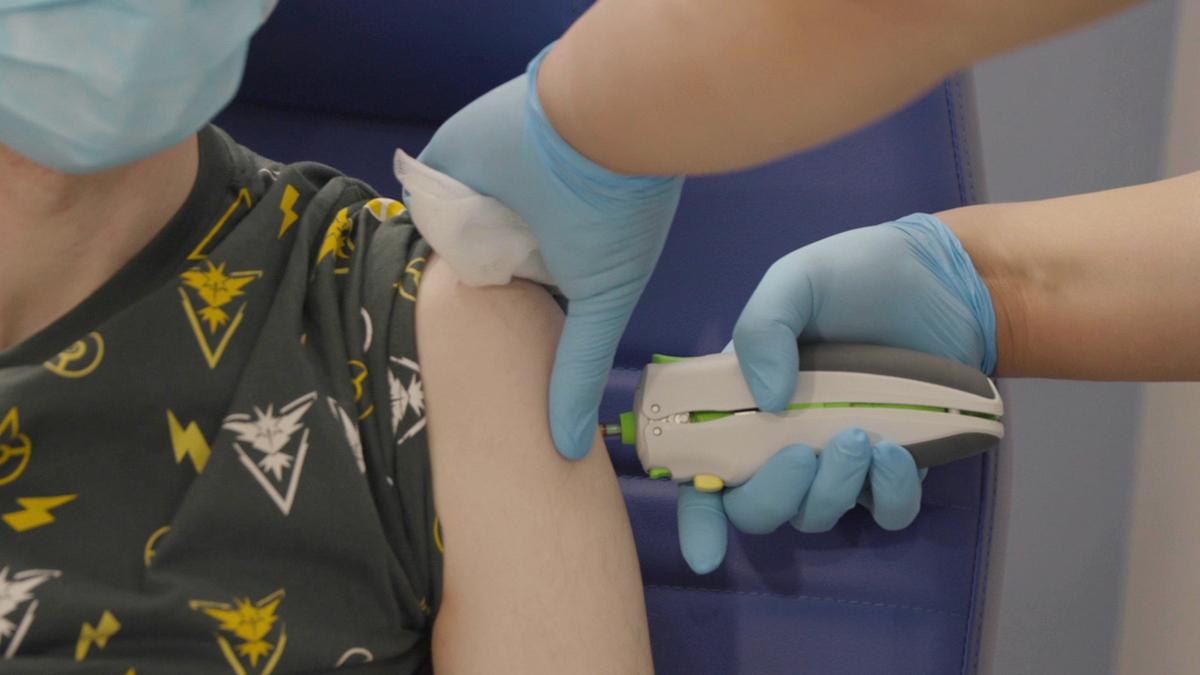
An AI-designed vaccine against all variants of the coronavirus SARS-CoV-2 – designed using an AI-powered platform developed at University of Cambridge spinout DIOSynVax – has shown promising results in its first clinical trial.
The researchers behind the project say it is the first time that a vaccine entirely designed using AI and computer simulations has been tested in humans.
The pEVAC-PS DNA plasmid-based, needle-free vaccine was developed using all the available genetic sequence data logged by surveillance programmes around the world relating to Sarbeco coronaviruses, which includes the COVID-19 virus, with the AI used to design a "super-antigen" containing features common to the whole group.
Testing in 39 human volunteers has shown not only that the vaccine is safe, but also that it triggered immune responses to SARS-CoV-2, the SARS virus (SARS-CoV-1) that emerged in the early 2000s, as well as Sarbeco viruses in bats that scientists fear could cross the species barrier and cause a future pandemic.
The results suggest that a similar super-antigen approach could be used to develop vaccines against other virus families, including Ebola, which is causing a worrying outbreak in the Democratic Republic of the Congo (DRC) and Uganda involving a species not covered by the current, WHO-recommended vaccine.
"Viruses like influenza, coronaviruses, and the Ebola group are evolving continuously, and by the time vaccines are rolled out, they may be poorly matched – the current 'reactive' vaccine system struggles to keep pace," said lead trial investigator Prof Saul Faust, director of the NIHR unit in Southampton.
"If we can develop and clinically advance this new class of vaccines before a virus outbreak begins, millions of lives could be saved, lockdowns avoided, and the economy preserved."
The trial was conducted at UK National Institute for Health and Care Research (NIHR) facilities at Addenbrookes Hospital in Cambridge and the University of Southampton, and demonstrated immunogenicity that was "modest but variable," which may reflect the varied exposure to COVID-19 vaccines among the subjects.
The authors – who have published their work in the Journal of Infection – said that while pEVAC-PS hasn't shown "broad or robust neutralising activity," the evidence of cross-reactive binding to antigens on sarbecoviruses supports the design concept, and the potential to develop next-generation shots with greater efficacy.
"We've converted vaccine development from being reactive to being future proof," said research lead Prof Jonathan Heeney of Cambridge's Lab of Viral Zoonotics. "Our vaccines will continue to provide protection against viruses even as they mutate into new strains."
A larger phase 2 trial is now planned to assess the vaccine's ability to induce immune responses in a wider and more diverse population, and confirm that it generates strong, broadly protective immune responses.
Founded in 2017, DIOSynVax's pipeline includes vaccine candidates for seasonal and pandemic influenza, haemorrhagic fever viruses, and coronaviruses.