When biology becomes a language: Biodata teaching

From Genryo’s Sidewinder technology to the Festival of Genomics & Biodata in the UK earlier this year – AI might be trending, but more importantly it is accelerating life sciences into the next frontier of possibilities, where DNA veritably speaks.
Indeed, the convergence of AI and biotechnology is creating a powerful synergy: AI processes the complexity of biology at scales never before possible, while biotechnology generates the rich datasets needed to train and improve AI models.
At an upcoming panel session on biology as a language at Biomed Israel 2026, the potential of such advances will be discussed in depth. In order to find out more ahead of the conference, pharmaphorum spoke with Dr Shai Melcer, head of bio-convergence at the Israel Innovation Authority.
Q. Tell us more about the biological language that industry is learning – and speaking – with the capabilities permitted by advanced technologies.
Shai Melcer: One of the biggest changes in life sciences today is a shift in how we think about biology. Instead of seeing it as a series of isolated experiments, scientists are starting to treat it more like a language – something that can be read, interpreted, and even predicted.
Think of it like this: just as AI can learn how human language works – spotting patterns, grammar, and meaning – it can now do something similar with biology. It can analyse patterns in DNA, proteins, and how cells behave, and start to “understand” how these pieces work together.
But here’s the catch: biology isn’t just one language, it’s more like a whole collection of them. Looking at DNA alone doesn’t tell you everything about how a cell or a human body will function. To really understand what’s going on, you need to connect multiple layers of information at once. That’s why researchers are building more advanced AI models that can combine many different types of biological data, rather than looking at each piece in isolation.
At the same time, new technologies are generating huge amounts of detailed biological data – from how individual cells behave, to how proteins interact, to how systems respond to changes. When you combine all of this data with AI, it becomes possible to study biology in ways that simply weren’t feasible before.
You can already see this “translation” in action. For example, Pangea Biomed uses AI to read standard pathology slides – tissue samples under a microscope – and turn them into insights about what’s happening at the genetic level, helping predict how a patient might respond to treatment. Meanwhile, Algocell applies similar ideas to manufacturing, using AI to model how cells behave so processes can be scaled from the lab to full production more reliably.
What’s especially exciting is that AI is no longer just speeding up analysis. It’s starting to actively guide research – suggesting new ideas, helping prioritise experiments, and making it easier to navigate the complexity of biology at a scale we’ve never seen before.
Q. And when it comes to Biodata teaching, how important is this for both those coming into the industry workforce from academia and for those already in life sciences, thus urging R&D forward?
The combination of biology and AI is changing what it means to work in life sciences.
For people just entering the field, knowing biology is no longer enough on its own. There’s a growing need for scientists who can also work with data, understand how AI works, and think across different disciplines. In simple terms, the future biologist also needs to be a bit of a data scientist.
But this shift isn’t just for newcomers, it’s just as important for experienced researchers. AI is changing how scientists come up with ideas, design experiments, and interpret results. It’s not enough to just use these tools; researchers also need to understand where they can go wrong, including their biases and limitations.
This brings up a critical issue: trust. AI can produce results that look very convincing, but aren’t always biologically correct. That’s why real-world testing, high-quality data, and careful validation are still essential. In biology, you can’t just take the AI’s word for it – you have to prove it.
Looking ahead, life sciences will increasingly rely on mixed teams. Biologists, doctors, data scientists, and AI experts will work side by side, combining their strengths to turn complex biological data into insights that can actually improve patient care.
Q. What tangible outcomes have already been made possible through use and understanding of the language of biology through AI, in Israel and/or globally?
We’re already seeing real-world impact from AI across many areas of life sciences, and Israel’s innovation ecosystem is playing a key role in pushing these advances forward globally.
AI is helping scientists make better decisions earlier. It’s being used to identify biological markers of disease, group patients more effectively, and design smarter clinical trials. One of the biggest benefits is that researchers can spot what won’t work much sooner, saving time, cost, and effort.
The companies in our session [at Biomed Israel] bring this to life. For example, CytoReason builds computer-based models of diseases that connect what’s happening at the molecular level to real patient outcomes. This helps researchers focus on the most promising drug targets and match treatments to the right patients.
Further along the process, QurisAI is improving how drugs are tested. Instead of relying heavily on animal testing, they use lab-grown human 3D tissue models combined with AI to predict how safe a drug will be for individuals. This approach aligns with recent regulatory shifts and could significantly reduce the risks and costs of clinical trials.
What’s important to understand is that the biggest value isn’t necessarily AI working on its own. It’s how AI speeds up decision-making, helping researchers focus only on the ideas that are most likely to succeed.
Q. What is just over the horizon in this field?
One of the big things coming next is a shift from AI that simply predicts what might happen, to AI that can actually understand how biology works at a deeper level.
In the near future, we’ll see AI systems that can combine many different types of biological data – like genes, proteins, and metabolism – and move beyond spotting patterns to identifying real cause-and-effect relationships. In other words, not just “this is linked to that,” but “this is what’s actually driving it.”
At the same time, something even more exciting is taking shape: the connection between digital biology and manufacturing. As AI gets better at “speaking” biology, its digital designs could be directly turned into physical reality using technologies like 3D bioprinting and tissue engineering. Imagine designing a biological system on a computer and then quickly building and testing it in the lab. This creates a powerful feedback loop, where data, AI, and lab work continuously improve each other.
But this progress comes with serious challenges. As AI becomes more influential, we need to make sure we truly understand how it reaches its conclusions. There are real concerns around reliability, hidden biases, and safety. An AI model might sound convincing, but that doesn’t mean it’s biologically correct.
That balance, between huge technological potential and the responsibility to get the science right, is one of the most important questions the field will face in the coming years, and exactly what this discussion is about.
About the interviewee
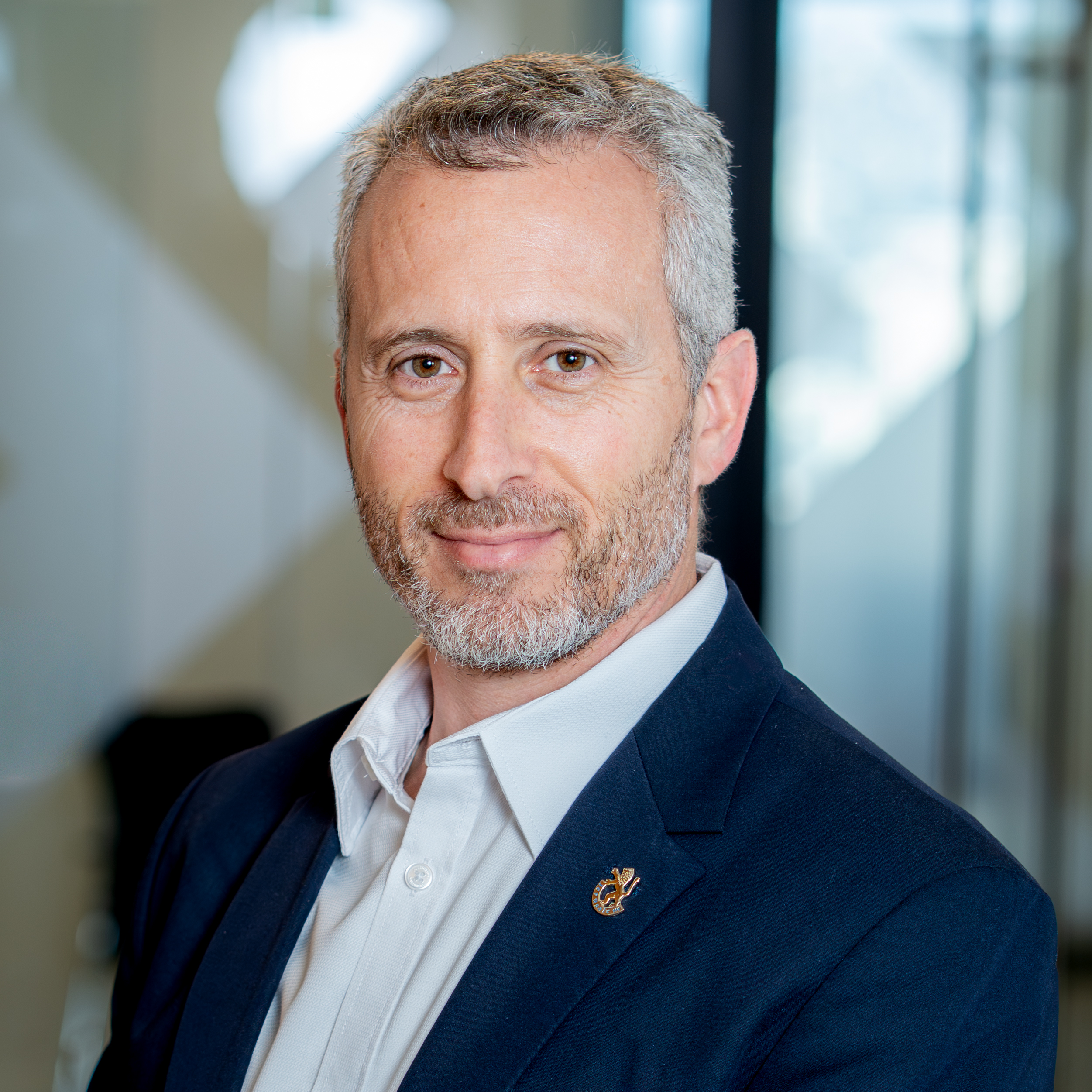
Shai Melcer, PhD, is head of bio-convergence at the Israel Innovation Authority. Dr Melcer brings over 15 years of experience in biomedical entrepreneurship, working across global pharma, biotech, and digital health. He has collaborated with leading institutions and co-founded multiple innovation platforms advancing the bio-convergence ecosystem. Dr Melcer is also an associate lecturer for Biotechnology at the Hebrew University of Jerusalem. His previous positions include co-founder of the GRAM Bio-Foundry; CBO at Minovia Therapeutics; CEO of BIOHOUSE; executive director of BioJerusalem (JDA); co-founder of BioGiv. Dr Melcer holds PhD and LLM degrees from the Hebrew University of Jerusalem.