Europe’s growing vector-borne disease threat: Are we keeping pace?
Europe has recent experience of navigating major public health crises, but COVID-19 showed that preparedness cannot be taken for granted. As vector-borne diseases become an increasingly tangible threat across the continent, the importance of stronger coordination, sustained investment, and a more supportive environment for health innovation is critical.
Vector-borne diseases – infections transmitted to humans by organisms such as mosquitoes and ticks – are not new to Europe. However, diseases once largely associated with tropical or subtropical regions are becoming a more immediate concern, with growing implications for public health systems across the region.
In 2025, for example, over 800 locally-acquired cases of chikungunya – a mosquito-borne disease more typically found in tropical and subtropical regions of Africa, Asia, and the Americas – were reported in France across 44 different regions.
Add to this picture the growing burden of tick-borne diseases such as Lyme disease and tick-borne encephalitis, and it becomes clear that the impact of vector-borne disease should be considered a present-day public health challenge for Europe, not simply a future concern. The critical question is whether the capabilities to anticipate, prevent, and respond are keeping pace with the changing risk.
A changing climate and shifting disease patterns
Vector-borne disease transmission and distribution are shaped by multiple interconnected factors, including international travel and trade, land use, human behaviour, and wider environmental conditions. Climate change is increasingly influencing this landscape by altering the conditions in which disease-carrying vectors can survive, reproduce, and remain active for longer periods.
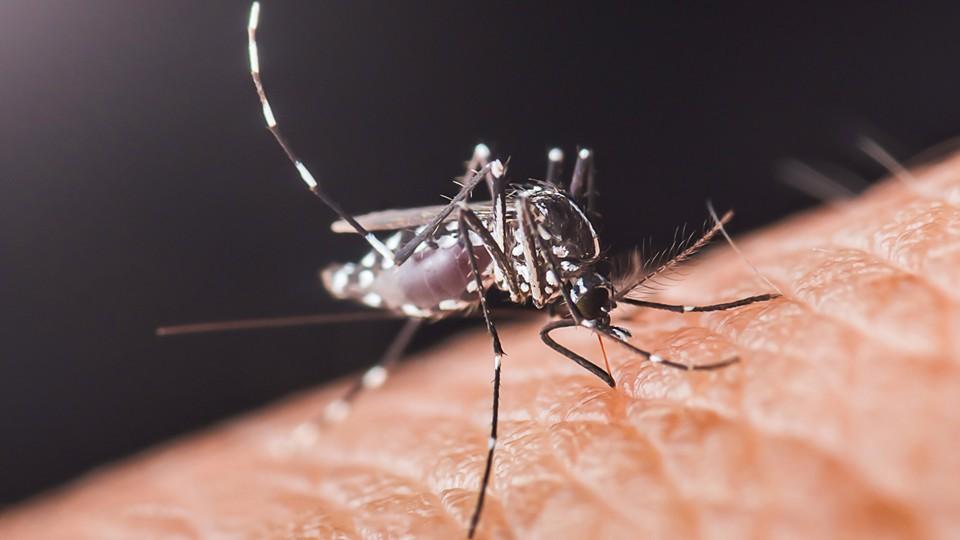
Across Europe, warmer temperatures and changing seasonal patterns are contributing to shifts in vector distribution, creating conditions in which disease risks can emerge in new locations or become more firmly established. One example of this is the Asian tiger mosquito, Aedes albopictus, which can transmit dengue and chikungunya viruses, and is now established across 16 European countries. In September 2026, Aedes aegypti, another invasive mosquito, was detected breeding in the UK for the first time, at residential properties in east London.
The impact of this changing landscape is not only limited to emerging mosquito-borne threats. Tick-borne diseases are also intensifying, with Lyme disease already the most prevalent vector-borne disease in Europe, with approximately 132,000 cases reported to surveillance systems annually between 2015 and 2023. When detected early, most cases can be treated successfully with antibiotics. However, delayed or untreated infection can lead to longer-term neurological, joint, and cardiac complications, and some patients may even experience persistent symptoms following treatment.
A potential preventative vaccine solution against Lyme disease would certainly represent a very significant positive impact from a health-economic benefit perspective for people living in high-risk areas. However, there are still many other vector-transmitted diseases – which might be vaccine preventable – for which there are currently no or very few vaccine developments on the horizon.
From response to preparedness
Prevention requires multiple, complementary measures. Disease and vector surveillance are critical to understanding changes in distribution and incidence while effective vector control and public health education can help reduce exposure. Where available and recommended, vaccination can provide an additional layer of protection.
Preventative vaccines are an important part of preparedness strategies; however, vaccine development operates on timelines very different from those of an emerging outbreak. Advancing a candidate from early research through to vaccine development, regulatory review and manufacturing scale-up requires sustained investment over many years.
Outbreaks, epidemics, and pandemics caused by infectious diseases will be inevitable. What is uncertain is when they will occur, and how severe the impact to humankind and the economy will be. Yet, where the future burden of a disease – and therefore demand for interventions – is difficult to predict, securing investment in disease control and prevention can be challenging. Innovative public and private funding vehicles are therefore needed to incentivise the development of new interventions. Governments must be prepared to invest in preventing disease spread before an outbreak occurs, rather than waiting until its impact is already being felt.
Strengthening resilience through collaboration
Partnership models can be particularly valuable where significant public health needs exist alongside uncertainty around commercial demand for vaccines. By bringing together funding, scientific expertise, development capabilities, and manufacturing capacity, partnerships can help share risk and accelerate development while supporting programmes that may otherwise be difficult to advance.
One successful example of this type of partnership has been our collaboration with the Coalition for Epidemic Preparedness Innovations (CEPI) and Instituto Butantan, which brings together public funding, clinical development, technology transfer, and local manufacturing to support vaccine access in endemic countries.
Based on my experience, successful public-private partnership must share the investment burden in a way that is economically justifiable for each organisation, while establishing future supply and commercialisation models that enable affordable access for everyone who could benefit from a preventative solution. More streamlined regulatory pathways, without jeopardising quality or compliance, could help affordable vaccines produced in a wider range of manufacturing markets reach Europe more quickly during an emerging disease or outbreak. This should be supported by maintaining sufficient manufacturing capacity and, where appropriate, emergency product stockpiles.
Keeping pace
Keeping pace with the evolving threat of vector-borne disease will require a long-term approach of tracking and anticipating changes in disease risk, sustaining investment in vaccine innovation before demand becomes urgent, and strengthening the partnerships needed to translate scientific progress into accessible interventions.
By the time outbreaks are widespread and placing pressure on health systems, the window to prevent wider disruption has already narrowed. Europe’s ability to keep pace will depend on moving from a reactive approach to one that prepares for changing disease risk earlier – before transmission becomes harder to contain.
About the author
 Thomas Lingelbach is CEO, member of the board, and co-founder of Valneva. He is an established vaccine industry leader with over 30 years of experience, including senior and executive management roles with Intercell, Novartis Vaccines, and Chiron. During his career, he has successfully contributed in different capacities to the successful development and licensure of more than ten vaccines. He holds an engineering degree specialised in bioprocess engineering and completed his education with a business administration programme.