Catching the signals sooner: AI’s role in proactive pharmacovigilance

A key message emerging from this year’s World Patient Safety Congress was that pharmacovigilance is evolving from a reactive, compliance-driven function to a more predictive and science-led discipline. As therapies for chronic diseases continue to expand globally, safety organisations face an unprecedented volume of evidence from ICSRs, clinical studies, scientific literature, electronic health records, and real-world data.
The challenge is no longer data collection, but the timely identification and interpretation of clinically meaningful safety signals within increasingly complex and heterogeneous datasets. As a result, highly trained safety physicians and scientists often spend significant time aggregating and reviewing information, rather than performing higher-value activities such as signal evaluation, causality assessment, and benefit-risk analysis.
As discussed at the Congress, artificial intelligence offers the potential to strengthen pharmacovigilance by accelerating evidence synthesis, supporting earlier signal detection, and enhancing risk surveillance. Importantly, AI is not a replacement for medical judgement. Rather, it enables a human-guided, scientifically grounded approach in which technology augments expert evaluation, allowing safety professionals to focus on the critical decisions that ultimately protect patients.
The growing complexity of modern therapeutics
The expansion of chronic disease therapies brings real benefits, but it also makes ongoing safety monitoring more demanding. Medicines are used over longer periods by people with varying underlying health conditions, often and alongside other treatment, exposing risks that weren't visible during clinical trials.
For example, diabetes patients are increasingly treated with combinations of glucose-lowering agents, cardiovascular therapies, obesity medicines, and renal-protective treatments. At the same time, healthcare is becoming more connected through continuous glucose monitoring, digital health applications, wearable devices, and remote patient monitoring.
This creates an increasingly complex safety environment where a potential safety concern may involve not only the medicine and an adverse event, but patient characteristics, treatment duration, concomitant medications, disease progression, lifestyle factors, and real-world treatment patterns. Understanding these relationships requires scientific evaluation, medical judgement, epidemiological assessment, and benefit-risk expertise.
While the industry has shown it can cope with a sharp rise in reporting volumes – most notably during the pandemic – the focus isn't on whether the system can handle another popular medicine, but whether safety teams can make sense of increasingly complex information quickly enough to step in when needed.
Rethinking the pharmacovigilance lifecycle
In simplified terms, the traditional process flows sequentially from the collection of Individual Case Safety Reports (ICSRs) to signal detection, followed by signal validation, scientific assessment and, finally, regulatory action.
A growing volume of information means that highly trained safety professionals often spend considerable effort organising, reconciling, and reviewing data before they can focus on higher-value scientific evaluation. The opportunity here is not only to process reports faster, but to help experts identify important patterns sooner, by reshaping the PV operating model.
Deploying artificial intelligence as a proactive radar
AI is unlikely to replace pharmacovigilance processes, but it can enhance them. A more realistic future state is one in which AI acts as an additional analytical layer capable of identifying weak signals and emerging patterns across multiple sources of evidence.
Conceptually, the system ingests millions of data points, allowing AI to autonomously identify unusual patterns. These insights are then seamlessly escalated for a medical safety review, advancing to signal validation, scientific assessment and, ultimately, appropriate risk-mitigation action.
More advanced agentic AI, where AI powered agents are engineered to execute specific tasks, extends this approach by coordinating tasks across connected workflows, with clear escalation points for human review. Biopharma companies reduce operational effort by 30-50%, accelerate regulatory reporting, identify safety signals earlier, and reduce the risk of inspection findings, product recalls, and patient safety events.
For larger safety reports, AI can help pull together the relevant evidence and draft sections, while human experts still review and sign off the conclusions.
This brings faster execution whilst ensuring more reliable information, which is available sooner, giving safety teams a stronger foundation for identifying what needs closer investigation. Importantly, AI does not establish causality, validate safety signals, or make regulatory decisions. These remain the responsibility of qualified pharmacovigilance professionals, medical safety physicians, epidemiologists, and regulatory authorities. The value of AI lies in helping safety experts focus attention on the right questions sooner.
Synthesising real-world evidence for rapid response
The next opportunity is looking beyond individual reports to evidence sitting in electronic health records, claims data, registries, clinical studies, and scientific literature.
For example, if an older diabetic patient takes multiple treatments simultaneously, individual reports may not make the connection apparent. AI-supported analysis across appropriate sources could help bring that pattern to specialists’ attention sooner.
Initiatives such as the FDA’s Sentinel programme and EMA’s DARWIN EU network demonstrate the importance of broader real-world evidence in safety assessment. They also highlight why AI is becoming critical: the volume and complexity of data is too great to analyse manually at speed, but can reveal patterns that help specialists identify emerging safety risks earlier. This also requires collaboration, as no pharmaceutical company has a complete view of patient experience.
While AI helps experts navigate this evidence, underlying illnesses, concomitant medicines, and reporting biases still require scientific assessment. The aim is to identify important questions sooner, not automate the answers.
Embedding governance and human oversight
Where AI is concerned, agents can handle the process, but people must make the judgement calls. By taking on repetitive preparation and coordination, AI can free safety experts to investigate complex cases ensuring decisions involving medical judgement and ambiguity remain with qualified professionals.
This requires governance by design, defined responsibilities, quality standards, escalation routes, and traceable records of AI outputs and human decisions that stand up to scrutiny.
That requires governance by design. Organisations need defined responsibilities, quality standards, and escalation routes, alongside a traceable record of source information, AI outputs, and human decisions. Every assessment must be capable of standing up to scrutiny.
Validation before deployment is only the beginning. Teams must monitor whether systems continue to perform as intended and intervene when output becomes unreliable. This also creates new skills requirements in data quality and AI oversight.
Human expertise becomes more valuable, not less, as reviewers need the evidence, time, and authority to challenge and not simply approve outputs.
The future of safety is intelligent collaboration
As highlighted at the World Patient Safety Congress, AI's greatest value lies in enabling safety organisations to shift from reactive reporting to predictive risk management. By identifying emerging risks earlier, safety teams can intervene sooner, make better-informed decisions, and strengthen patient protection.
However, AI is not a substitute for scientific and clinical judgement. While intelligent systems can accelerate data analysis and insight generation, responsibility for benefit-risk evaluation, signal validation, and regulatory decisions remains with qualified safety professionals.
The future is an AI-native safety enterprise where technologies and human expertise work together. AI handles data-intensive processes, while experts focus on critical medical decisions, enabling faster insights, earlier risk mitigation, and greater confidence in patient safety.
AI will not replace safety experts. It will empower them to anticipate risks sooner, make better decisions, and protect more patients with greater confidence.
About the author
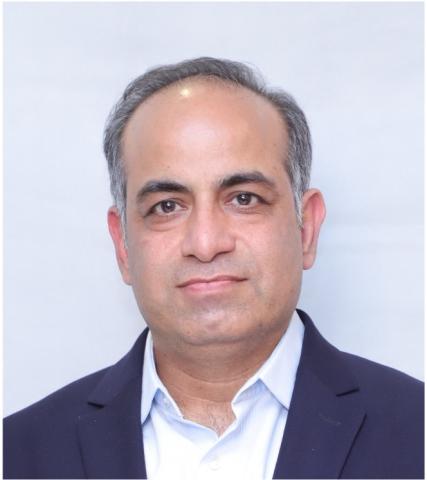
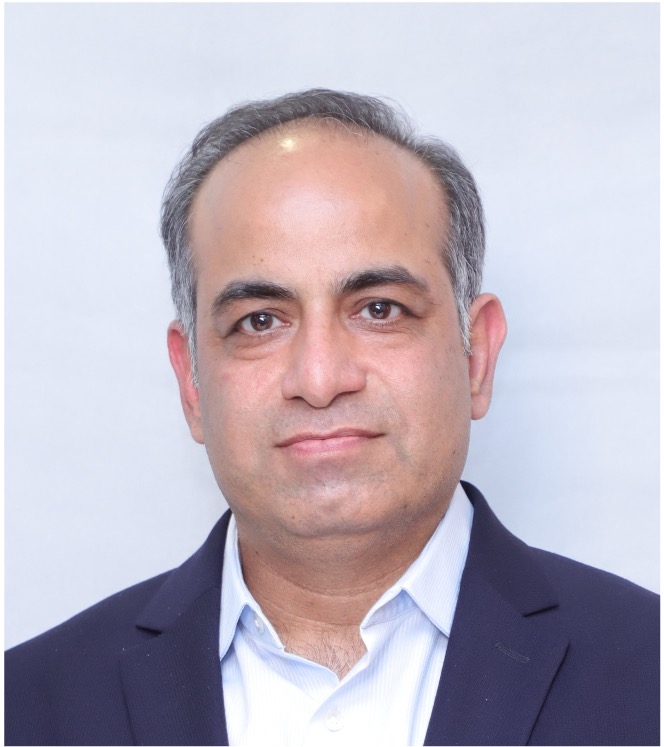 Sanjeev Sachdeva leads advisory and business process services globally for the life sciences unit at Tata Consultancy Services. As a member of the unit’s core leadership team, he drives strategic direction, business and IT advisory, thought leadership, industry collaboration, and technology innovation. With more than 30 years of experience in business and technology transformation, he partners with customers across the value chain—R&D, manufacturing, supply chain, and commercial—to adopt new technologies, processes, and operating models. Sachdeva is a regular contributor to industry and academic forums, including the Wharton Mack Institute for Innovation Management, DIA (Drug Information Association), PHUSE, PHORUM, and IIT Delhi. He also speaks at industry roundtables and has authored white papers on AI enabled transformation in drug safety, clinical development, personalised medicine, digital health, quantum computing in life sciences, the future of the lab, blockchain, the metaverse, and AI in regulated industries.