12 Questions with Faruk Uzman
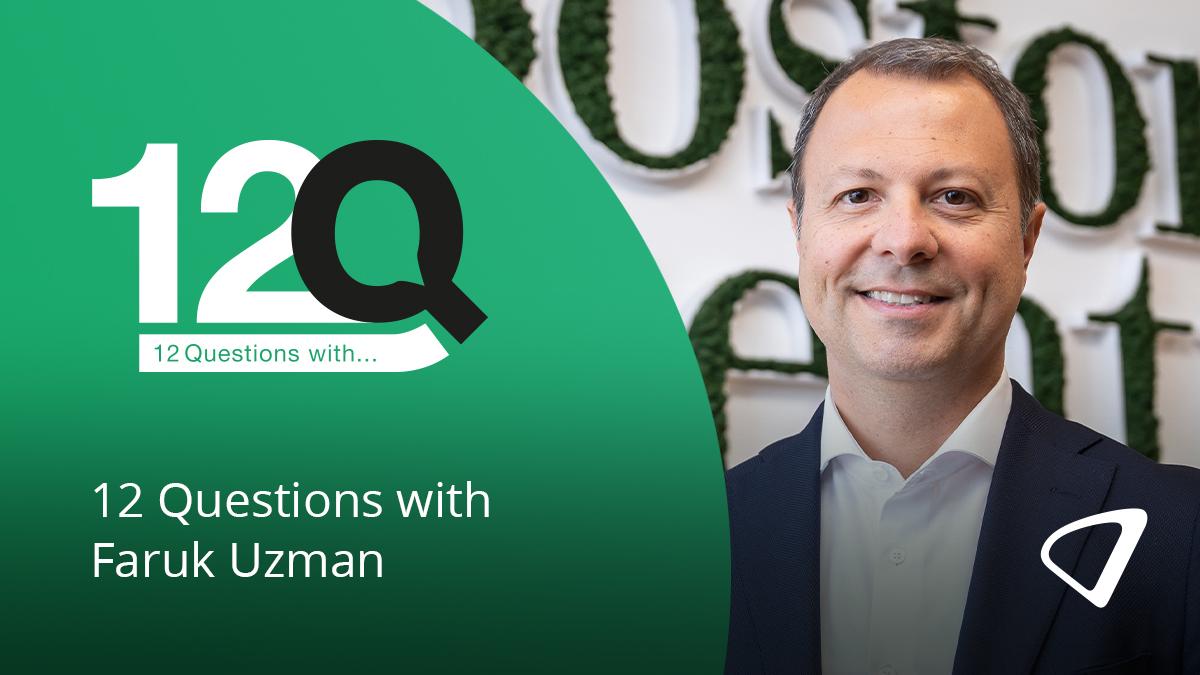
Faruk Uzman is Vice President Europe, Middle East, Africa at Boston Scientific. He joined Boston Scientific in 2018 and brings 25 years of experience to his role leading Healthcare Solutions and Strategy, having held various leadership roles in commercial leadership, business development, and healthcare strategy. As VP EMEA, Uzman continues Boston Scientific's commitment to delivering innovative solutions that address evolving needs in healthcare systems and to improving outcomes for patients and healthcare providers across the EMEA region.
What are the main responsibilities of your current role? As Vice President of Healthcare Solutions and Strategy at Boston Scientific, my role focuses on helping healthcare systems address practical challenges in care delivery while creating long-term, sustainable value. My team works closely with healthcare providers to understand where pressures exist in areas such as capacity, patient flow, operational efficiency, or the adoption of new therapies, and to explore how technology, services, and partnerships can help address those challenges.
In practice, this can include supporting hospitals in redesigning care pathways, improving operational visibility through digital tools, or helping clinicians adopt new technologies through education and collaboration.
What are some of the biggest ongoing challenges in your work? One of the biggest challenges is translating innovation into real-life implementation.
Healthcare systems are under increasing pressure due to workforce shortages, growing demand for care, and financial constraints. Even when technologies demonstrate strong clinical value, integrating them into existing care pathways can be complex.
Introducing a new therapy may require training for clinicians, changes in hospital processes, alignment across hospital departments, and sometimes adjustments in reimbursement pathways. Supporting healthcare systems through that transition is a key part of our work.
What do you see as the biggest challenges facing the industry right now? Healthcare systems globally are facing structural pressures. Ageing populations and increasing rates of chronic disease are driving demand for care, while healthcare providers must manage limited resources and growing operational complexity.
At the same time, innovation across MedTech, digital solutions, AI and data is accelerating rapidly. The real challenge for the industry is ensuring that these innovations are implemented in ways that genuinely support clinicians and improve patient outcomes. This requires strong collaboration across the healthcare ecosystem between providers, industry, and policymakers.
What excites you most about current industry trends? What excites me most is the growing focus on how healthcare systems deliver care. For many years, innovation was primarily focused on individual technologies. Today there is an increasing attention on how those technologies integrate into broader care pathways.
When minimally invasive therapies, digital tools, remote technologies, education, and operational improvements come together, the impact can be significant. Patients may recover faster, hospitals can improve capacity, and clinicians are supported in delivering care more efficiently. That system-level perspective is an exciting development for the future of healthcare.
In your opinion, what has changed most about the industry since the start of your career? One of the biggest changes is the shift toward a more holistic view of healthcare. Earlier in my career, innovation was often viewed mainly through the lens of individual products or technologies. Today, there is a stronger focus on how those innovations integrate into healthcare systems and care pathways.
What are your biggest short-term goals for this year and next year? In the near term, my focus is on supporting healthcare systems navigate increasing complexity while continuing to improve patient care. This includes strengthening partnerships with healthcare providers, helping implement innovative therapies more efficiently, and identifying how digital capabilities and remote technologies can support clinicians in their daily work.
Ultimately, the goal is at the same time simple and ambitious: to ensure innovation translates into meaningful outcomes for patients and sustainable value for healthcare systems.
What do you think MedTech will look like in 15 years? 50 years? Over the next 15 years, I believe MedTech will increasingly move beyond individual technologies toward more integrated solutions that combine devices, digital capabilities, AI, and clinical expertise. Technology will enable earlier intervention, more minimally invasive treatments, and more connected data to support clinical decision-making.
Looking further ahead, healthcare may evolve toward more predictive and preventive models of care. Data and digital tools will play an important role in helping clinicians identify risks earlier and manage chronic diseases more effectively.
The opportunity for our industry will be to ensure that these innovations translate into significant improvements in patient outcomes and healthcare system efficiency.
What advice do you have for your MedTech industry peers? Stay close to the realities of healthcare systems and the clinicians who deliver care every day. Innovation in our industry is essential, but the real challenge lies in implementation. Even the most advanced technology cannot create impact if it does not fit naturally into clinical workflows and healthcare systems.
Collaboration across the healthcare ecosystem is therefore critical. Industry, healthcare providers, and policymakers must work together to ensure innovation can be adopted effectively.
What are the most important professional skills in your work, and how do you hone them? Curiosity and adaptability are extremely important. My openness to change was shaped early in life. When I was 16, through the Rotary International exchange programme, I moved from Istanbul, a city of more than 15 million people, to a small town in the United States with around 15,000 residents. I was the only foreign student in the programme.
That experience pushed me far outside my comfort zone and taught me the importance of adapting to new environments and learning from different perspectives. Those lessons have stayed with me throughout my career.
Healthcare is a complex and constantly evolving environment. Staying open to learning from different perspectives and continuously challenging assumptions is critical.
Listening is also an essential skill. Understanding the needs of clinicians, healthcare leaders, and colleagues allows us to develop solutions that truly address real challenges.
How do you see AI transforming the way healthcare systems deliver care? AI has the potential to significantly improve how healthcare systems deliver care. It can support earlier diagnosis, improve clinical decision making, and help optimise treatment pathways.
However, technology alone is not enough. Its impact will depend on how effectively it is integrated into clinical workflows within healthcare systems. Industry leaders have an important role in working closely with healthcare providers to ensure these technologies are implemented responsibly and effectively.
What is your leadership philosophy, and how has it evolved over the course of your career? My leadership philosophy is built around three principles.
First, stay humble. There is a quote often attributed to Einstein that I like very much: “Ego = 1/knowledge.” As knowledge increases, ego should decrease.
The second principle is bringing your heart to what you do. Healthcare is a field with a strong sense of purpose, and people achieve their best work when they feel connected to that mission.
The third principle is always putting yourself in the shoes of your customers. I try to approach challenges by putting myself in the shoes of our customers and focusing on the outcomes they care about most. Understanding this helps guide better decisions and improves collaboration. When humility, purpose, and customer focus come together, you create strong teamwork and a real sense of belonging.
What personal values guide you most as a leader? Purpose is deeply important to me. I originally studied engineering, but was drawn to healthcare because I wanted to work in a field with real meaning. Healthcare is one of the few industries where the work we do can directly improve people’s lives. I cannot imagine working in a field without that sense of purpose.
When I joined Boston Scientific in 2018, I quickly realised how strongly the company’s culture of collaboration and respect aligned with my own values. That alignment has been a defining part of my journey here.
Connect with Faruk Uzman on LinkedIn