12 Questions With Marie Teil
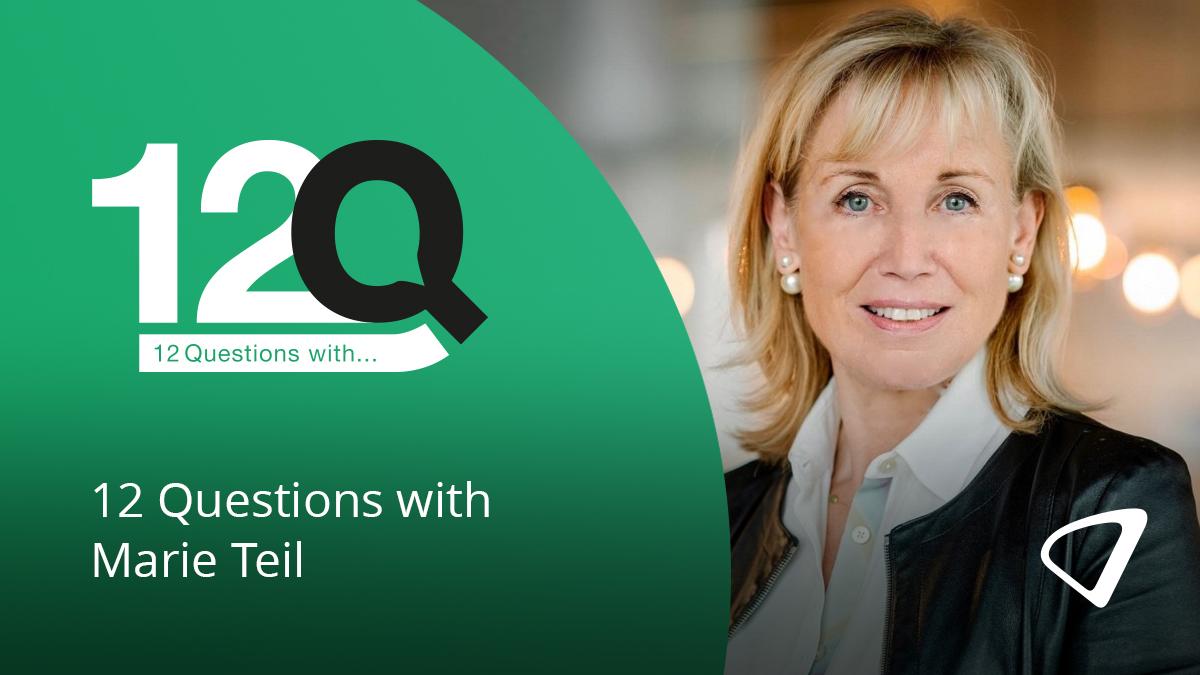
Marie Teil is a pharmaceutical executive with over 20 years of experience in the healthcare field, with roles spanning academia, clinical research, ethics, and operations. She holds a medical degree from University Claude Bernard in Lyon, as well as a Master’s in Statistics from University Pierre & Marie Curie in Paris. She joined UCB with a visionary purpose: to establish and lead the Women of Childbearing Age (WoCBA) programme. Her mission has been to push the boundaries of science and elevate the standard of care for women living with chronic diseases during their childbearing years. The WoCBA programme is dedicated to empowering and supporting women of childbearing age with chronic diseases so they can make informed decisions about their healthcare.
As a woman and mother, Teil is deeply committed to advancing science in women’s health. She believes that by collaborating with patients, healthcare professionals, regulators, and advocacy groups, it is possible to create a more inclusive and patient-centric approach to drug development and clinical care. Learn more about the WoCBA programme at ucb.com/hcp/women-of-childbearing-age.
What are the main responsibilities of your current role? As Global Head of Special Patient Populations (SPP) at UCB, my focus is to ensure that patients who have historically been overlooked in research are no longer left behind; this includes women of childbearing age (WoCBA), children, and the elderly.
I work across the R&D lifecycle and across therapeutic areas to ensure the needs of these populations are recognised and embedded early, from study design to evidence generation, helping to close critical data gaps. This can only be achieved through collaboration and partnerships with patient groups, healthcare professionals, and regulators.
Ultimately, it’s about making clinical trials more representative, so, every patient, at every age and stage of life, can benefit from evidence that applies to them.
What is your background prior to this role and how did it prepare you for the work you do now? I started as a medical doctor in Lyon and then built on that foundation by developing expertise in statistics and regulatory science, which gave me a mix of clinical, scientific, and practical perspectives.
Over the years, I’ve worked across academia, clinical research, and industry, so, I have seen how decisions are made at different stages and where some of the gaps can appear. When I was approached by UCB to establish and lead the WoCBA programme, it was a great opportunity to use my experience to help women living with chronic diseases get the data they deserve to make informed decisions during their reproductive journey. As a woman and a mother, this topic is very meaningful personally.
This foundation has influenced how we are now approaching Special Patient Populations, particularly in recognising that similar evidence gaps and barriers also exist for groups such as children and older adults.
What is your proudest professional accomplishment to date? The development of the WoCBA programme at UCB stands out. Historically, women who are pregnant or breastfeeding are often excluded from clinical trials, therefore, data is sparse and important treatment decisions have been made with limited evidence. When you consider that more than 70% of pregnant women take prescription medication, yet, only a small proportion of those medicines have been properly studied in this context,1 that really brings the challenge into focus.
At UCB, we believe women of childbearing age must be empowered to make informed decisions about their health before, during, and after pregnancy. We also recognise that, for women living with chronic conditions, managing disease during pregnancy is not optional: if treatment is stopped, the condition can worsen, which can affect both the mother and the baby. So, we looked at how to generate evidence more responsibly, designing studies differently, making participation more flexible, and working closely with stakeholders across the field.
While there is still yet more to do, this work has helped build greater awareness of the importance of more representative research.
What motivates you about working in pharma? Moments like World Clinical Trials Day are a reminder of why this work matters; we have the chance to make a real difference for patients. We live in a world driven by data, yet, some groups still don’t have all the information they need to make confident decisions about their care. I find that both challenging and inspiring, because it is an area where we can do so much better. I’m often struck by how keen patients are to contribute to research; understanding that, by taking part in it, they are helping not only themselves, but also others, and that’s incredibly powerful.
What is your personal mission statement? What values keep you centred in your work? I am guided by collaboration and curiosity: bringing disciplines together, challenging assumptions, and continuously improving how we generate evidence, so that research reflects the diversity of patients we serve.
What are your biggest long-term goals for five years or 10 years from now? I’d like to see inclusive research become the norm, rather than the exception, across all underserved populations. That means listening to these patients and rallying for earlier generation of relevant data they need. That requires stronger alignment across regulators, industry, and healthcare systems. At UCB, our focus is on embedding these considerations from the outset, so that these patients are not left waiting years to benefit from data that reflects their specific needs.
What do you see as the biggest challenges the industry is facing right now? There are many challenges across the industry right now. In my particular area of work, one of the ongoing challenges is the urgent need to protect underserved populations through research, not from research.
Historically, this mindset has led to women of childbearing age, children, or older adults being excluded from research due to perceived risks. It’s now more widely acknowledged that managing disease is just as critical as managing risk. For example, in pregnancy, controlling a chronic condition is important for both the mother and the baby, so, having the right evidence matters.
Beyond the science, there are also practical realities, regulatory frameworks, operational complexities, and the need for collaboration across different stakeholders.
What excites you most about current industry trends? We are seeing more collaboration from all stakeholders and the broader community to evolve how studies are designed, whether that’s improving recruitment approaches or making participation more accessible; for example, via remote enrolment. These developments, alongside many other areas of innovation in pharma, are helping us move towards a more equitable and patient-informed model.
In your opinion, what has changed most about the industry since the start of your career? I think the biggest change I have witnessed is that we have moved away from thinking about one “typical” patient. There is now much more awareness that every patient is different; in how diseases present, how treatments work, and what matters to them. We are continuously learning how to translate that into everyday practice, but the awareness itself is an important step and is changing how we’re approaching our work.
How can the industry take a more practical approach to making clinical research more representative of real-world patients? It starts with listening to patients’ needs in their everyday life and intentionally designing research with this in mind. That could mean making participation more flexible, reducing the burden on the individual, and rethinking practices that exclude certain groups. There is no one-size-fits-all approach; different populations have different needs.
And, importantly, it requires collaboration across the ecosystem to consistently make research much more reflective of real-world patients. This is something to particularly keep in mind on World Clinical Trials Day.
What advice would you give to a young person starting out in your field? Never lose sight of the patient, be curious and challenge the status quo: some of the most important progress in our industry comes from asking why things are done in a certain way and whether they could be done differently to better serve our patients.
If you could have any job other than the one you have now, what would you choose? I cannot think of another job where I would be able to connect with such a broad scope of stakeholders and help translate their needs into evidence and ultimately see a direct impact for current and future generations.
Connect with Marie Teil on LinkedIn
References
- Hilas O. Medication use during pregnancy. US Pharm. 2024;49(9):14. Available at: https://www.uspharmacist.com/article/medication-use-during-pregnancy. Last accessed: May 2026.