Designing global PSPs for the real world

Designing and implementing global patient support programmes (PSPs) is becoming increasingly complex. While many programmes are strategically designed at a global level, successfully translating them into meaningful patient support across different healthcare systems, regulatory environments, and cultures can be far more challenging in practice.
Historically, PSP strategy and implementation have often been approached separately, with local operational realities introduced later in the process. However, as therapies become more complex and programmes expand across Europe and beyond, pharmaceutical companies are increasingly recognising the value of integrating delivery insight earlier into programme design.
To explore how this approach is evolving, pharmaphorum sat down with Ian Riches, Head of Patient Solutions International at Inizio Engage, and Derek Cothran, Managing Principal at Nuvera, an Inizio Engage Patient and HCP Treatment Experience brand, to discuss how integrating strategic design with implementation expertise can help create more scalable, locally relevant, and effective global PSPs.
Q1: Pharma companies don’t always recognise the gap that can emerge between the strategic design of a global PSP and its implementation across local markets. How did you first come to recognise this challenge?
Ian Riches [IR]: Over the years, we’ve often been brought into programmes at the point where a global strategy needed to be implemented across Europe or other international markets. What became clear very quickly is that even well-designed programmes can encounter challenges when they meet the realities of local healthcare systems, regulations, operational processes, and patient expectations.
Design is essential because it establishes the patient journey and overall framework for support. But implementation teams are responsible for translating that framework into something that works practically and consistently within each local market.
Historically, design and implementation have often happened sequentially, rather than collaboratively. We recognised that, if implementation expertise and local market insight could be introduced much earlier into programme design, it would create programmes that were more scalable, practical to launch, and effective for patients and healthcare professionals.
That shift became even more apparent as we began working more closely with Derek Cothran and the Nuvera team. By bringing together strategic treatment experience design with real-world implementation insight from the outset, we were able to create programmes that were not only strategically strong, but grounded in operational reality from day one.
Q2: What needs to be considered when designing an effective global PSP across multiple markets?
Derek Cothran [DC]: Ultimately, the goal of any global PSP is consistency of patient support, while still allowing enough flexibility to reflect how healthcare is delivered within each local market.
The starting point is understanding the treatment experience from both the patient and healthcare professional perspective. We look at the full treatment journey to identify the “moments that matter” – the points where patients may require additional education, onboarding, adherence support, or ongoing engagement to help them remain successfully on therapy.
Many patient support needs are universal across markets, including therapy initiation, education, and adherence support. However, how that support is delivered can vary significantly depending on local healthcare systems, regulations, infrastructure, and cultural expectations.
That’s why global PSP design cannot happen in isolation. While we create an overarching framework, we also work closely with local market experts and implementation teams from the beginning of the process to ensure the programme is grounded in real-world practice.
Integrating implementation insight early allows us to design programmes that are not only strategically aligned, but also practical to launch, scalable across markets, and adaptable to local patient needs from day one.
Q3: Once a global PSP strategy has been developed, what are some of the realities that can change from market to market during implementation?
IR: While the core patient need may remain consistent globally, the practical realities of delivering support can vary significantly between markets.
For example, some countries may have established homecare infrastructures that support nurse-led onboarding and ongoing patient engagement, while others rely far more heavily on hospital-based treatment pathways or remote support models. Regulations around patient contact, pharmacovigilance reporting, data privacy, and even how educational materials can be delivered also differ across markets.
Cultural and behavioural differences also influence how patients engage with support programmes. In some countries, patients may expect regular direct interaction and coaching, while in others they may prefer more self-directed or digital engagement. These differences influence everything from onboarding and training approaches through to channel selection and long-term adherence support.
That’s why implementation cannot simply be a case of replicating one market’s programme into another. Our role is to take the global strategic framework and adapt the operational delivery model so that it works effectively within each local healthcare environment, while still maintaining consistency in the overall patient experience and programme objectives.
Because our teams operate within these markets every day, we’re able to identify potential barriers earlier, adapt quickly where needed, and ensure programmes remain practical, compliant, and relevant for both patients and healthcare professionals.
Q4:Once a PSP is live, how do you ensure the programme continues to remain effective across different markets and patient populations?
IR: Even with strong strategic design and careful implementation planning, programmes need to remain flexible once they are operating in the real world. Patient behaviours, engagement preferences, and healthcare environments can all shift over time, particularly across multiple markets.
What’s important is recognising that the underlying patient need or pain point may not change, but the most effective way to support that need sometimes does. That may involve adjusting communication channels, refining onboarding approaches, or adapting how support is delivered based on real-world experience and feedback from patients, nurses, and healthcare professionals.
Because our teams are operating within these markets every day, we’re able to identify those changes quickly and adapt the programme accordingly while maintaining consistency with the overall strategic intent.
DC: From a strategic design perspective, the core treatment experience blueprint typically remains consistent because the underlying patient and HCP needs do not fundamentally change. However, implementation insight is incredibly valuable in helping validate and refine how support is operationalised across different markets and patient populations.
The learnings generated through real-world implementation can also inform future programme evolution, whether that involves scaling into additional markets, supporting new indications, or adapting programmes as therapies and patient expectations evolve over time.
That ongoing connection between strategic design and implementation helps ensure programmes are not only designed thoughtfully at the outset, but remain practical, scalable, and relevant throughout their lifecycle.
Q5: What do pharmaceutical companies need to think differently about when designing and implementing global PSPs today?
DC: As therapies become more complex and healthcare systems continue to evolve, pharmaceutical companies need to think beyond designing programmes that work well conceptually at a global level. The real challenge is designing programmes that can be implemented effectively and sustainably across very different local environments.
That means involving operational, local market, and implementation expertise much earlier in the process, rather than treating implementation as a downstream activity after strategic design is complete.
Increasingly, we’re seeing clients recognise that successful global PSPs require both a strong strategic framework and a realistic understanding of how support will ultimately be delivered to patients and healthcare professionals in practice.
IR: From an implementation perspective, scalability and flexibility are becoming just as important as strategy itself. Global programmes need to be able to adapt to local healthcare systems, patient expectations, regulatory requirements, and operational realities without losing consistency in the overall patient experience.
The most effective partnerships are those where strategy and implementation work together from the beginning. That allows programmes to launch more efficiently, adapt more effectively over time, and ultimately deliver more meaningful support for patients in every market. Successful global PSPs are increasingly relying on this closer integration between strategic design and implementation expertise.
About the interviewees
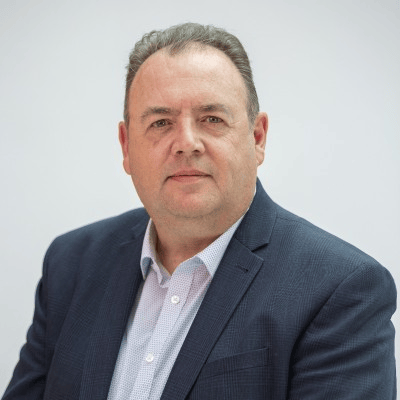 Ian Riches is Global Vice President, Patient Solutions and Head of Patient Solutions International at Inizio Engage. With more than 20 years of experience in patient support and healthcare services, including leadership roles at IQVIA and Quintiles, Riches specialises in designing and implementing patient support programmes across international markets, combining strategic insight with real-world delivery expertise to improve patient experiences and outcomes.
 Derek Cothran, Managing Principal at Nuvera, an Inizio Engage Patient and HCP Treatment Experience brand, brings a wealth of experience to his position, having served in various executive management roles within the life sciences industry for over 20 years. Equally adept at planning and operational execution, he is leading a new chapter in the company’s culture and service delivery of aligning organisational cross-functional teams along a shared vision to create the optimal treatment experience for patients.
About Inizio Engage
Inizio Engage is a global strategic, commercial and creative engagement partner that specialises in healthcare. Combining a unique mix of consultation, creation and activation expertise with the latest technology, it designs and delivers tailored solutions that inspire lasting change. As a group of more than 6,000 experts, working in more than 20 countries it offers a passionate, diverse team with global reach and local knowledge. Together, they partner with clients to challenge conventional thinking to empower people to make better health decisions and enhance treatment outcomes across the globe