Daiichi Sankyo gears up for five ADC launches in 2026
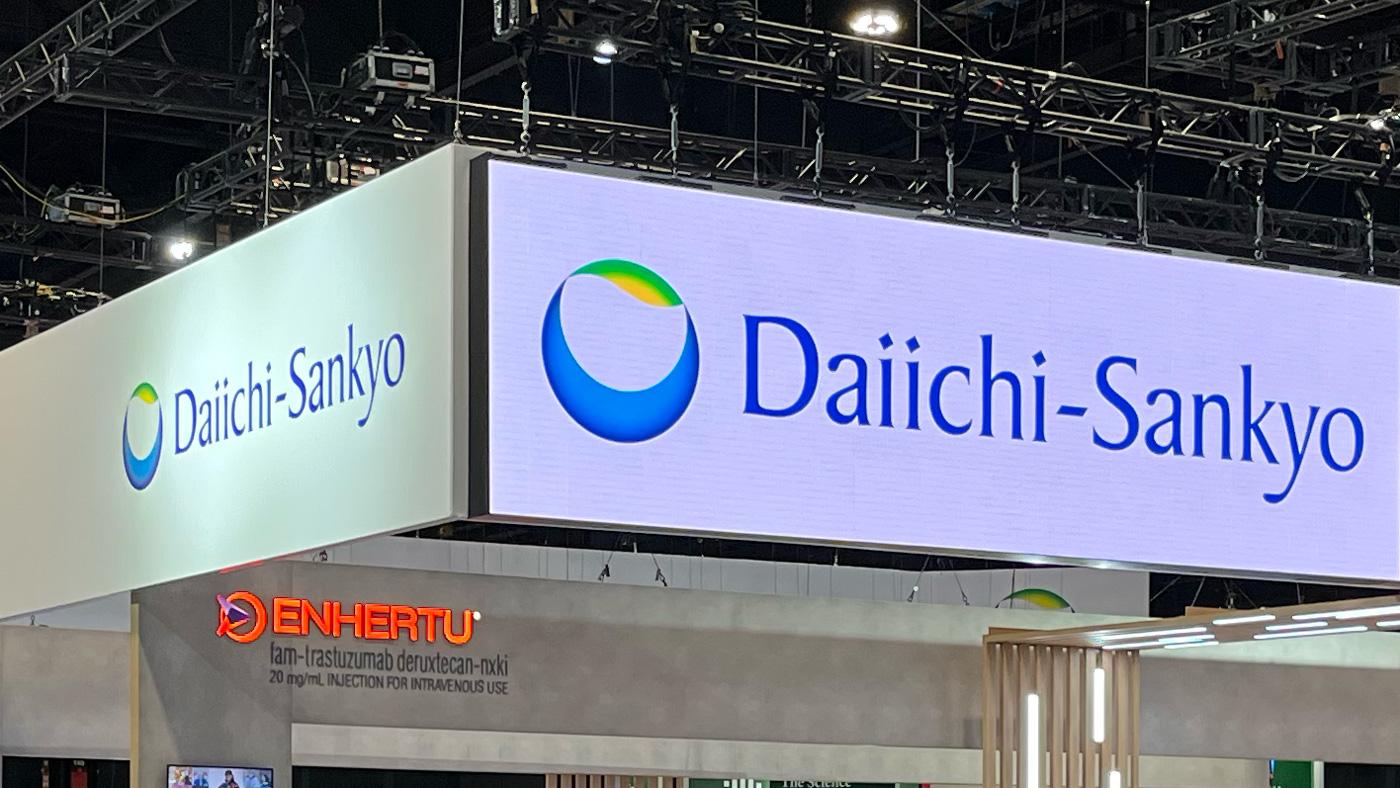
It’s been almost a decade since Japanese pharma company Daiichi Sankyo began its dramatic pivot from cardiovascular health into antibody-drug conjugates.
For Daiichi Sankyo, it’s hard to argue that the gutsy move has been anything but successful so far. Much of that success is wrapped up in Daiichi Sankyo and AstraZeneca’s blockbuster Enhertu (trastuzumab deruxtecan), which isn’t losing its US patent until 2033. That gives the company a precious commodity: time.
On the sidelines of JPM last month, pharmaphorum caught up with Ken Keller, president and CEO of Daiichi Sankyo in the US, to talk about the big year the company has planned.
Five launches in one year?
From a research perspective, 2025 was a dynamic year for Daiichi Sankyo, which sets up a busy 2026 from a commercial standpoint, Keller said.
“Last year, we had the read out for five registrational trials,” he said. “Every one of them came up positive. Now we're in the midst of launching each and every one of them. … I've been in the industry for a long time, and I've never had five launches in a single year.”
The launches are mostly new indications for Enhertu and Datroway (datopotamab deruxtecan). But one is a novel ADC. They are:
• Enhertu combined with pertuzumab in HER-2 positive advanced or metastatic breast cancer, which was approved in December
• Enhertu in early-stage breast cancer, which has a May PDUFA date
• Enhertu in the post-neoadjuvant setting, expected in the summer
• Datroway in triple negative breast cancer, also expected in the summer
• Ifinatamab deruxtecan (I-DXd) in small cell lung cancer, being developed in partnership with MSD (this one is ‘more of a maybe’, Keller said, but he still expects a launch this year based on the strength of the data)
Although they’re mostly existing drugs, Keller stressed that these aren’t just incremental improvements.
“Every one of these studies is standard of care changing,” he said. “So we're not adding a month or two of progression-free survival. … We're adding years. I mean, literally years of progression-free survival and literally showing overall survival. It's a pretty tremendous time for the company and oncology.”
Additionally, Keller said, the company’s portfolio in breast cancer is well on its way to being comprehensive.
“We can help over 95 % of women with breast cancer,” he said. “And so when we go into an oncologist office, a physician who treats breast cancer, it's a pretty unique conversation we have. And we're running a study right now in the remaining 5% of those patients. So if that's positive, and based on everything I know, I'm confident it will be, we'll be able to help 100% of women.”
That study, TROPION-Breast-05, is expected to read out next year.
Doubling down, but planning ahead
Keller’s goal is for Daichii-Sankyo’s portfolio of two approved ADCs to be up to four by 2030, with approvals for IDXD as well as raludotatug deruxtecan (RDXD). The idea is to extract as much value from Enhertu as possible before the patent cliff, but set up the other ADCs to pick up the slack when that generic pressure arrives.
“We have seven indications now in Enhertu, and we expect to have over a dozen indications by 2030,” he said. “All the first five indications were in late-stage disease. And we saw the activity there, so we developed and we ran studies in earlier and earlier stages of disease. So if you look at the next few indications, it will be in early-stage disease where we believe we're going to have the biggest benefits for patients. Those benefits hopefully end up in cures.”
By planning ahead early, Keller hopes to avoid being in a situation where looming LOE forces the company into suboptimal or overpriced deals. In fact, the company hasn’t so far allocated many resources at all to external innovation, instead investing in rapidly iterating their internal pipeline.
“So many companies are in this situation where they have patents expiring soon. And when that happens, it's a feeding frenzy for drugs that show potential that are close,” he said. “Usually, that makes the price very, very expensive. We have the luxury because we've got this really super stable drug platform for a while that we can look at earlier things.”
And they are looking, Keller says, even outside their core wheelhouse of ADCs.
“I would say that ADC technology is our strength. I think numbers show we're the best in the industry. We're going to keep doing that. But you always have to be developing the next modality, the next breakthrough platform. And so we're doing that internally and externally,” he said.