ASCO 2026: Are radiopharmaceuticals being systematically underdosed?
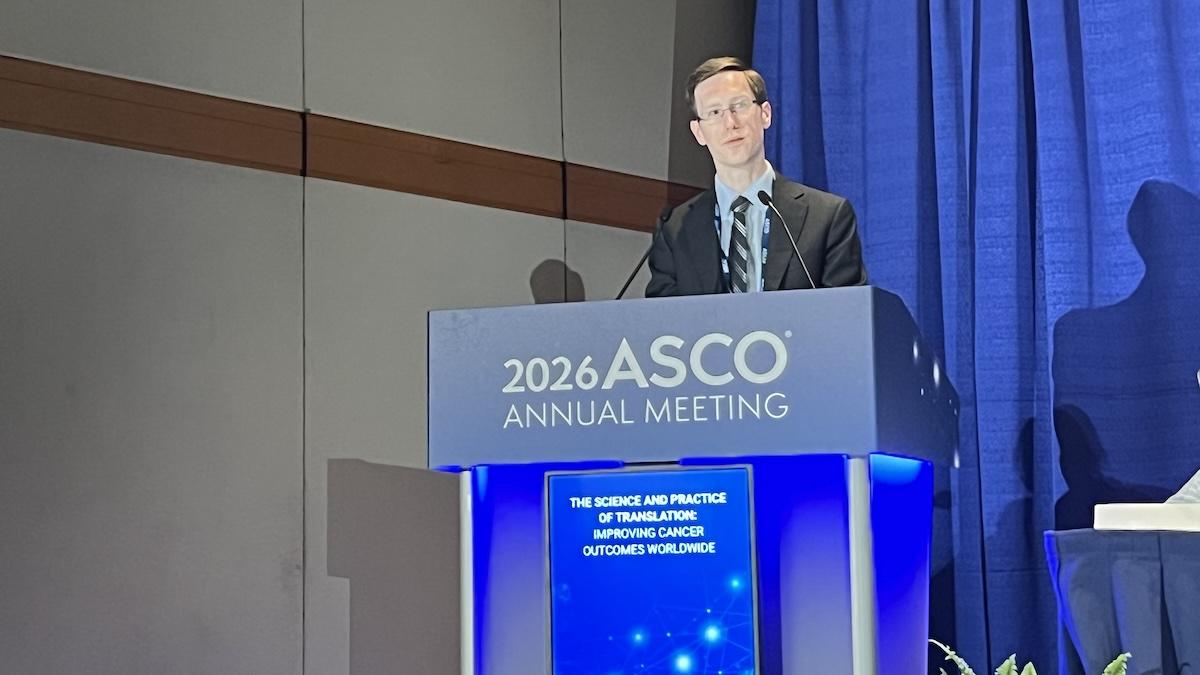
Dr William Maguire speaks at ASCO 2026.
Radiotherapeutics were a major topic at ASCO this year, as more and more studies progress on a variety of targets, isotopes, and indications. The industry as a whole seems bullish on the category, in which small radioactive payloads are delivered directly to tumour cells via a targeting molecule.
But as more of these therapies are developed, industry stakeholders are raising concerns that the maximum dose of radiation prescribed by the FDA might be too conservative, potentially limiting the efficacy of these drugs.
“To mitigate the risk of long-term toxicity, cumulative dosages of currently approved RPTs have generally fallen within historic normal organ tolerances derived from external beam data,” Dr William Maguire, an oncologist and clinical reviewer with the FDA, said in a session at ASCO. “However, we've heard from many stakeholders that EBRT limits are arbitrary and too conservative for at least some RPTs. Although the limits appear to have resulted in a relatively low incidence of long-term safety issues such as chronic renal toxicity for the currently approved dosages of RPTs, some in the field have expressed that higher dosages may be needed to maximise efficacy.”
It’s a surprisingly thorny problem: Existing limits are based on data from external beam radiation therapy, but the whole point of radiopharmaceuticals is that they deliver the radioactive payload directly to the tumour, rather than hitting a number of healthy cells in the crossfire as EBRT does. So limiting RPTs to the standards of EBRTs risks undercutting the very thing that makes RPTs so promising compared to their predecessors.
A higher dose of radiation in an RPT could well be safer, but it’s very difficult to know that for sure because the concern is with delayed or cumulative effects of radiation, not with acute toxicity.
“Traditional dose escalation designs for non-radioactive drugs are problematic to evaluate long-term or cumulative toxicity, since this may take months or years to detect and is unlikely to be fully characterised during short-term observation periods,” Maguire said. “Discovering an unacceptable delayed or cumulative toxicity can be particularly concerning when a large number of patients are exposed, such as in a Phase 3 trial for a marketed product, or in patients who have a long life expectancy and/or may have already been cured by the current standard of care.”
The current problem – that radiopharmaceuticals might be underperforming their potential – seems preferable to the alternative.
“[If the dosage] were escalated enough, the added risks might start to outweigh the added benefits,” Maguire said. “So a key question is where the cutoff between benefit and harm would happen, and I would hypothesise that this is not known for most RPTs.”
FDA has produced a draft guidance to try to help guide companies that may want to test their RPT candidate at higher-than-recommended dose levels. It includes suggestions like referencing data from similar existing RPTs, keeping doses low for first-in-human studies, and testing higher doses in the advanced disease setting – all in consultation with the agency, of course.
While restricting testing to the advanced setting does lower risks, it’s also of limited usefulness because patients in the advanced disease setting are less likely to contribute data on the long-term effects of the therapy.
Other speakers in the session, like Dr Lisa Bodei from Memorial Sloan-Kettering, suggested that better understanding of the radioresistance and radiosensitivity of tissues, which is genetically driven, could also allow for safer, personalised dose optimisation in the future.
Ultimately, as the field of radiotherapeutics advances, more data, especially longitudinal data, will help set standards for dose optimisation that raise the bar for efficacy without imperilling safety. In the meantime, researchers will have to work with the FDA to thread the needle of acceptable exposure risks.