After Pluvicto: Alpha radiopharma and prostate cancer
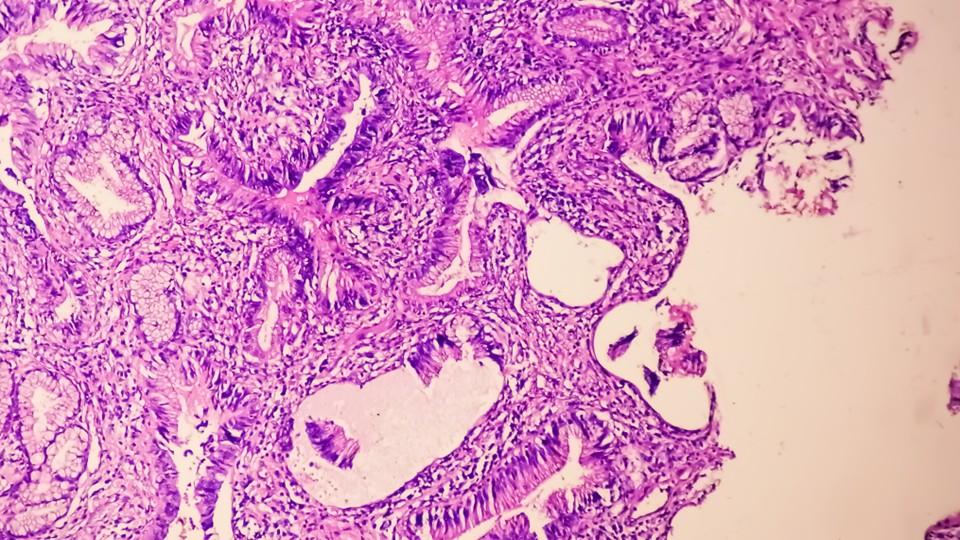
According to Prostate Cancer UK, prostate cancer is the most common cancer in men: 1 in 8 men will get it and if you’re over 50, or you’re Black, or you have a family history of the disease, then your risk is even higher.
There are around 46,000 new cases of prostate cancer each year in England and Wales, with 13% of these cases showing signs of spread at diagnosis and with around 12,000 dying from the disease annually. In the US, the American Cancer Society’s estimates for prostate cancer for 2026 alone are about 333,830 new cases and approximately 36,320 deaths from the disease.
The current standard of care for prostate cancer varies based on the stage of the disease, but includes options such as active surveillance, surgery, hormone therapy and, more recently, radiation therapy.
Developments in prostate cancer screening and treatment
While the UK's National Screening Committee had concluded its review of prostate cancer last month, saying that the harms of a large-scale, national programme would outweigh the benefits – the UK government now needing to decide whether it will accept the advice to reserve screening only for "a few thousand" men with BRCA2 mutations that elevate their risk of prostate cancer – there is also a £42 million ($55 million), large-scale TRANSFORM study ongoing, which started in 2024 and recently expanded to all eligible Black men in the UK. It is testing various approaches to prostate cancer screening, including MRI pathways and saliva-based genetic testing.
This is obviously to catch prostate cancer much earlier and avoid men being diagnosed at advanced stages of the disease. Other developments within the field when prostate cancer isn’t caught early include the efforts of Candel Therapeutics, a clinical-stage biopharma focused on developing multimodal immunotherapies, which recently entered into a product commercialisation agreement with EVERSANA to support the potential launch of agltimagene besadenovec (aglatimagene or CAN-2409) for the treatment of intermediate- to high-risk, localised prostate cancer, subject to regulatory approval. The investigational, off-the-shelf, replication-defective adenovirus regimen is designed to induce an individualised and specific CD8+ T-cell-mediated response against an injected tumour and uninjected distant metastases for broad anti-tumour activity, based on in situ immunisation against a variety of tumour antigens.
Additionally, NICE recently recommended Pfizer's Talzenna (talazoparib) at the start of 2026, a once-daily oral poly ADP-ribose polymerase (PARP) inhibitor that can be taken at home. The Phase 3 TALAPRO-3 study of Talzenna in combination with Astellas’ Xtandi (enzalutamide), an androgen receptor pathway inhibitor (ARPI), in people with homologous recombination repair (HRR) gene-mutated metastatic castration-sensitive prostate cancer (mCSPC) – also known as metastatic hormone-sensitive prostate cancer (mHSPC) – had met its primary endpoint of a statistically significant and clinically meaningful improvement in radiographic progression-free survival (rPFS).
Elsewhere, the BBC has reported that, for the first time, 1,000s of men in England who have low- or intermediate-risk prostate cancer will be offered high-powered precision radiotherapy outside of trials. It will reduce the number of treatment sessions needed by 75%, from 20 to just five. The stereotactic ablative radiotherapy (SABR) technique provides more effective targeting than standard radiotherapy. Indeed, NHS England stated “it expected all 48 radiotherapy centres around the country to start offering the treatment ‘within weeks’.”
The BBC article also mentioned, however, that “trials are already under way to see if the precision radiotherapy can be used on high-risk prostate cancer patients.”
Radiopharma possibilities in prostate cancer
Looking more closely at radiopharmaceuticals in prostate cancer, Novartis’ Pluvicto (lutetium Lu 177 vipivotide tetraxetan, aka Lu-177) is a targeted radiopharma treatment for adults with prostate-specific membrane antigen (PSMA)-positive metastatic castration-resistant prostate cancer (mCRPC). Lu-177 emits high-energy beta and low-energy gamma particles and has a half-life of approximately 6.7 days, so it is important to have safety guidelines for both the patient and employees performing this radioligand treatment.
Nonetheless, another company taking on the critical unmet need in mCRPC is Convergent Therapeutics, which has developed CONV01-α, an alpha-emitting radioantibody with a promising clinical future. While most prostate cancer radiopharma programmes default to small-molecule ligands, even as early data begins to surface questions around biodistribution and tolerability, Convergent believes – and its recent ASCO data reveal suggested – that alpha antibodies offer an effective alternative beneficial to progression-free survival for this group of patients.
To find out more, pharmaphorum spoke to Convergent’s co-founder and CEO Dr Philip Kantoff, a world-renowned prostate cancer clinician and researcher who has shaped multiple generations of prostate cancer treatment. Dr Kantoff believes the field may be underestimating how much delivery modality matters for alpha emitters in PSMA-driven cancers.
The benefits of alpha after beta
In a recent article published at MedCityNews, co-authored with Drs Jones T. Nauseef and Richard Messmann – What Comes After Pluvicto? A New and Distinct Prostate Cancer Patient Subpopulation Is Taking Shape – Dr Kantoff wrote of how treatment decisions are more than selecting which therapy, but also when to use it.
“Men are diagnosed with prostate cancer either with metastatic disease or with localised disease,” Dr Kantoff explained. “Some relapse after being treated with radiation and surgery and ultimately are treated with hormonal therapy; some men who come in the door with metastatic disease are treated with hormonal therapy. What I mean by hormonal therapy is basically blocking androgen, blocking testosterone. So, once the cancer progresses in the context of having low testosterone, that's the definition of castration resistant prostate cancer, either metastatic or non-metastatic.”
“The conventional treatment for that has been chemotherapy for the most part,” he continued. “The advances over the past 15 years or so have been the development of newer forms of blocking the androgen pathway. There are now these things called ARPIs, androgen receptor pathway inhibitors, which are quite effective at prolonging survival, drugs like enzalutamide, abiraterone.
“What also has developed is the radiopharmaceutical space, particularly the development of Pluvicto […] These have been significant advances, but they're still not curative. There’s also a trend to delay chemotherapy as long as possible because it's the most, I would say, toxic for patients. [But] men who die of prostate cancer are men who have metastatic castration resistant prostate cancer […] The survival for these men is about two years overall.”
Convergent’s CONV01-α (formerly Ac-225-J591) is a proprietary, best-in-class radioantibody targeting a protein (antigen) expressed on the surface of almost all prostate cancer cells. It combines the precision and pharmacokinetics of antibodies with the tumour-killing potential of alpha-emitting radionuclides (a radioactive isotope that delivers the radiation inside cancer cells).
“In the case of prostate cancer, a key target is a molecule on the surface called prostate specific membrane antigen, which is PSMA, and there are things that bind it all the way from small molecule ligands, which is what Pluvicto uses, to large molecules like antibodies, which is what we use,” explained Dr Kantoff. “The advantage of using an antibody is the fact that it has greater affinity and avidity for the target. It also allows greater internalisation of the isotope and greater retention time.”
Selection of an alpha radionuclide is significant. The promise of their potency comes from the high destructive energy they emit with the short range that energy travels. Once inside a cell, these characteristics combine for greater potential for tumour cell destruction. In contrast to the longer range of beta emitters, though, the short range of alphas is less likely to damage healthy adjacent cells and tissues.
The ASCO data reveal for CONVO1-α
At ASCO, Convergent Therapeutics’ interim Phase 2 data in the study of late-stage patients who previously had been treated with Pluvicto was announced – for whom such patients there is currently no approved standard of care. As stated above, whereas Pluvicto is a radioactive beta isotope attached to a small molecule, CONVO1-α is an antibody with the much more powerful alpha radionuclide Ac-225, with a half-life of 10 days. The data showed CONV01-α was safe to administer to ‘post-Pluvicto’ patients, with promising anti-tumour activity, a durable response, and a highly favourable tolerability profile (particularly as compared to radioligands). Convergent now plans to move CONVO1-α into Phase 3 studies.
“Unstable isotopes decay, they release particles like alphas and betas, or they release gammas, X-rays as well,” said Dr Kantoff. “Actinium-225 has a 10-day half-life and is ideal in that respect; it gives us a lot of leeway to get it to the patient. In our clinical trial, we've treated probably 50, 60 patients now, and we've not missed the dose in any patient.”
The advantages, it is clear, are many when it comes to the large molecule, biologics approach. More specifically, there is a difference in toxicity risks, also.
“One of the issues that surrounds the small molecules is that they bind and penetrate into the salivary glands where PSMA is expressed,” he continued. “The antibody does not penetrate into the salivary glands, so it doesn't cause the dry mouth to the extent that the small molecules do. Also, the small molecules are excreted through the kidneys and the kidneys have PSMA with this small molecule, so that's how they are excreted […] So, there is some renal damage when you use the small molecules.
“[By contrast,] the antibodies are excreted through the hepatobiliary system and, fortunately, despite the fact that that is the case, we don't see liver or GI toxicity […] The disadvantage is that it causes more toxicity to the bone marrow, and so the main toxicity that's seen with antibodies is hematopoietic. We have very manageable hematopoietic toxicity because of the therapeutic window. We can give a significant amount of drug without causing any significant thrombocytopenia.”
Most importantly, though, in patients who have a very limited life expectancy after Pluvicto and chemotherapy, Convergent saw – preliminarily – a radiographic progression-free survival in the time to changes on a CT scan or a bone scan that exceeded estimation of what patients' overall survival was.
“We’re very optimistic that we've sort of hit the sweet spot here with regard to efficacy,” stated Dr Kantoff. “And we're very optimistic about the phase 3 study that we're going to do in patients who have already been treated with Pluvicto and chemotherapy. The reason that people are so excited about this therapy is that we've honed in on a treatment schedule where we give just two doses. So, a patient gets a dose on day one, gets a dose on day 15, and that's the end of therapy.”
Looking to the future of prostate cancer treatment
In terms of ‘Where next?’, earlier-line settings in oncology are ever key.
“We believe that treating patients with very early disease who have relapsed will translate into much more significant survival advantage and even potentially curative therapy for patients who otherwise would not be cured,” suggested Dr Kantoff. “That is where we're heading.”
Indeed, for Dr Kantoff, radiopharmaceuticals in cancer will become a “much bigger thing” within the next decade.
“In the context of prostate cancer, there are potentially other targets that could be addressed with radiopharmaceuticals, and I also have some optimism that, although immunotherapy has not worked thus far in prostate cancer, that immunotherapy will become an acceptable modality of therapy […] specifically, the early data with the T-cell engagers against a variety of different targets looks promising. [But] the main treatment modalities used in prostate cancer over the period of time that I've been in the field have been hormonal therapy, which has its significant toxicities in men and delaying the intervention with hormonal therapy would be very desirable – men don't like being castrated, to be specific,” Dr Kantoff concluded.
About the interviewee

Dr Philip Kantoff is a globally recognised leader in prostate cancer research and treatment. He serves as co-founder and CEO of Convergent Therapeutics and previously held leadership roles at Dana-Farber Cancer Institute, where he directed the Lank Center for Genitourinary Oncology and was Chief of Solid Tumor Oncology. He later served as Chair of Medicine at Memorial Sloan Kettering Cancer Center. Dr Kantoff has led multiple pivotal clinical trials that have shaped the standard of care in prostate cancer, including work spanning androgen signalling inhibitors, immunotherapy, and radiopharmaceuticals. His research has focused on the biology and clinical management of advanced prostate cancer, with particular emphasis on treatment sequencing and emerging therapeutic modalities.