White House signs pricing deals with nine more pharmas
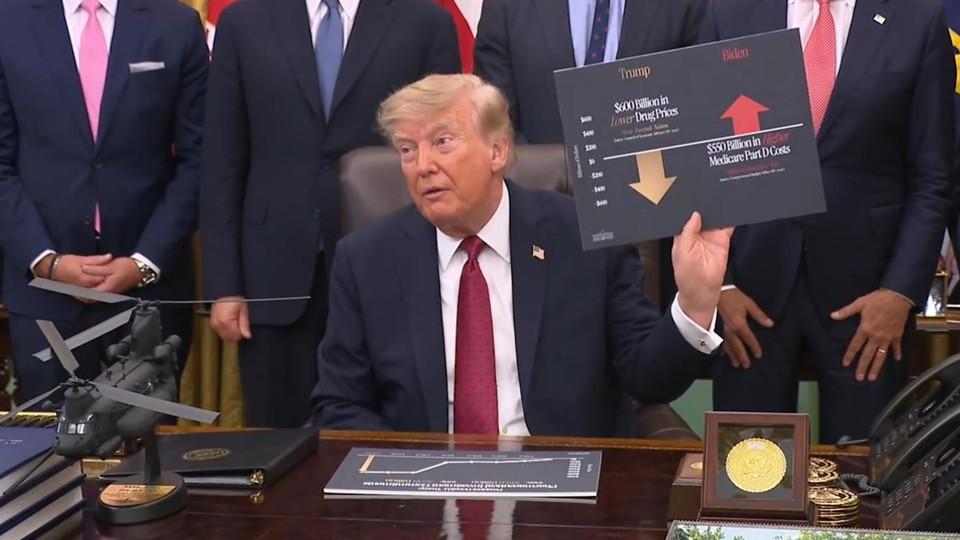
Nine mid-sized pharma companies have signed up for the Trump administration's Most-Favoured Nation (MFN) pricing deals, following in the footsteps of 17 larger drugmakers.
Adding in the latest block – Alcon, Astellas Pharma, BeOne Medicines, BridgeBio, CSL, Kyowa Kirin, Sun Pharma, Teva Pharma, and UCB – means that 89% of the branded drug market in the US is now subject to MFN deals, according to a White House statement.
Trump told reporters in the Oval Office that other companies supplying the US market "are also coming in, they have no choice."
Americans pay the highest drug prices in the world, and the MFN policy – which is designed to tie prices to the lowest price charged abroad – was introduced to reduce prices for US health systems and patients and force the pharma industry to adopt more equitable pricing models.
To ward off tariffs on medicines made elsewhere and imported into the US, pharma companies have agreed to lower their prices to MFN levels for the GENEROUS programme supplying Medicaid and also increase investment in US-based manufacturing facilities.
The extension of the dealmaking to include smaller pharma companies comes just a few months after Trump signed an executive order imposing tariffs of up to 100% on imported brandname medicines in what was viewed as a lever to force them to the negotiating table.
They also come ahead of two other MFN vehicles applying to Medicare Parts B and D – GLOBE and GUARD – which are in the planning stages.
According to the Trump administration, the agreements reduce prices on drugs that treat "numerous costly, chronic, and even rare diseases," including haemophilia, Parkinson's, macular degeneration, glaucoma, liver disease, skin conditions, and various forms of cancer.
For now, details of the commitments agreed by the new block of mid-sized companies are scant, but some said they would be donating supplies of active pharmaceuticals to the federal API stockpile and follow through on previously announced manufacturing onshoring plans.
Teva said an agreement "to lower the cost of select medicines for American patients covered by Medicaid" was still being negotiated, adding that it has offered MFN pricing for "applicable future innovative product launches."
A White House statement on the new deals claimed that the agreements include commitments of nearly $20 billion in "near-term" US manufacturing investments.
Consumer advocacy group Public Citizen said the MFN drug pricing deals are "a farce" and "a distraction from the administration's failed plan to lower US drug prices to the levels paid in other wealthy countries."
It argues that a better strategy would be to build international reference pricing into the Medicare drug price negotiation framework introduced under the Biden administration's Inflation Reduction Act.
"There still is no evidence that any pharma company has followed through on prior commitments to the Trump administration to launch new drugs at MFN-price points," said Peter Maybarduk, Access to Medicines director for Public Citizen.